Galaxy Z TriFold vs Huawei Mate XT puts two different readings of the same concept side by side: a three‑panel foldable with two hinges. Huawei seeks maximum versatility with a single screen that folds in a “Z”; Samsung bets on a more protected build and a friction‑free Android experience. This matters because these form factors aim to replace both smartphone and tablet at once, and the choice is no longer just “which has the better spec sheet” but becomes “which fits my everyday life”.
In this article
- General Overview: what “trifold” means in practice
- Architecture & Specifications: hinges, screens and durability
- Real‑World Use Cases: when versatility pays off (and when it hampers).
- Software, performance and “friction” of the ecosystem
- Competition & pricing: what these choices signal
- What to do now: how to choose without regrets
- FAQ
General Overview: what “trifold” means in practice
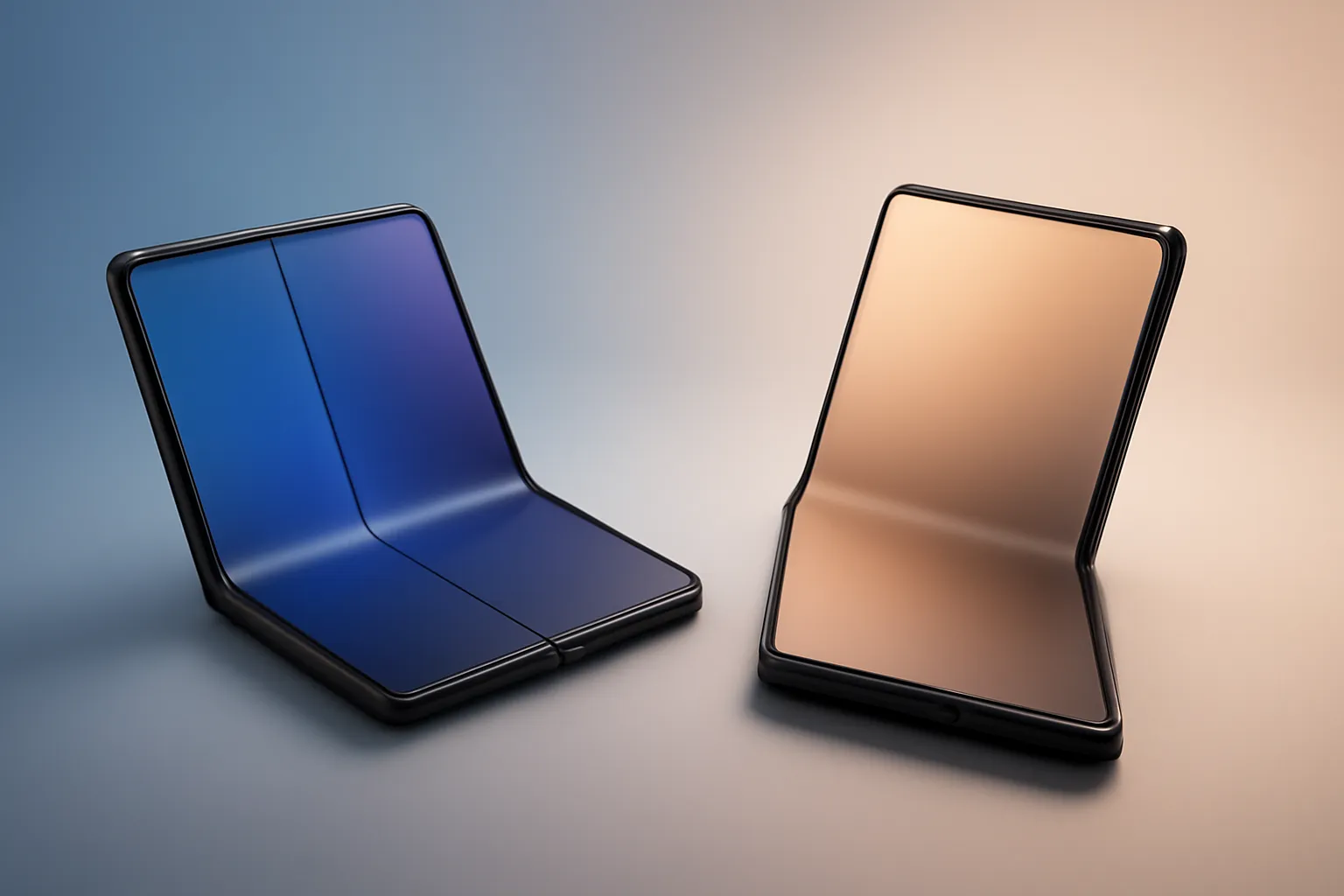
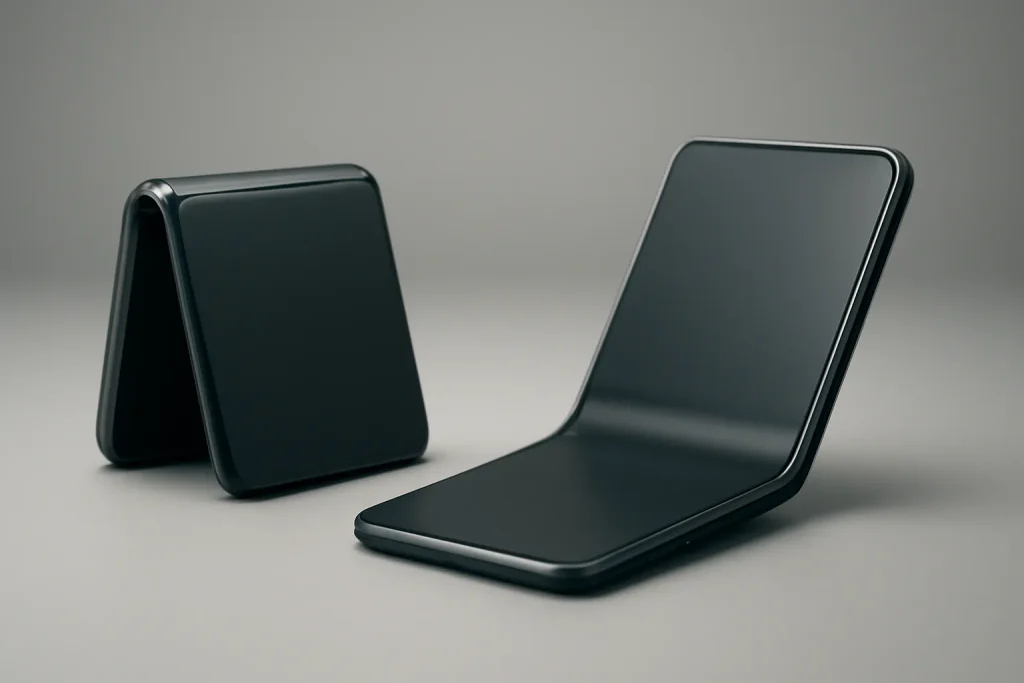
Despite the name, both fold at two points and split the screen into three sections. The difference lies in the mechanics and what that unlocks. On the Galaxy Z TriFold, the two flaps fold inward (a “U”‑type closure), which tends to protect the main screen when the device is closed. On the Huawei Mate XT, the single screen folds in a “Z”, allowing three usable formats: phone, mini‑tablet (one fold) and tablet (opened).
This distinction changes ergonomics and the number of truly useful “modes”. In Galaxy Z TriFold vs Huawei Mate XT, Huawei wins by offering an intermediate mode that, for reading, email and social media, is likely the most frequent. Samsung, on the other hand, simplifies: closed is phone, open is tablet, with fewer transitions and less exposure of the flexible panel.
Architecture & Specifications: hinges, screens and durability
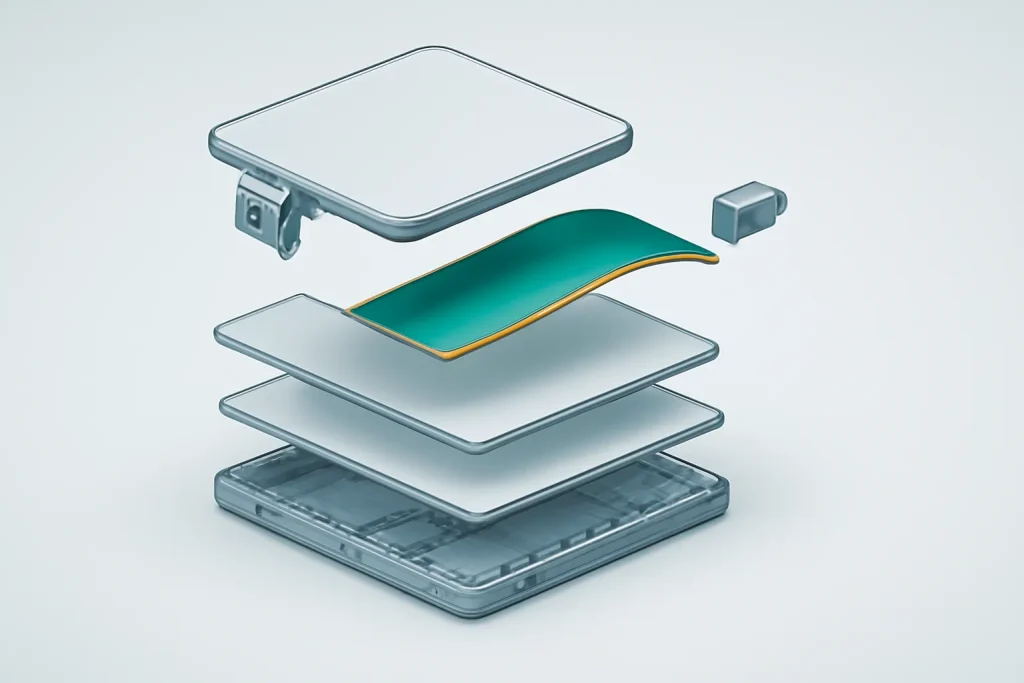
Galaxy Z TriFold’s design uses two hinges of different sizes and three panels of varying thicknesses so the flaps overlap when closed. It also includes a second rear screen (in the “middle section”) for use when the device is closed. Huawei Mate XT follows a single‑screen approach, with curved sides and a panel that remains partially exposed in phone mode, a choice that improves mode fluidity but increases vulnerability to risk and wear.
Regarding durability, Huawei lists a rating of IPX8 (water resistance, no dust rating). Samsung lists IP48: water and some protection against particles larger than 1 mm, but not against fine dust or pocket lint. For the user, this translates to a simple rule: neither is “dust‑proof”, but both handle water better than many earlier foldables. Still, in Galaxy Z TriFold vs Huawei Mate XT, the critical point is the screen exposure on Huawei when closed; the brand includes a flap‑cover to help mitigate that risk.
On the displays, Samsung opts for two panels: an outer 6,5\" AMOLED with 120 Hz and an inner 10\" with 120 Hz (with pixel density lower than the outer panel). Huawei uses a single OLED of 10,2\" at 90 Hz, with higher pixel density and thinner margins. The result is clear: Huawei may be more pleasant for widescreen video consumption (less “letterboxing”), while Samsung could have an advantage in multitasking with three apps side by side, depending on the final ratio and software optimisation.
Real‑World Use Cases: when versatility pays off (and when it hampers).
The strongest argument for Huawei Mate XT is the mini‑tablet mode. One fold gives you a screen large enough to read documents, reply to long messages or edit a spreadsheet without fully opening the device. In Galaxy Z TriFold vs Huawei Mate XT, this intermediate mode is what makes Huawei feel literally “three‑in‑one”.
Samsung counters with a “cleaner” and potentially more robust everyday experience: the flexible screen is protected when closed and the grip/lip on the edge helps open the device with more control. For users who open and close the device dozens of times a day, these details matter. There is also a tactile difference: the author notes that Samsung’s folds feel better to the fingertip, although both are visible under direct artificial light and at extreme angles.
If you want to dive deeper into what changes within the Samsung ecosystem, it’s worth cross‑referencing this topic with screen and battery vs portability\, because the “trifold” does not live in isolation: it inherits design and software decisions from the Fold family.
Software, performance and “friction” of the ecosystem
In the Galaxy Z TriFold vs Huawei Mate XT comparison, software is almost as decisive as hardware. Samsung uses the Snapdragon 8 Elite for Galaxy, 16 GB of RAM and options of 512 GB or 1 TB. It runs One UI 8 based on Android 16 and, according to the source text, includes seven years of system and security updates - a relevant point for anyone buying an expensive device and intending to keep it for a long time.
Huawei uses a Kirin 9010 chip, also with 16 GB of RAM and 512 GB or 1 TB. On global models it runs EMUI 14.2 and does not include pre‑installed Google apps. There are “workarounds” to install the Play Store, but this adds steps, a risk of incompatibilities and extra maintenance. For many users this friction weighs more than any format advantage. If you rely on Google Pay, native contact/calendar sync or apps that require Google services, the balance tends to tip towards Samsung.
Regarding battery, both cite 5.600 mAh. Huawei includes a 66 W charger and supports wireless charging up to 55 W; Samsung supports 45 W and Qi wireless. Without side‑by‑side tests, real endurance remains uncertain, but the pattern is predictable: the way you use the large screen (brightness, multitasking, video) will dominate power consumption.
Competition & pricing: what these choices signal
The source text indicates that the Galaxy Z TriFold is available in the US for 2.900 dollars. It is not a “mass‑market” price; it is a technology showcase price. The aim is to generate desire and, at the same time, test market appetite for formats that replace tablets and laptops in light mobility. In the Galaxy Z TriFold vs Huawei Mate XT comparison, Huawei tries to differentiate itself with a more flexible form factor; Samsung aims to win on ecosystem trust, extended support and engineering that better protects the internal panel.
For editorial context and transparency, the original comparison is in source article. On iOutlet's blog, you also find a summary focused on practical differences in key differences between models.
\n
What to do now: how to choose without regrets
If your priority is to have “one device for everything” and you know you will frequently use the mini‑tablet mode, the Huawei Mate XT is the most ambitious concept. In the Galaxy Z TriFold vs Huawei Mate XT comparison, it comes closest to replacing three screen sizes with a single panel. But assume you will manage the Google apps issue and accept a partially exposed screen when closed.
If you want a large‑format foldable with fewer day‑to‑day compromises - apps, payments, sync, updates and less screen exposure - the Galaxy Z TriFold is the more predictable choice. Before deciding, confirm support policies and post‑sale conditions; when buying online, it makes sense to review warranty conditions and return policy, because the experience with foldables depends as much on usage as on support.
FAQ
- What exactly is a 'trifold' in these models?
- It is a foldable with two hinges and a display split into three sections. On Huawei, it is a single screen that folds in a 'Z'; on Samsung, the panels fold inward, protecting the main display when closed.
- Which is more versatile for daily use?
- In the Galaxy Z TriFold versus Huawei Mate XT, the Huawei tends to be more versatile because it offers a mini-tablet mode (a single fold) in addition to phone and tablet. Samsung focuses on two main modes: closed and fully open.
- Is the exposed Huawei screen a real problem?
- It can be, depending on your use. As part of the panel remains exposed when closed, there is a higher chance of contact with keys, dust and surfaces. Huawei includes a flap cover, but it does not completely eliminate the risk.
- Which offers a better app and service experience?
- Samsung provides an Android experience with Google services unimpeded. On Huawei, the global variants do not come with Google apps pre-installed; there are alternative solutions, but they require extra steps and can cause incompatibilities.
- What do IP48 and IPX8 mean for someone who carries the phone in their pocket?
- IPX8 indicates water resistance, with no dust rating. IP48 includes water and some protection against particles larger than 1 mm, but does not guarantee protection against fine dust and cotton. Neither is 'dust‑proof'.
- For video and streaming, which tends to be better?
- Huawei may have an advantage by offering a wider screen when open, reducing black bars in some content. Samsung can compensate with smoother refresh (120 Hz) and potentially better multitasking, but it depends on the content format and the apps.
Get more articles like this one.
Refurbished tech analysis + €5 with BEMVINDO5 on your first order.