In this article
- Overall View
- Technical Details
- What changes for the user
- There is also an implicit privacy dimension: when the “intelligence” of notifications is performed on the device, the need to send usage patterns to servers is reduced. The exact detail depends on implementation and settings, but the principle is relevant: automatic decisions can be useful without requiring external sharing of habits.
- helps to contextualise.
- Next Steps
- FAQ

Overall View
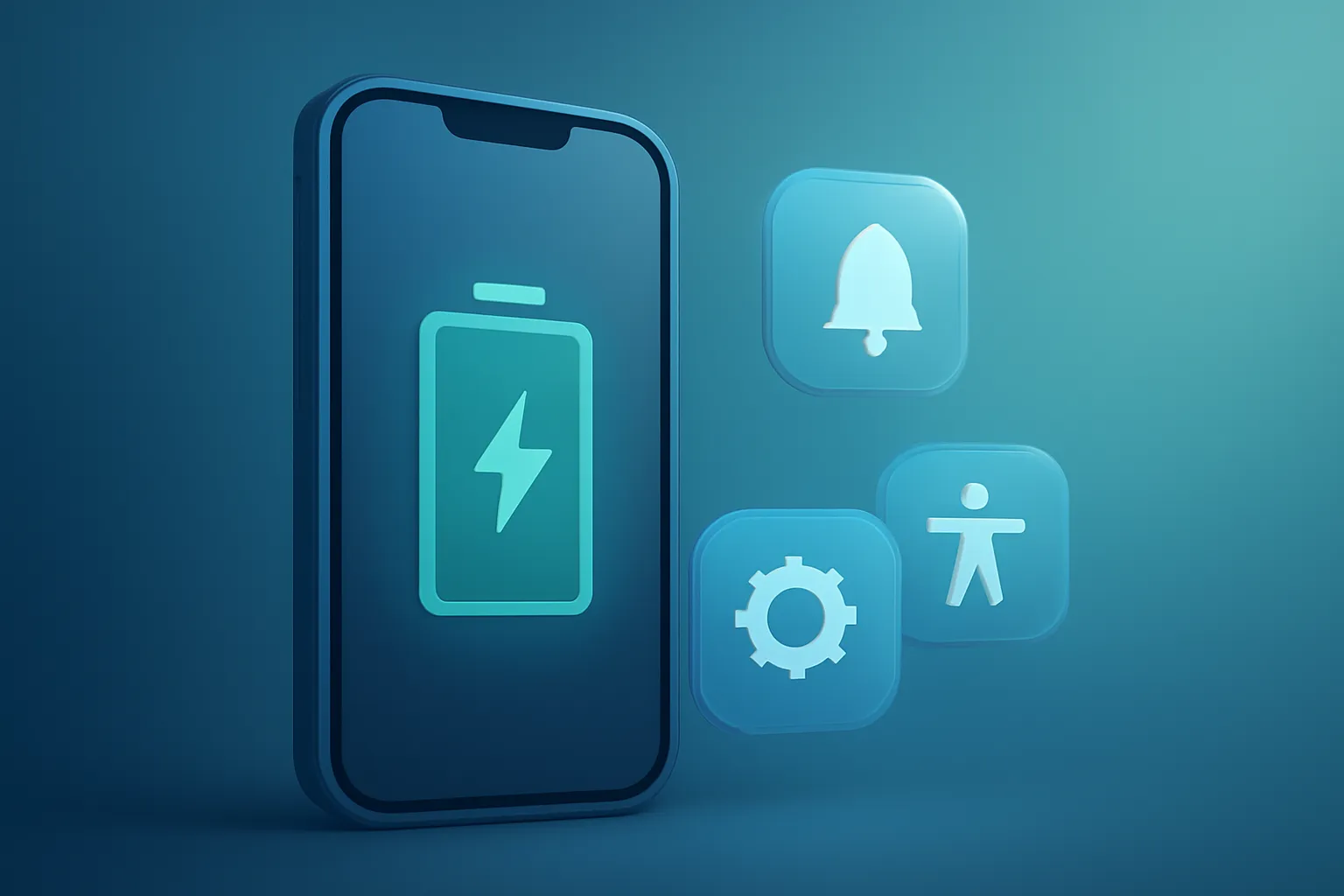
There are updates measured by a list of new features and others assessed by what they stop happening: less battery anxiety, fewer interruptions, fewer steps to achieve the same thing. This is where iOS 26 features sit. Rather than reinventing the interface, Apple seems to bet on automatic “micro‑decisions” by the operating system: when charging, what to show first and how to make the iPhone usable by more people, in more contexts. The result, for many users, is an iPhone that requires less manual management. For IT teams and professional users, it also means predictability: fewer complaints about battery life, fewer notifications breaking the flow and more options to tailor the device to specific needs.Technical Details
At the heart of iOS 26 features is the evolution of power management, described as adaptive. Simply put: the iPhone tries to recognise usage and charging patterns and adjusts its behaviour to reduce battery wear. This relates to a known issue with lithium‑ion batteries: keeping high charges for long periods and “unnecessary” cycles accelerates chemical degradation over time. When the system imposes charging limits (for example, stop before 100% and finish later), the goal isn’t to “give less battery”, but to reduce electrochemical stress when you don’t need maximum endurance. The key is adaptation: instead of a fixed rule, the iPhone tries to anticipate when you’ll leave the house or when you truly need a full charge. This approach relies on on‑device routine learning (a kind of machine learning: models that recognise patterns from data), which may explain why some users notice improvements sooner than others. In practice, iOS 26 features in this area can translate into two things: (1) more consistent endurance throughout the day, because the system manages peaks and habits better; (2) battery degrading more slowly, because it reduces prolonged periods at 100%. It isn’t magic: if your usage is heavy, consumption remains. The gain comes from avoiding waste and preserving battery health over months.
What changes for the user
Notifications are the other area where iOS 26 features affect daily behaviour. The promise is simple: less “rain” of alerts and more signal. This is achieved through more contextual grouping and prioritisation, that is, the system tries to bundle related notifications and highlight what appears relevant at that moment. Read this as an ergonomic shift, not just a visual one. Notifications are an interruption interface: each alert competes with what you’re doing. If iOS groups better, summarises and silences more judiciously, the benefit is cognitive: less context switching, fewer reflexive unlocks. For those who feel they spend too much time on the phone, there’s an interesting angle: reducing noise can lessen the temptation to open apps unnecessarily. If this concerns you, it’s worth cross‑referencing with the reading on excessive smartphone use,There is also an implicit privacy dimension: when the “intelligence” of notifications is performed on the device, the need to send usage patterns to servers is reduced. The exact detail depends on implementation and settings, but the principle is relevant: automatic decisions can be useful without requiring external sharing of habits.
Practical Benefits The third leg of iOS 26 features is accessibility. Here, the impact isn’t only for users with permanent needs; many of these tools help in temporary situations: driving, using the phone with one hand, noisy environments, visual fatigue or even a cracked screen. Improvements in voice controls and haptic patterns (tactile feedback) make navigation more “confirmable” without relying so much on sight. Haptic feedback is, in a sentence, vibration with meaning: it’s not just a buzz, it communicates state/action. When finely tuned, it reduces errors and speeds up repetitive tasks. Another point gaining relevance is the integration of contextual reading and recognition (for example, text captured by the camera and interpreted by the system). Even without making absolute promises, the direction is clear: the iPhone aims to describe and guide, rather than just display. For anyone wanting a quick summary of the most visible changes, this iOutlet guide on new iOS 26 featureshelps to contextualise.
Privacy Issues The more the system “learns”, the more important it is to understand what stays on the device and what may be synchronised. iOS 26 features that rely on routines (charging, silences, summaries) raise legitimate questions: what data is used, where it is processed and how automatic behaviours can be disabled when they make no sense. The practical advice is simple: validate the settings after updating. If you notice the iPhone limiting charging on days you need 100%, look for limit/optimisation options and adjust. If notification summaries hide something important, review app‑by‑app permissions and the alert delivery mode. For official instructions and terminology used by Apple, the safest source is theApple SupportNext Steps
iOS 26 features also appear designed to evolve in interim updates: energy algorithms can be fine‑tuned, grouping rules can become more consistent and accessibility options can gain greater granularity. This is typical of “systemic” features: they improve with aggregated telemetry, bug fixes and heuristic adjustments. For the user, the best way to benefit is to treat the update as a small maintenance project: update, observe for two or three days, and adjust. If you want to cut distractions more radically, complementary approaches include a “dumbphone” mode on iPhone, which pairs well with smarter notifications.
FAQ
- How do I enable or disable iOS 26 adaptive battery features?
- It depends on the model and the options shown in Battery/Charging settings. If the automatic behaviour doesn’t suit your routine, look for optimisation/charging‑limit options and adjust as needed.
- Do iOS 26 features actually improve endurance or only preserve battery health?
- Both can happen, but they aren’t guaranteed. Health preservation tends to be a medium‑term effect; daily endurance may improve if the system reduces waste and manages consumption peaks better.
- Can the “smart” notifications of iOS 26 hide important alerts?
- They can, if the setting is too aggressive. Ideally you review app‑by‑app permissions and keep critical apps (banking, authentication, work) with priority alerts and without excessive summaries.
- Do iOS 26 notification features use personal data in the cloud?
- The principle described for these improvements is to favour on‑device processing, but the detail may vary by feature and setting. For confirmation and exact steps, consult the documentation on Apple Support.
- Which accessibility improvements in iOS 26 are useful even without permanent needs?
- Voice controls, more informative haptic feedback and contextual reading/recognition tools help in situations such as driving (safely), noisy environments, visual fatigue or one‑handed use.
- What should I do right after updating to get the most out of iOS 26 features?
- Observe for 48-72 hours: endurance, charging times and notification volume. Then adjust: notification permissions per app, focus modes and charging/optimisation options to align with your routine.
Get more articles like this one.
Refurbished tech analysis + €5 with BEMVINDO5 on your first order.