
In this article
Overview
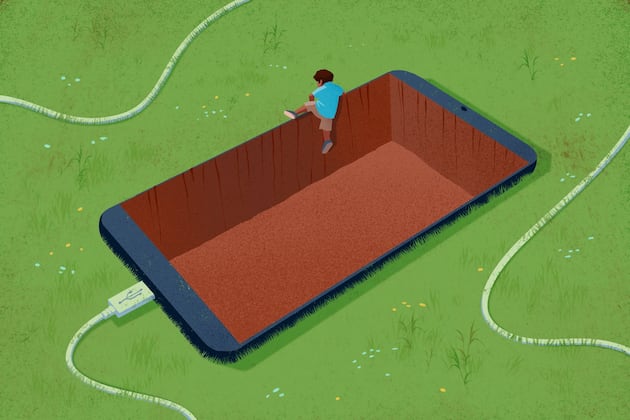
The cited study (from Reviews.org) sums up a pattern that is hard to ignore: the phone is no longer just 'a device' but has become personal infrastructure, work, messages, maps, payments, entertainment and news. In this context, the word 'addiction' appears readily in responses, even when the behaviour can be explained by convenience habits and app design. Two numbers help frame the scale: on the one hand, most adults pick up their phone within the first 10 minutes of waking up; on the other, many say they feel discomfort when leaving home without it. This describes not just psychological dependence but also a shift in social expectations (reply quickly, be available) and a transfer of tasks from the computer to the pocket.Usage Trends
The report shows clear generational differences in smartphone time: Gen Z spends the most time on their phone (4 hours and 6 minutes), while baby boomers come in at 2 hours and 8 minutes. The average figure cited for US adults is 4 hours per day. More interesting than the daily total is the 'interstitial use': the phone appears during other activities. Most admit using it while watching television and a significant portion uses it during dinner. There are also socially sensitive behaviours, such as texting someone in the same room or checking the phone on a date. The most worrying figure is use while driving, where the cost is not just 'time' but safety. The report also notes a 9% drop in the average number of times the phone is checked per day compared with the previous year. Even so, the frequency remains high. In practice, this suggests that minor improvements (fewer 'checks') do not necessarily mean less dependence, because the duration of each session may increase and notifications continue to demand attention.Limitations & Challenges
There are two levels of risk when talking about 'excessive use'. The first is clinical and behavioural: poorer sleep, anxiety over notifications and difficulty sustaining focus. The second is economic and about opportunity: time spent on screen is time not spent on rest, exercise, study or face-to-face interaction. The study text itself underlines this tension between social connection and isolation. It is also worth reading these numbers with caution. The survey was conducted with 1.000 adults in the US, with a stated margin of error of ±4% and weighted by age, gender and census region. This provides a useful snapshot, but does not turn the result into a universal law, nor does it guarantee that 'addiction' is being measured clinically. Here, 'feeling addicted' is a self-assessment, influenced by social norms and individual perceptions of control.What this means for the user
If the phone already dominates the routine, the practical question is: what to do with this information? Three areas usually have a quick impact: 1) Notifications and 'triggers': reducing interruptions is more effective than trying to 'have willpower'. Notifications are stimuli designed to capture attention; by silencing what is not essential, you lower the chance of automatic checks. 2) High-risk moments: driving, meals and the period before sleep. If the phone enters these blocks, the cost is disproportionate. Creating simple rules (for example, phone out of reach during dinner) tends to work better than vague goals. 3) Battery health and anxiety: the report mentions panic when the battery drops below 20%. This is a sign of functional dependence (needing the device) and not just emotional. Here, measures such as battery optimisation and predictable charging reduce stress. For those who want to act now, official support pages usually explain how to manage notifications, focus modes and digital wellbeing: Apple Support and Google Support.Next Steps
The same report suggests that Americans keep their phone for an average of 2,5 years, but start thinking about replacing it around 16 months. The most cited motivations are performance and battery; 'new features' matters less. This detail is relevant because it links digital behaviour to consumption: the more central the phone, the lower the tolerance for slowness, battery failures or degraded experience. In practice, this points to a future with two parallel trends. On one side, more control tools (focus modes, screen time reports, per-app limits). On the other, more pressure to keep the device 'always ready', which can accelerate repairs, battery replacements and upgrades. If the goal is to save money and reduce waste, it is worth looking at warranties and timeframes with informed attention, including policies such as warranty conditions and processing times when buying online.FAQ
- Is this 'addiction' a medical diagnosis?
- Not necessarily. In the report cited, 'feeling addicted' is a self-assessment by respondents, not a clinical diagnosis. It serves to measure perceived dependence and loss of control, but does not replace professional evaluation.
- Why does Gen Z spend more time on the smartphone?
- The study shows the difference but does not prove a single cause. It is plausible that the greater centrality of social media, messaging, short-form video and school or organisational tasks done on the phone weighs heavily, along with habits formed from an early age.
- What does 'checking the phone X times a day' mean in practice?
- It usually refers to unlocks and quick checks. Even if each check lasts only a few seconds, the impact can be large because it fragments attention and creates a cycle of interruptions throughout the day.
- How can I reduce usage without relying only on willpower?
- It works better to change the environment: cut non-essential notifications, use focus modes, remove apps from the home screen and set phone-free zones or times (meals, bedroom, driving).
- What should I do if a battery below 20% causes me anxiety?
- Treat it as a predictability problem: short charges at fixed times, battery optimisation and a backup charger in strategic places. If battery life has degraded, it may be a sign of an ageing battery.
Get more articles like this one.
Refurbished tech analysis + €5 with BEMVINDO5 on your first order.