In this article
- What Garmin sleep features measure (and why it matters)
- Nighttime stress: the chart that flags alcohol, late meals and illness
- Body Battery: an "energy reserve" for managing training, rest and sleep
- Breathing during sleep: when the rate rises and the body "alerts" early
- Sleep Coach and naps: dynamic targets instead of a fixed number
- Sleep Mode: fewer interruptions, more regularity (the detail that makes a difference)
- Limitations & challenges: what these metrics cannot guarantee
- What to do now: a simple 7‑day plan with Garmin sleep features
- FAQ
What Garmin sleep features measure (and why it matters)
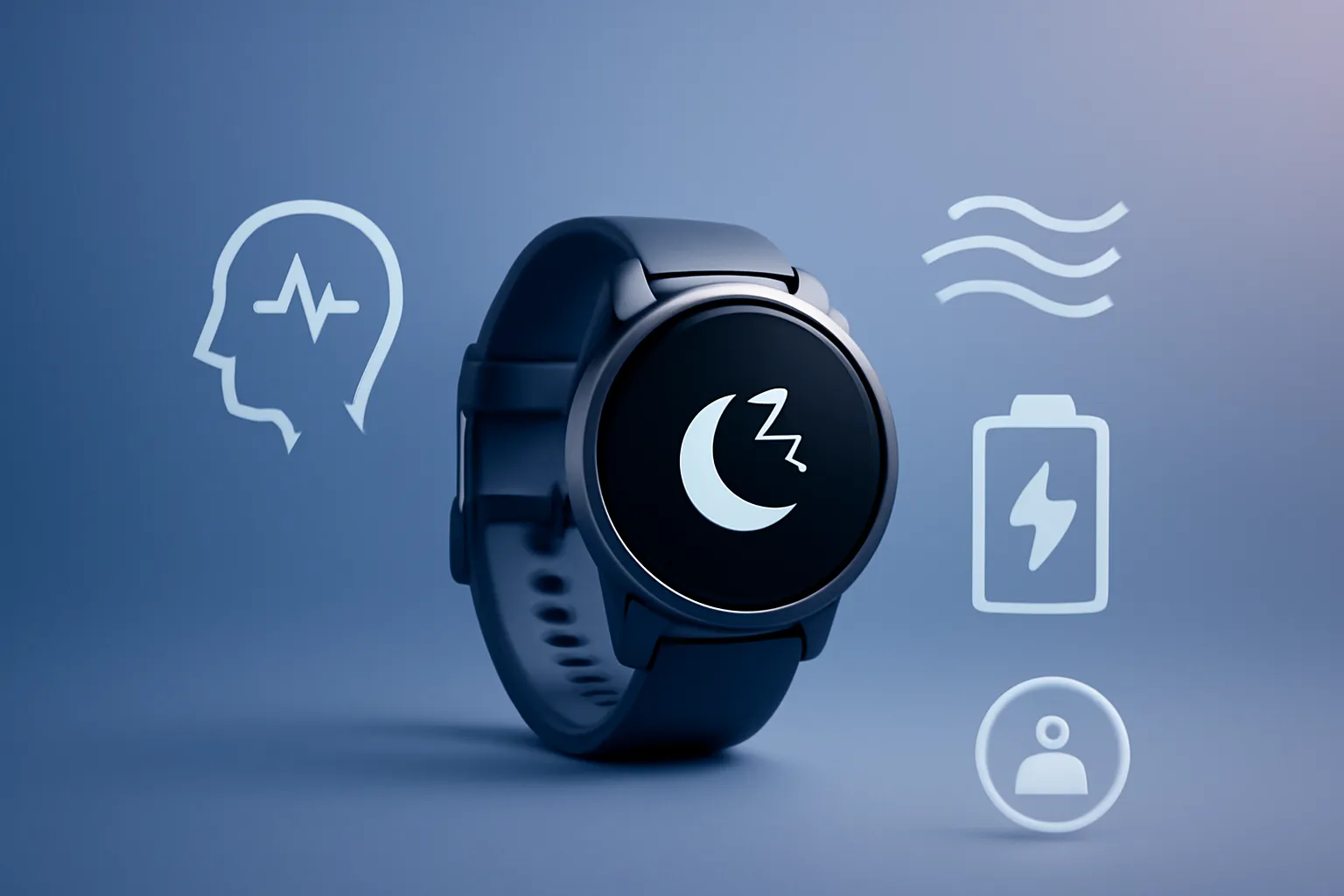
\r\nA sports smartwatch is usually used for steps, runs and workouts, but recovery is the other side of performance. Garmin sleep features combine physiological signals collected at the wrist, such as heart rate, heart-rate variability (HRV), movement and breathing patterns, to produce a practical reading of your state. HRV is the time variation between heartbeats; simply put, it is an indirect indicator of how the nervous system is handling stress and recovery.\r\n\r\nThe critical point: the overall sleep score can look good yet you still wake feeling heavy. This happens when sleep quality is affected by factors the average score does not immediately reveal, for example physiological stress during the night, late meals, alcohol, or accumulated training load. This is where these features add value: they help identify repeated patterns, not just isolated nights.\r\nNighttime stress: the chart that flags alcohol, late meals and illness
\r\nAmong Garmin sleep features, the Stress chart is one of the most useful for explaining "why I slept but didn’t recover". Ideally you see most of the night in the resting zone (low values). When high periods appear, it signals the body is working: it may be metabolising alcohol, digesting a heavy meal close to bedtime, responding to an imminent infection, or recovering from intense effort.\r\n\r\nHow to use in practice: instead of trying to "guess", cross night‑time stress with what happened earlier in the day. If the pattern repeats, you have a clear lever: eat dinner earlier, cut alcohol on hard training days, or plan a wind‑down routine (low light, fewer screens, warm shower, reading). The watch does not diagnose, but it gives you a cue to adjust behaviour.\r\nBody Battery: an "energy reserve" for managing training, rest and sleep
\r\nBody Battery is another Garmin sleep feature that is often under‑used. Think of it as a near‑real‑time energy indicator: sleep tends to "charge" it and stress/activity tends to "drain" it. The value is not magical; it is a synthesis of data such as HRV, stress and activity, presented in an easy‑to‑interpret format.\r\n\r\nWhat changes for the user: instead of deciding to train solely by calendar, you can decide by state. If you wake with a low Body Battery despite a long night, that suggests recovery was not efficient, and it may be wiser to do a light workout, mobility work, or simply walk. For regular trainers, this helps reduce the risk of accumulating "silent" fatigue.\r\nBreathing during sleep: when the rate rises and the body "alerts" early
\r\nIn Garmin sleep features, the Respiration Rate (breaths per minute during sleep) provides physiological context that many people never check. A sudden rise relative to your baseline can appear during periods of higher effort, stress, or when the body is dealing with a respiratory infection. Some models also include indicators of respiratory variations, useful for spotting patterns that deserve attention.\r\n\r\nImportant: this is not medical diagnosis. If you suspect sleep apnoea or have persistent symptoms (loud snoring, observed breathing pauses by a partner, daytime sleepiness), the correct step is to speak with a health professional. Nevertheless, as a self‑observation tool, this metric can be the "alert" you needed to stop normalising poor nights.\r\nSleep Coach and naps: dynamic targets instead of a fixed number
\r\nSome newer generations include a Sleep Coach and nap detection. Among Garmin sleep features, this is one of the most behaviour‑oriented: instead of setting a static goal (for example, 8 hours), the watch adjusts sleep need based on signals such as HRV, activity history and recorded naps.\r\n\r\nIn practice, this can avoid two common mistakes: (1) trying to compensate fatigue with "more hours" when the issue is nighttime stress; (2) sleeping too long after a nap and waking with sleep inertia (that sluggish feeling). If the watch reduces the need after a short nap, it nudges you toward consistency, and consistency usually outweighs sheer "quantity" when we talk about routine.\r\n\r\n
Sleep Mode: fewer interruptions, more regularity (the detail that makes a difference)
\r\nSleep Mode is one of the Garmin sleep features with immediate day‑to‑day impact, because it automates the watch environment during the sleep window: it reduces interruptions and adjusts settings such as backlight, notifications and, depending on the model, touch interaction. The goal is simple: lower stimuli that fragment sleep and reinforce a predictable routine.\r\n\r\nThe value here is not "sleep more", it is to sleep more regularly. If you have noticed that you wake better when you go to bed and get up at similar times, you are observing a basic sleep‑hygiene principle: the body prefers stable schedules. Sleep Mode helps protect that window, especially for those who receive late‑night notifications or have a habit of checking the watch during the night.\r\nLimitations & challenges: what these metrics cannot guarantee
\r\nEven with solid Garmin sleep features, there are limits. Wrist measurement is indirect: it infers states from physiological signals, and can be affected by strap fit, tattoos, cold skin, night movement and even the type of workout performed the day before. Moreover, a "good night" on the watch does not replace how you feel: persistent daytime sleepiness, morning headaches or frequent awakenings merit investigation outside the wearable ecosystem.\r\n\r\nThe best use is longitudinal: look at week‑long trends, not a single night. If night‑time stress rises consistently on days with late dinner, that is actionable. If breathing rises consistently after intense workouts, that provides context. If Body Battery never recovers, it may signal excessive load, chronic stress or fragmented sleep.\r\nWhat to do now: a simple 7‑day plan with Garmin sleep features
\r\nTo turn data into change, use Garmin sleep features as a small "experiment" over a week. First, enable Sleep Mode with a realistic schedule and try to keep it consistent. Then, pick one variable to test: dine earlier, cut alcohol, or lower training intensity on low‑energy days. Every morning, confirm three things: night‑time stress, Body Battery on waking and breathing (if available). After 7 days you will have a pattern, and a clear next step.\r\n\r\nIf you are comparing ecosystems, it can help to see how other watches approach health and training; in the iOutlet archive, for example, there is context in analysis of the Apple Watch Ultra 2 " and in the guide on " best Android smartwatch". For editorial transparency, the piece that inspired this topic is in the original source".\r\n\r\n
FAQ
- Do Garmin sleep features work on all models?
- Not always. Some metrics (such as respiratory variations, Sleep Coach and nap detection) may depend on the watch model and generation. If you don’t find an option, it is likely not supported on your device.
- Why do I wake tired even with a good sleep score?
- An aggregated score may not reflect physiological stress during the night, accumulated training load, alcohol, late meals or fragmented sleep. Check night‑time stress, Body Battery on waking and weekly trends to understand the pattern.
- What does it mean to have high stress while I sleep?
- It generally indicates the body is not in full rest. It may be digesting a heavy meal, metabolising alcohol, recovering from effort or reacting to the onset of illness. If it recurs, it is worth adjusting habits and monitoring the trend.
- Can Respiration Rate detect sleep apnoea?
- It can help identify suspicious patterns, but it does not diagnose. If there are signs consistent with apnoea (loud snoring, observed breathing pauses, daytime sleepiness), the correct action is to seek clinical evaluation.
- How should I use Sleep Mode to improve regularity?
- Set a realistic sleep window and try to keep it stable, including weekends. Sleep Mode reduces interruptions and helps protect that routine, especially if you receive night‑time notifications.
- Does Body Battery replace the feeling of fatigue?
- No. It is a useful indicator for managing effort and recovery, but it should be interpreted in your own context (stress, training, diet and how you feel). If the body’s signals and the watch diverge, give priority to symptoms and to a consistent pattern.
Get more articles like this one.
Refurbished tech analysis + €5 with BEMVINDO5 on your first order.