In this article
- Global overview: two philosophies for the same 'mental' price point
- Technical details: design, drivers and what that means for sound
- ANC and ambient mode: where the difference shows in daily use
- Battery life: hours in the earbuds versus hours with the case
- What to do now: choose by your profile (and reduce regrets)
- Editorial verdict (without absolutism)
- FAQ
Global overview: two philosophies for the same 'mental' price point
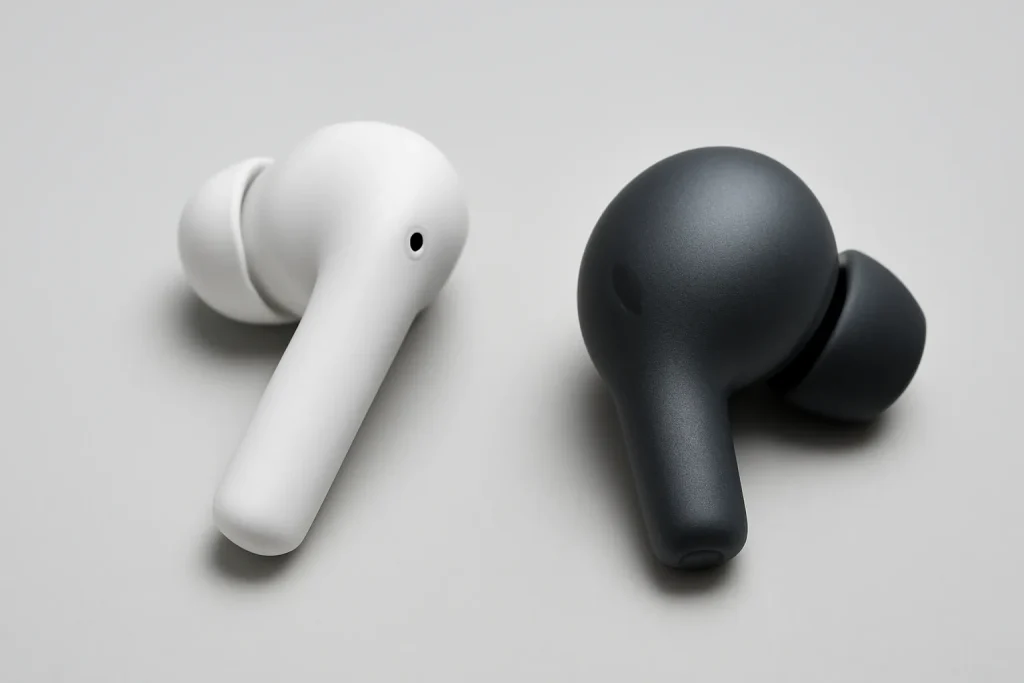
Although they sit in the same segment, OnePlus Buds 4 vs Samsung Galaxy Buds Core isn't about 'who is better at everything'. It's more useful to think in terms of user profiles. Someone who works in an open-plan office, takes the tube or bus, or takes calls in noisy places will tend to value ANC and natural ambient mode. Meanwhile, someone who works out, has sensitive ears or simply wants a more secure fit will often prefer a stemless body with wing tips. There is also an under-discussed point: comfort isn't just about 'softness'. It's about stability, breathability and weight distribution. An earbud that seals better can improve bass and ANC, but it can also increase the sensation of pressure. For that reason, the decision in OnePlus Buds 4 vs Samsung Galaxy Buds Core should rarely be made on specs alone.Technical details: design, drivers and what that means for sound
When it comes to fit, the OnePlus Buds 4 follow a stem-based design, light and common, designed to suit 'most people'. The Samsung Galaxy Buds Core opt for a more anatomical, ear-shaped body and include winged tips for extra grip, something that matters especially during running and at the gym. Here, the advantage usually goes to the Samsung pair for comfort and in-ear security. On sound, the difference is more subtle but significant. The source text attributes a more balanced profile to the OnePlus Buds 4, with better soundstage (the perceived width and separation of instruments) and cleaner mids, helping vocals and guitars sound less 'muffled'. The presence of dual drivers and dual DACs (digital-to-analogue converters, responsible for turning the signal into audio) is cited as part of the explanation for this consistency. The Samsung Galaxy Buds Core, by contrast, are described as more 'bass-heavy': strong lows that can steal some sparkle from the treble, appealing for pop and hip-hop but potentially tiring over long sessions or with acoustic music. On calls, the material indicates a practical tie: microphones with similar clarity, no standout difference. Even so, in real-world use, fit and wind can alter results significantly; this is one of those cases where 'better' depends on your ear shape and where you take calls.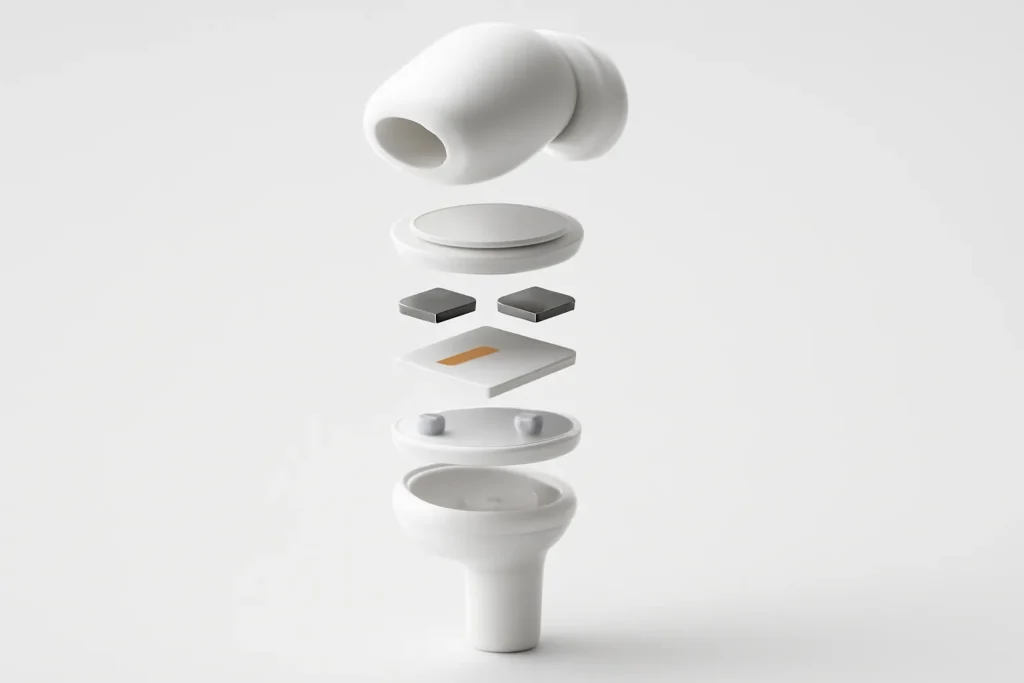
ANC and ambient mode: where the difference shows in daily use
If your goal is to reduce constant noise (engine, air conditioning, background chatter), OnePlus Buds 4 vs Samsung Galaxy Buds Core tips in OnePlus's favour. The source states that the dynamic ANC of the Buds 4 blocks more ambient noise and outperforms the Galaxy Buds Core, which fall short especially on traffic sounds. In practice, this means less need to turn up the volume, which also helps reduce listening fatigue. Ambient mode (transparency) also matters: when it sounds natural, you can hold a conversation or hear announcements without that metallic feeling. The source points to the ambient mode of the OnePlus Buds 4 as superior, which could be decisive for anyone who switches frequently between isolation and awareness of their surroundings.Battery life: hours in the earbuds versus hours with the case
In direct battery life, the Galaxy Buds Core come out ahead: up to 9 hours with ANC on and 10 hours with ANC off, while the OnePlus Buds 4 manage 7 hours with ANC and 8, 9 hours without ANC (figures from the source text). For anyone spending the day out and wanting as few charging breaks as possible, this difference can matter. With the case, the picture flips: the OnePlus Buds 4 are cited at up to 45 hours total, while the Samsung pair sit between 30 and 35 hours. In other words, if you charge the case and manage your use across a week, OnePlus Buds 4 vs Samsung Galaxy Buds Core tends to favour OnePlus on total battery. A practical note: real-world battery varies with volume, codec, ANC quality, wind during calls and even temperature. If ANC is a priority, it makes sense to choose the model that lets you listen at lower volumes without losing detail.What to do now: choose by your profile (and reduce regrets)
To decide between OnePlus Buds 4 vs Samsung Galaxy Buds Core without relying on guesswork, use this simple rule: Choose OnePlus Buds 4 if your day involves public transport, constant noise, a focus on balanced sound, and you want more effective ANC and a more convincing ambient mode. Choose Samsung Galaxy Buds Core if your recurring issue is fit, you train regularly, you prefer more present bass and you value wing tips for stability. Before finalising, check after-sales policies and decision windows, because earbuds are a product highly sensitive to comfort and hygiene. In the iOutlet ecosystem, it can be helpful to review delivery times and processing, as well as the returns and warranty conditions, to reduce risk if the fit doesn't work out.
Editorial verdict (without absolutism)
On balance, the source text gives the edge to OnePlus Buds 4 vs Samsung Galaxy Buds Core because the OnePlus pair combines better ANC, more balanced sound and greater total battery life with the case. The Samsung pair counters with a strong and often underestimated argument: comfort and grip, along with a bass signature many prefer. If you can, prioritise what cannot be 'fixed' with an equaliser: fit and ANC. For editorial transparency, the original comparison is at the original source.FAQ
- Can ANC cause a feeling of pressure? How can I minimise it?
- Yes, some people feel 'pressure' with ANC. It helps to use tips that don't over-seal, reduce the ANC level (if adjustable) and avoid high volumes to compensate for noise.
- OnePlus Buds 4 vs Samsung Galaxy Buds Core: which is better for calls on a windy street?
- The source text indicates similar microphone quality. On the street, fit and microphone orientation both have an effect; if possible, test in real wind or use just one earbud to reduce turbulence.
- Does stronger bass mean 'better' sound?
- Not necessarily. Strong bass can add impact, but it can also mask mids and treble. If you listen to vocals, podcasts or acoustic music, a more balanced profile tends to sound cleaner.
- Is ambient mode actually useful or just marketing?
- It's useful when you need to hear announcements, speak quickly or stay aware of traffic. Quality varies: a natural ambient mode reduces the artificial feeling and improves the experience.
- How can I compare battery life fairly between models?
- Compare 'hours in the earbuds' (continuous use) and 'hours with the case' (use across days). Also consider whether you will keep ANC on at all times, because that significantly changes consumption.
- What should I check on the first day to avoid regrets?
- Test comfort after 30, 60 minutes, stability while moving, ANC on constant noise (traffic or a fan) and calls in a real environment. If something fails, it's easier to act within the returns window.
Get more articles like this one.
Refurbished tech analysis + €5 with BEMVINDO5 on your first order.