In this article
- Big Picture: what's making the Samsung Galaxy S25 Ultra so hard to beat
- Architecture & Specifications: sustained performance, not just peaks
- Real-World Use: cameras, video and what changes beyond the specs sheet
- Ecosystem Integration: One UI, Android 15 and 7 years of updates
- Limitations & Buying Decisions: what to assess before upgrading
- What to do now: how to decide if the Samsung Galaxy S25 Ultra is for you
- FAQ

Big Picture: what's making the Samsung Galaxy S25 Ultra so hard to beat
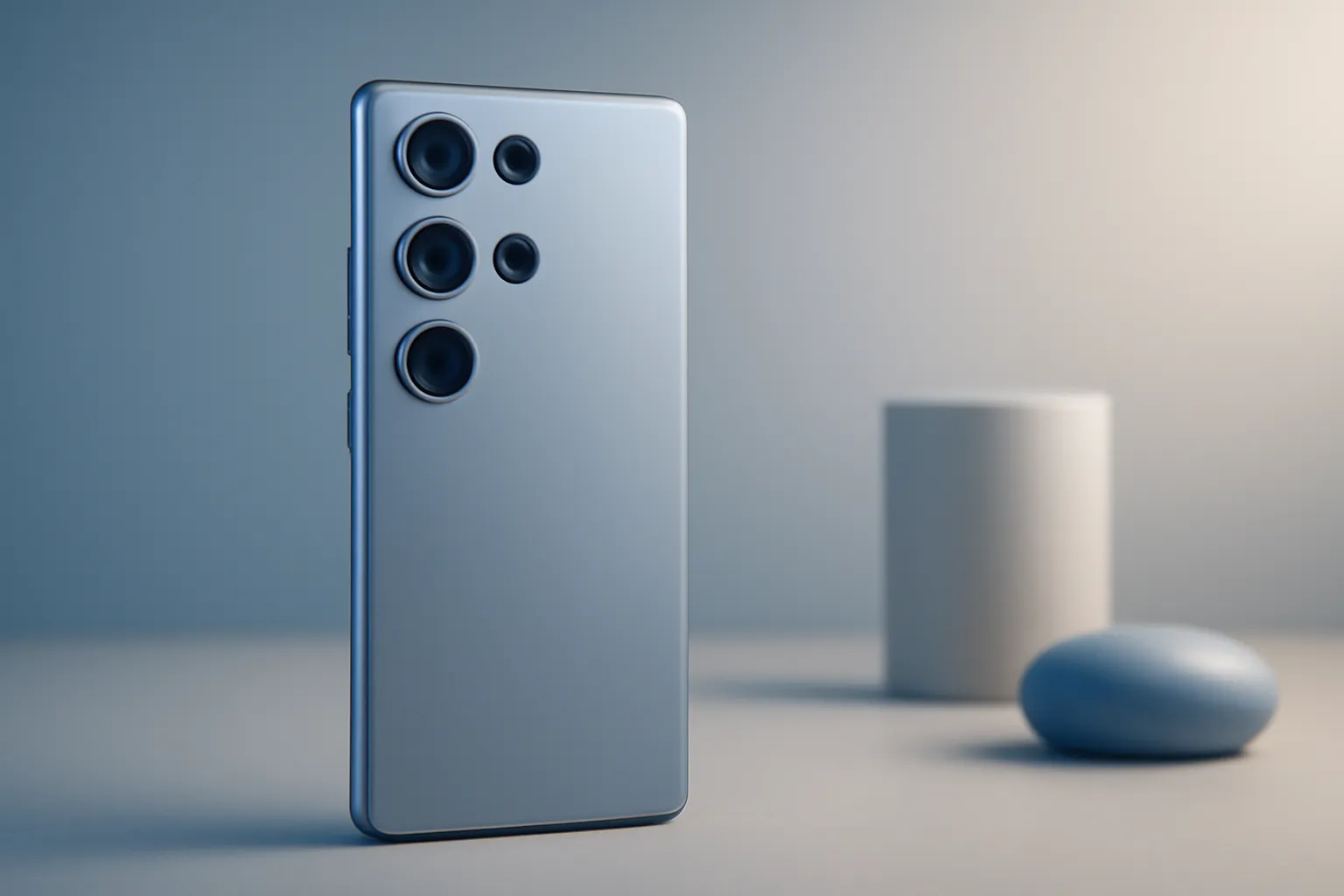
There's a reason the Samsung Galaxy S25 Ultra is being described as "polished": Samsung appears to have tackled typical pain points of large flagships. The design loses aggressive edges and gains more rounded corners, whilst keeping flat sides that aid grip. The result is straightforward to explain: less fatigue during long sessions and less of a "brick" feeling when pulling it from your pocket. The 6.9-inch display remains large, but slim bezels help it not feel disproportionate. The anti-reflective coating (an optical treatment on the glass that reduces direct reflections) is the kind of improvement you only truly value when using the phone outdoors: less glare, better readability and colours that stay vibrant without pushing brightness as hard. There's also a detail that matters to those who use cases and styluses: the integrated S Pen keeps the "Ultra" productivity DNA. It's not a niche accessory; it's a tool that changes how you capture ideas, sign documents or mark up screenshots with precision.Architecture & Specifications: sustained performance, not just peaks
The Samsung Galaxy S25 Ultra uses a customised version of the Qualcomm Snapdragon 8 Elite, paired with 12 GB of RAM. In practice, this translates to quick boots, fluid app switching and gaming with fewer stutters when the system is under load. The crucial nuance is "sustained": it's not enough to be fast for 30 seconds; what matters is maintaining that pace without heating up and without losing performance after a few minutes. The source text points to a more effective cooling system, which is relevant for two reasons. First, it improves consistency under heavy workloads (gaming, video editing, heavy browsing). Second, it helps preserve the experience over time, because less heat typically means less thermal throttling – that's the automatic performance reduction to manage temperature. For battery life, the 5000 mAh battery is described as sufficient for an intense day and often stretching into the next. As always, this depends on your usage profile (5G, high brightness, camera, gaming), but the combination of chipset efficiency and thermal management is usually what separates "lasts a day" from "lasts a day without anxiety".
Real-World Use: cameras, video and what changes beyond the specs sheet
The Samsung Galaxy S25 Ultra continues to bet on a "toolkit" approach to photography. The 200 MP main sensor is primarily for capturing more detail and allowing high-quality crops, but the most interesting gain may lie in the 50 MP ultra-wide, described as better in low light than its predecessor. In photography, the ultra-wide is often the weak link at night; when it improves, it improves a type of image people actually use on trips and indoors. The two telephoto lenses maintain zoom flexibility, with clean images at high magnifications – a critical point for those photographing events, children, animals or distant details. On video, the reference to log profiles (a format that records with flatter gamma to allow colour grading) is a clear sign of ambition: it's not just for "point and shoot", it's for those who want to edit properly. There's also a promise of strong night and portrait results, with more faithful skin tones. Here it's wise to keep expectations realistic: computational photography can vary with mixed lighting and motion. Still, when a phone improves in consistency – fewer "failed" shots – that's worth more than an occasional peak in quality.Ecosystem Integration: One UI, Android 15 and 7 years of updates
The software runs One UI on top of Android 15 and, according to the source information, should receive updates for seven years. For the average user, this means two things: longer with security patches and a longer lifespan without being stuck on old versions. For businesses and professionals, it reduces the risk of rapid obsolescence and makes device standardisation easier. The "daily helpers" mentioned (notification summaries and suggestions based on behaviour) point to a contextual assistant layer. In practical terms, the value lies in reducing friction: less time searching for information, more useful automation. Still, it's wise to review permissions and notifications, because these features depend on access to usage data. Being a Samsung, connection with watches and tablets tends to be straightforward, especially for those already in the ecosystem. If you're considering alternatives, it might help to compare philosophies: Samsung bets on productivity and versatility; other brands may favour closed integration or computational photography with a specific "look". On iOutlet's blog, it's worth cross-referencing this with the context of the future of smartphones and the analysis of competitors like the Xiaomi 15T Pro.Limitations & Buying Decisions: what to assess before upgrading
The Samsung Galaxy S25 Ultra appears to have solved several design "niggles", but it remains a large phone. If you use it heavily one-handed, comfort has improved, but the size remains. It's also worth thinking about your actual zoom usage: if you rarely go beyond 2x–3x, some of the telephoto's value may go unused. Another point is the expectation created by terms like "benchmarks" and "sustained performance". Even when a model leads in tests, the perceptible difference in daily use can be small if you're mainly using social media, messaging and casual photography. The purchase makes more sense when there's a clear reason: video editing, demanding games, S Pen work, or needing a long update cycle. If your priority is readability in sunlight, there's a specific angle that deserves attention: the combination of brightness and anti-reflective coating. iOutlet has already explored this angle in screen reflections, useful for those spending much time outdoors.
What to do now: how to decide if the Samsung Galaxy S25 Ultra is for you
To decide with a clear head, start by mapping three routines: (1) how much time you spend outdoors (screen), (2) how often you use zoom and video (camera), (3) whether you want a phone to keep for many years (updates). If these three points are central, the Samsung Galaxy S25 Ultra fits as a long-term "primary phone". If the purchase depends on after-sales policies, confirm timelines and terms before finalising. In iOutlet's editorial context, it's helpful to have to hand the pages on warranty terms and returns policy. For transparency about the source of this adapted analysis, here's the reference to the original source.FAQ
- Is the Samsung Galaxy S25 Ultra too large for daily use?
- It's a large model, but the design with rounded corners and flat sides tends to improve ergonomics. If you frequently use it one-handed, size remains the deciding factor.
- What does "sustained performance" mean on the Samsung Galaxy S25 Ultra?
- It's the ability to maintain high performance for several minutes without overheating. It depends on internal cooling and how the system avoids thermal throttling.
- Do the 200 MP make a difference in photos?
- They make more sense for detail and cropping than for "megapixels in themselves". Real gains usually appear when you want to crop the image whilst maintaining sharpness, or in good lighting conditions.
- Does the 50 MP ultra-wide actually improve at night?
- According to the source text, yes, especially in low light versus the previous year. In practice, results vary with motion and mixed lighting, but a stronger ultra-wide reduces failed shots indoors.
- Who benefits from log profiles in video?
- For those who edit video and want more colour control. "Log" records a flatter image to allow later colour grading, bringing the workflow closer to dedicated cameras.
- Do seven years of updates change the value of the Samsung Galaxy S25 Ultra?
- Yes, because they extend lifespan with security patches and new system versions. For those keeping the phone for several years, that weighs as much as the camera or processor.
Get more articles like this one.
Refurbished tech analysis + €5 with BEMVINDO5 on your first order.