In this article
- Overall view: why "OLED" is no longer just luxury
- Architecture & Specifications: what matters in an OLED screen (and what can mislead)
- The 5 highlighted models (and who they're for)
- HP Spectre x360 14: versatility for hybrid work
- ASUS ROG Zephyrus G14: OLED focused on performance and smoothness
- Dell Inspiron 14 Plus: OLED for creators on a controlled budget
- Lenovo Yoga Slim 7: focus on colour, HDR and mobility
- ASUS Vivobook 15 OLED: entry point for OLED at 15.6"
- Limitations & Challenges: what you should confirm before buying
- What changes for the user: quick recommendations by profile
- Next Steps: how to decide without falling for marketing
- FAQ
Overall view: why "OLED" is no longer just luxury
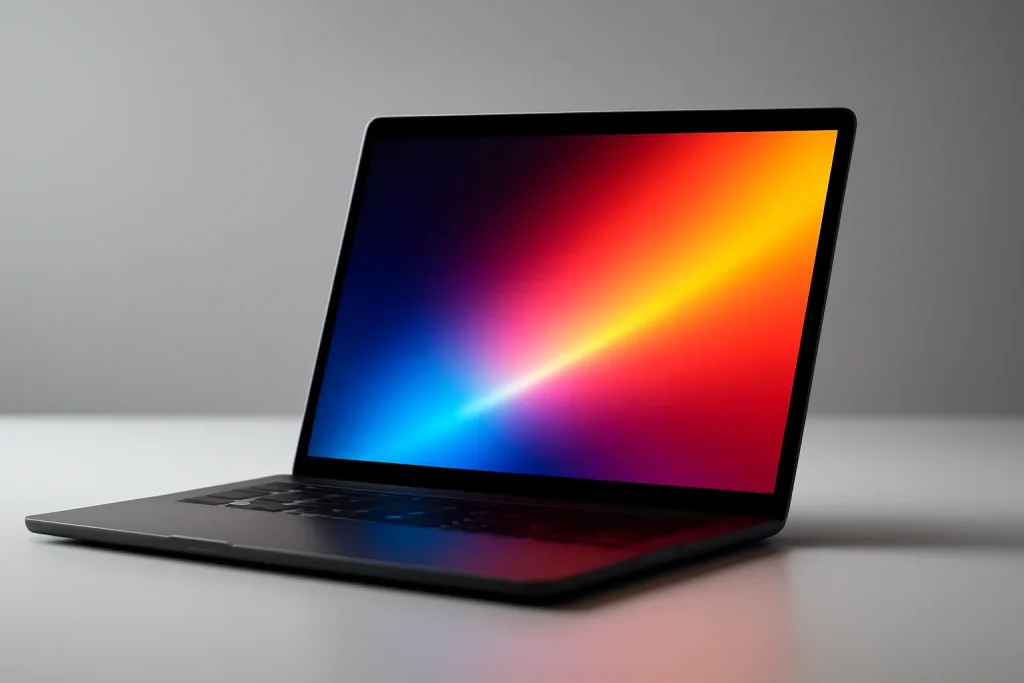
For years, OLED in laptops was synonymous with top-of-the-range. In 2026, it already appears in more accessible lines, maintaining the central promise: high contrast and "true" blacks (when a pixel is switched off, it emits no light). This improves dark scenes, dark mode interfaces and HDR content, and can make text sharper against dark backgrounds. At the same time, "OLED" is not a magic stamp. There are significant differences between panels: resolution, refresh rate, factory calibration, colour space coverage (such as DCI‑P3) and HDR certifications. That's why, when looking for the best OLED laptops 2026, it's better to look at the whole package (screen + performance + battery life + ports + weight) than at the word in the spec sheet.Architecture & Specifications: what matters in an OLED screen (and what can mislead)
Contrast and true blacks are the calling card. In OLED, each pixel emits its own light; in LCD, there is a backlight and filters. In practice, OLED tends to win in dark scenes and high-contrast content. Refresh rate (Hz) defines how many times per second the screen updates the image. A 120 Hz panel can provide a smoother feel in scrolling, animations and games, as long as the hardware keeps up. Brightness and HDR vary greatly. Certifications such as DisplayHDR True Black point to more consistent HDR behaviour in OLED (with deep blacks), but the real impact depends on the content and usage profile. Colour spaces: 100% DCI‑P3 coverage is relevant for creating and consuming modern video. For photography and the web, sRGB remains important; ideally, colour modes are well implemented. Burn-in risk: burn-in is permanent retention of static elements (such as bars and icons) after long periods. It is not inevitable, but it is something to manage with habits and settings (moderate brightness, hide taskbar, avoid static images for hours).
The 5 highlighted models (and who they're for)
The selection below follows the equipment mentioned in the source article, with a critical reading of each one's positioning. If your priority is to find the best OLED laptops 2026, use these profiles as a shortcut to narrow down options.HP Spectre x360 14: versatility for hybrid work
The HP Spectre x360 14 emerges as a 2-in-1 (convertible), with a 14-inch touchscreen OLED and 16:10 format, useful for productivity by offering more vertical space. The proposal is clear: alternate between laptop, "tent" mode and tablet for meetings, notes and content consumption. For those who live between documents, browsing and light creation, OLED here is both visual comfort and a presentation tool.ASUS ROG Zephyrus G14: OLED focused on performance and smoothness
The Zephyrus G14 is described as an option for gaming and creation, combining AMD Ryzen 9 CPU and dedicated NVIDIA GeForce RTX graphics, with a high-resolution OLED panel at 120 Hz. The practical takeaway: it's the type of machine where the screen is not just "pretty"; it's for gaming with smoother visual response and for video timelines with a smoother feel. In lists of best OLED laptops 2026, it's the "portable power" profile, although battery life and noise depend on power mode and load.Dell Inspiron 14 Plus: OLED for creators on a controlled budget
The Inspiron 14 Plus appears as an alternative with a 2.8K OLED screen and Intel Core Ultra processor, highlighting AI features for tasks such as video enhancement and noise reduction. The strong point is the attempt to balance colour and screen detail with a more contained price within the OLED universe. For those wanting light to moderate editing and good multimedia experience, it can be a "sweet spot": as long as the concrete configuration (RAM/SSD) is not below the software used.Lenovo Yoga Slim 7: focus on colour, HDR and mobility
The Yoga Slim 7 is presented with a 14-inch OLED panel, Dolby Vision, DisplayHDR True Black 500 certification and 100% DCI‑P3. In other words: it's a laptop designed for those who want colour consistency and better performance in HDR content. The Thunderbolt 4 reference helps those who use docks, external monitors and fast storage. For students and mobile professionals, it's an obvious candidate when looking for the best OLED laptops 2026 without entering a "gaming" segment.ASUS Vivobook 15 OLED: entry point for OLED at 15.6"
The Vivobook 15 OLED is described as a more affordable option, with a 15.6-inch FHD OLED panel and mid-range hardware. The value here is in the size and OLED experience for general work, study and entertainment. For creation, it can serve for occasional tasks, but it's worth confirming adequate memory and storage for your workflow (for example, multiple tabs, productivity apps and large files).Limitations & Challenges: what you should confirm before buying
Even among the best OLED laptops 2026, there are three checks that prevent regrets. First, brightness in very bright environments: OLED can be excellent indoors, but not all panels handle direct light the same way. Second, battery life: bright content and high brightness tend to use more power; dark mode can help, but it's not a miracle. Third, warranty and return policy: with premium screens, it's worth understanding timelines and conditions in case of faulty pixels or uniformity issues. For this, it makes sense to consult warranty conditions and return rules before deciding. It's also wise to confirm the "package" of ports (USB‑C, Thunderbolt, HDMI), especially if you work with an external monitor. And if you're buying for heavy daily use, look at the keyboard/trackpad and cooling system: OLED doesn't make up for an uncomfortable experience.What changes for the user: quick recommendations by profile
For creators (photo/video/design): prioritise colour coverage (DCI‑P3), well-defined colour modes and brightness stability. If you work with external monitors, value full Thunderbolt/USB‑C. For students and productivity: 16:10 at 14" can be more useful than 15.6" 16:9, depending on the type of tasks. In best OLED laptops 2026, "balance" is usually in weight, battery life and keyboard. For gaming: refresh rate and sustained performance matter more than maximum resolution. An OLED at 120 Hz can be excellent, but only if the GPU delivers consistent frames.
Next Steps: how to decide without falling for marketing
If you're filtering the best OLED laptops 2026, start by defining your dominant scenario (creative work, mobility, gaming, or mixed use). Then, compare three points: (1) panel features (resolution, Hz, HDR, colour spaces), (2) actual configuration (RAM and SSD, not just the CPU), and (3) post-purchase support, including delivery and processing times. For editorial transparency, the original list mentioned in this article is available on Hindustan Times. OLED can be the best "felt" upgrade in a laptop: but only when the rest of the equipment matches the screen. That's where the choice stops being a trend and becomes a smart purchase.FAQ
- Is OLED in a laptop always better than LCD?
- No. OLED tends to win on contrast and blacks, but LCD can offer more sustained brightness and sometimes better value. It depends on the panel, usage (indoors vs outdoors) and budget.
- What is burn-in and should I worry?
- Burn-in is permanent retention of static elements after long periods. In normal use, with moderate brightness and no static images for hours, the risk is reduced. Still, it's wise to activate system protections and vary content.
- For photo and video editing, which screen specification should I prioritise?
- Look for colour coverage (for example, DCI‑P3), consistent colour modes and good calibration. HDR and certifications can help with video, but system and app colour management remains decisive.
- Does a 120 Hz OLED make a difference outside of games?
- Yes, it can improve the smoothness feel in scrolling, animations and navigation. The difference is more noticeable for those who use the laptop many hours a day.
- How do you compare battery life between OLED laptops?
- Compare similar scenarios: brightness, type of content and power mode. In OLED, bright pages and high brightness tend to use more power; dark mode can improve it, but varies with the panel and software.
- What minimum RAM and SSD configuration makes sense in 2026?
- It depends on usage. For productivity and multitasking, more RAM helps; for creation, SSD influences the management of large files. Always confirm the exact configuration of the model, because the same line can have very different variants.
Get more articles like this one.
Refurbished tech analysis + €5 with BEMVINDO5 on your first order.