In this article

Global Overview
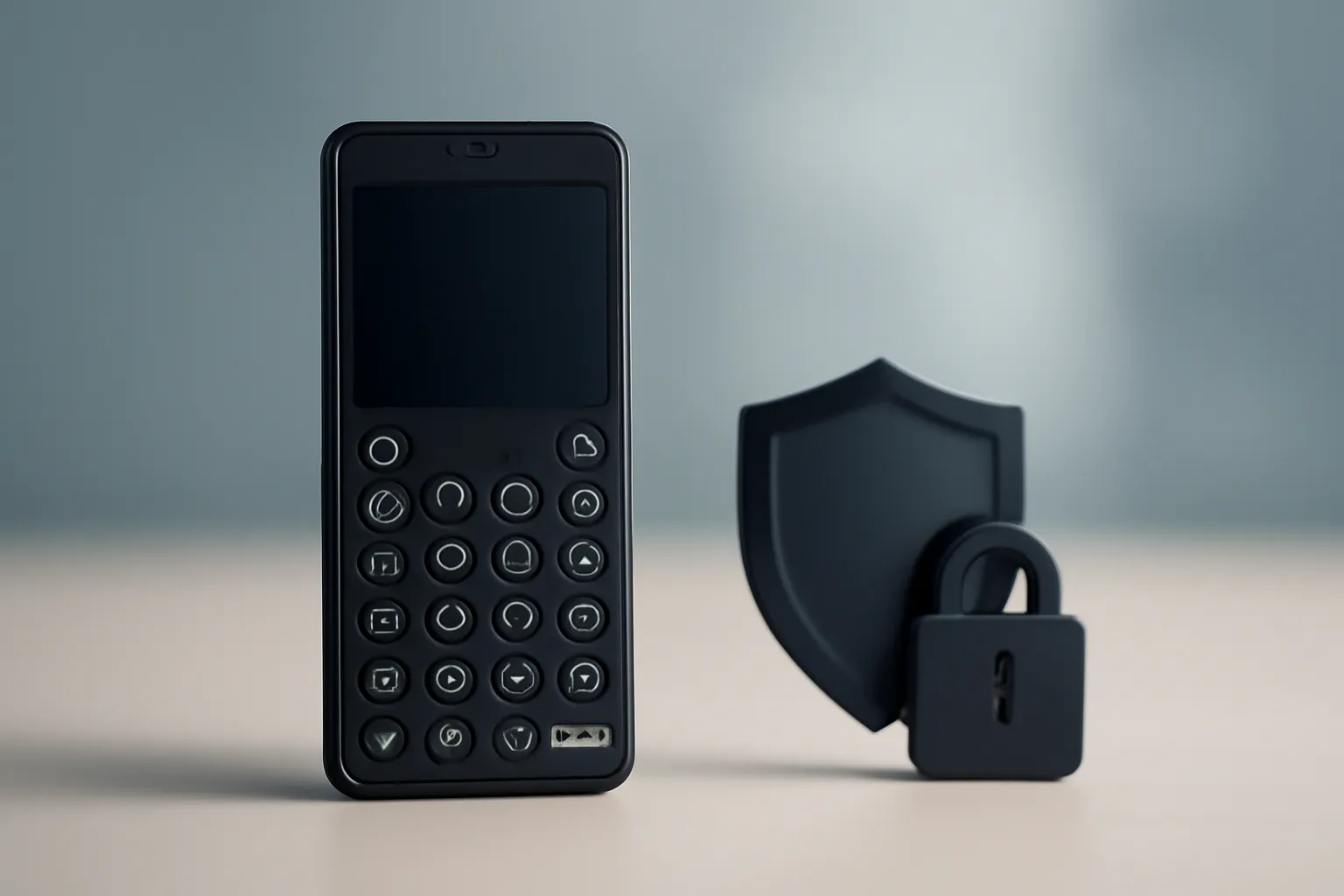
Punkt became known for minimalist phones with physical keys and small screens (MP01/MP02), designed for calls and messages, not for 'endless scrolling'. The Punkt MC03 minimalist smartphone changes the frame: it abandons the dumbphone form factor and moves closer to the typical design of a current Android phone, with a large screen and multiple cameras. This shift matters because it addresses a real hole in the market: many people want fewer distractions and more privacy, but do not want to give up a comfortable screen, water/dust resistance or a decent camera. Punkt's proposal tries to reconcile these two worlds, even if that means accepting limits on the ecosystem and a subscription model.Architecture & Specifications
In terms of hardware, what has been revealed places the MC03 in the territory of modern smartphones: an OLED screen with a 120 Hz refresh rate (useful for visual smoothness), a front camera, four rear cameras and a mention of a 64 MP sensor. There are also two details that have become rare: a removable battery and an IP68 rating (dust and water immersion resistance, under conditions defined by the manufacturer). The important point, however, is not about 'winning' a specifications race. It is about understanding the intent: the Punkt MC03 minimalist smartphone tries to offer comfort and practical longevity (replaceable battery) without falling into the logic of 'more apps, more services, more notifications'. If the execution is consistent, this could appeal to anyone wanting a primary device, rather than a second phone 'for a detox'. Since the announcement does not detail the processor, RAM, storage, update policy or real-world performance, any assessment of smoothness, photography and battery life remains, for now, in the realm of expectations. On a product that charges for software after a year, these points will carry more weight than usual.
Privacy Issues
The big differentiator is AphyOS, an operating system built by Apostrophe. Here, 'operating system' means the base software that manages permissions, apps, services and how the user interacts with the phone. The promise is a minimalist experience (list of functions and apps without flashy icons) and a focus on privacy: blocking tracking and profiling tools, reducing bloatware (unnecessary pre-installed apps) and limiting background services. There is also an idea of 'zonal separation' that the brand describes as two repositories: the 'Vault' and the 'Wild Web'. In plain language, this is a form of compartmentalisation: in the Vault are approved apps and a more controlled environment; in the Wild Web, the user installs apps more freely but under system rules and safeguards. The goal is to reduce the risk of a 'noisy' app (in terms of permissions, tracking or processes) contaminating the entire experience. A concrete example of the Vault is the inclusion of apps from Proton (Mail, Calendar, Drive, VPN and Pass). This points to a positioning: the Punkt MC03 minimalist smartphone does not want to compete with the 'everything integrated' approach of generalist platforms; it wants to offer a set of tools more aligned with privacy, with less reliance on behavioural advertising. What remains unclear, and matters to anyone serious about privacy, is the technical detail: what specific blocking mechanisms exist, how the auditing of 'approved' apps is carried out, what telemetry (if any) is collected, and what the cadence of security patches is. Without that, the promise is interesting but incomplete.Limitations & Challenges
The business model is probably the most controversial part. According to the information released, after a year it will be necessary to pay for AphyOS (with monthly options and multi-year plans). This changes how the product is evaluated: it is not just the cost of the device, but the total cost of ownership over time. In practice, the reader should ask: what happens if I do not subscribe? The source text does not describe the phone's behaviour in that scenario (loss of functionality, absence of updates, app limitations). Until official clarification, it is prudent to assume that the subscription is tied, at least, to services and security maintenance, and for a 'privacy-first' device, that is a critical point. Another challenge is the balance between minimalism and utility. An interface without icons and with fewer stimuli can be liberating, but it can also make everyday tasks slower for anyone who depends on work apps, authentication, banking or mobility. The 'Wild Web' exists to provide freedom, but the real experience will depend on how transparent the permission management is and how well the system communicates risks to the user. Finally, there is the question of positioning: the MC03 'looks like' a conventional smartphone, which may attract more people but also raises expectations. Anyone paying for a phone with a subscription will demand stability, updates and a camera that matches the marketing, and that can only be validated with independent testing.What Changes for the User
For those tired of notifications and feeds, the Punkt MC03 minimalist smartphone promises a behavioural change by design: fewer visual 'triggers', less temptation to open apps out of habit, and more control over what runs in the background. The Vault/Wild Web separation could be useful for anyone wanting to keep a cleaner 'core' of communication and productivity without completely giving up occasional apps. There is also a potential gain in predictability: fewer hidden services and fewer pre-installed apps could translate into less battery drain and less data traffic, although this remains a hypothesis until measurements and technical reports exist. At the same time, it is a product that asks for discipline: if the user installs the same distracting apps on the Wild Web as on other phones, the minimalism becomes merely aesthetic. The value lies in using the system's barriers as guardrails, not as decoration.
Next Steps
The MC03 is not yet available, with a launch indicated for spring in North America and pre-orders in Europe. Until more data emerges, there are three practical recommendations for anyone interested in the Punkt MC03 minimalist smartphone: (1) confirm in writing the update policy and what the subscription covers; (2) understand what happens after the first year without payment; (3) map out indispensable apps (banking, authentication, work) and assess whether the Vault/Wild Web model accommodates them without friction. If the main motivation is 'reducing distractions' without changing devices, it may also make sense to explore ways to simplify your current smartphone (fewer notifications, greyscale screen, focus modes and tighter permissions). And if you go ahead with the purchase, it is worth knowing the after-sales rules, such as warranty conditions, returns policy and shipping times, to decide with less risk. For editorial transparency, the source information for this announcement can be consulted at the original source.FAQ
- Is the Punkt MC03 minimalist smartphone an Android device?
- According to published information, no. The phone runs AphyOS, its own operating system focused on minimalism and privacy.
- What is AphyOS, in simple terms?
- It is the phone's operating system: it defines the interface, permissions, background services and how apps are installed and managed.
- What do 'Vault' and 'Wild Web' mean on the MC03?
- It is a separation into environments: the Vault brings together approved apps and a more controlled experience; the Wild Web allows other apps to be installed, with safeguards and privacy settings.
- What happens at the end of one year if I do not pay the subscription?
- The source text does not clarify this. Before buying, it is worth confirming with the brand whether there is a loss of updates, features or access to services.
- Is this model suitable for someone wanting a 'digital detox'?
- It can be, because it reduces visual stimuli and encourages more intentional use. Still, if you install the same apps and habits on the Wild Web, the effect may be diluted.
Get more articles like this one.
Refurbished tech analysis + €5 with BEMVINDO5 on your first order.