In this article
Historical Background
AirDrop has always been a central piece of Apple's "walled garden": a feature that, in practice, rewards those who own both an iPhone and a Mac. The idea of an Android device sending files via AirDrop therefore sounds almost counterintuitive, and explains the initial surprise when Google announced compatibility, stressing that Apple did not take part in its development. The decisive detail is that the barrier was not simply Apple's "will". AirDrop relies on a proprietary implementation of peer-to-peer Wi‑Fi connections that historically excluded non-Apple devices. What changes now is the legal context in Europe, which pushes for the opening of interfaces and connections between devices.Technical Details
Under the hood, AirDrop uses AWDL (Apple Wireless Direct Link), described as a modified version of Wi‑Fi Direct. Short definition: Wi‑Fi Direct is a peer-to-peer Wi‑Fi connection mode that does away with a router, creating a temporary direct link between two devices. In the case of AWDL, Apple adapted the concept for its ecosystem, creating a temporary network to negotiate the connection and transfer data. On the Android side, modern file sharing has converged around Quick Share. Google had already been using Wi‑Fi Aware for sharing since Android 8.0. Short definition: Wi‑Fi Aware is a proximity discovery and connection technology that lets devices "find" each other and communicate without relying on a traditional Wi‑Fi network. What Google appears to have done, according to the source text, is apply reverse engineering to the protocols needed to interoperate with AirDrop and integrate them into Quick Share. Reverse engineering here is not "piracy" in the popular sense; it is the process of understanding how a protocol works by observing behaviour and traffic, and then implementing a compatible client.Privacy Issues
Interoperability is not synonymous with inevitable risk, but it does increase the attack surface: opening peer-to-peer communication channels can expose flaws in implementation, file validation and permission management. Google says it has mitigated this through engineering choices and validation. One relevant point is the use of Rust. Short definition: Rust is a programming language that prioritises memory safety (avoiding common error classes such as invalid accesses) through rules checked at compile time. According to Google, the aim was to reduce typical vulnerabilities such as buffer overflows and other memory corruption bugs that can allow malicious code execution. Furthermore, Google says it sought to layer security mechanisms between Android and iOS (for example, validations and protections against malicious files) and hired an external firm (NetSPI) for penetration testing after internal tests. This does not eliminate risk, but it signals maturity in the process: interoperability without auditing tends to fail in the details. The most immediate limitation, however, is neither encryption nor speed: it is the AirDrop reception filter. For an iPhone to receive from an Android device, the iOS user must change AirDrop to allow reception from "Everyone". Even if iOS reverts to a more restrictive mode after a period (the text mentions 10 minutes), an exposure window exists. In crowded spaces, this can invite file spam or unwanted "contact" attempts. If you want to check or adjust settings on your device, the support documentation is usually the most reliable route: AirDrop options on iPhone and Quick Share help.Limitations and Challenges
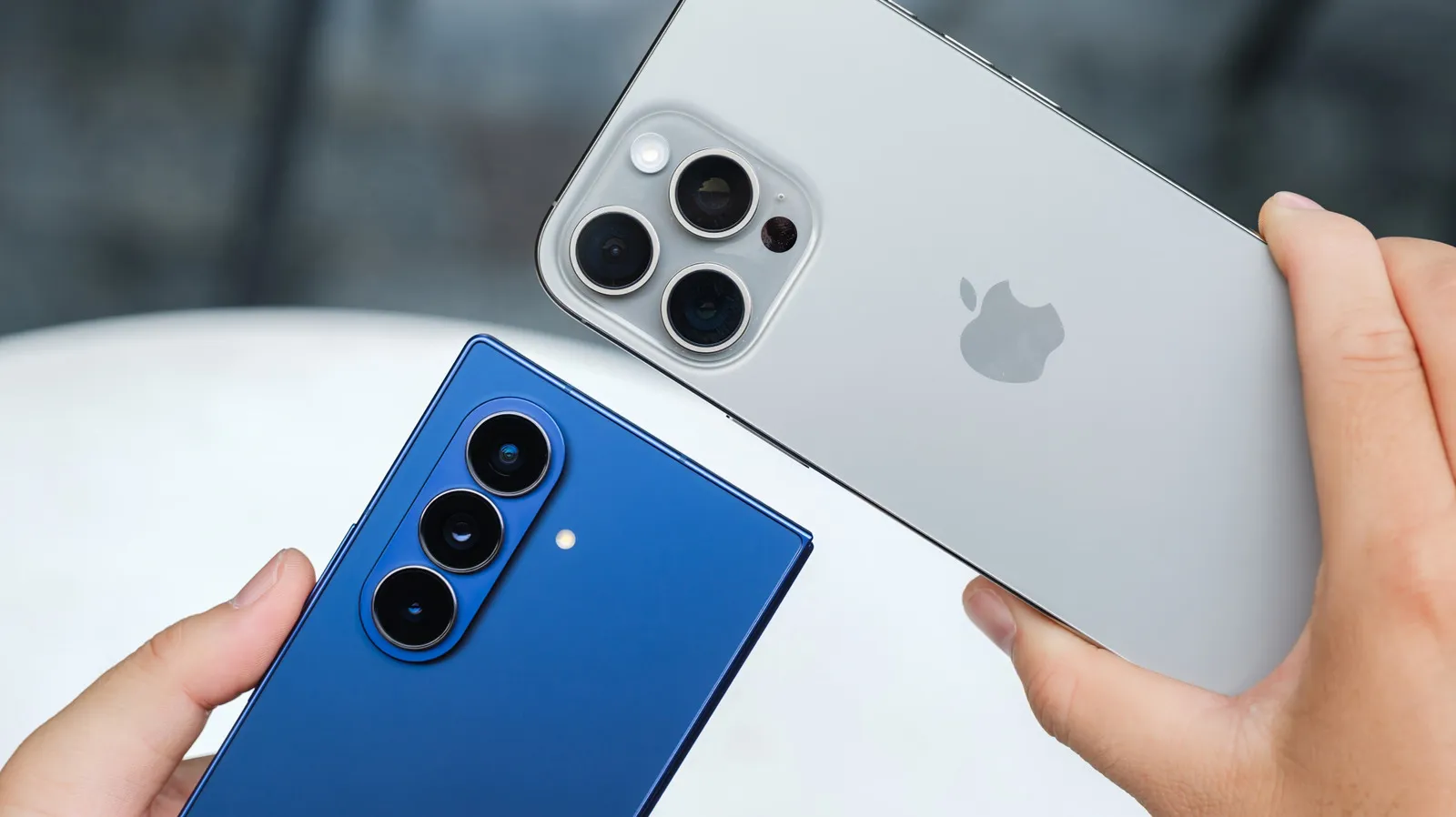
There are three practical limits to keep in mind, even assuming compatibility works well day to day. First, the rollout is partial: the text indicates a debut on the Pixel 10 series and future expansion to more devices. Until then, "Android interoperability" may, in practice, mean "Pixel interoperability". Second, the experience still does not replicate AirDrop's "Contacts Only" mode when the sender is an Android device. Google says it is open to working with Apple to make this possible, but that depends on cooperation from the other side, and Apple has a historical incentive to maintain ecosystem differentiation. Third, interoperability may vary by region and legal framework. The source text attributes the unlocking primarily to European antitrust rules; outside the EU, behaviour may not be identical, depending on how Apple applies restrictions and how Google distributes the feature.What Changes for the User
For people sharing files "in the moment", a photo at a party, a PDF in a meeting, a short video for a family member, the improvement is simple: fewer steps, fewer intermediary apps, less compression and less reliance on temporary links. In mixed ecosystems, this reduces the friction that for years pushed people towards alternative solutions. At the same time, the practical recommendation is conservative: if you are an iPhone user, avoid enabling "Everyone" in busy public spaces and switch back to a more restricted mode as soon as the transfer is complete. If you are an Android user, always check the recipient on screen and be wary of unexpected requests. Interoperability is freedom, but it also demands basic digital hygiene. For editorial transparency, the original text that served as a basis is here: article on SlashGear.FAQ
- Does this mean any Android can already use AirDrop?
- Not necessarily. The source text mentions a debut on the Pixel 10 series and an intention to expand. Until there is a wider rollout, compatibility may be limited to specific models and versions.
- Do I need to install an app to use this compatibility?
- The text indicates integration via Quick Share, which is the unified sharing solution on Android. Depending on the device, it may come pre-installed or arrive through a system or services update.
- Does AirDrop become less secure by accepting Android?
- The risk depends on the implementation. Google says it used Rust to reduce memory flaws and carried out external penetration testing. Even so, opening interoperability increases the attack surface, so good practices (confirming recipients, avoiding "Everyone" in public) still matter.
- Why do I have to enable "Everyone" on iPhone to receive from Android?
- According to the text, the limitation lies in AirDrop's filters: the "Contacts Only" mode does not (yet) work for Android senders. Google says it wants to work with Apple to support this in the future.
- Is this change global or only in Europe?
- The text frames the opening with European regulations and decisions that push for interoperability. This suggests the EU played a decisive role, but it does not confirm how the feature will be applied in all regions.
- Can Apple block this with an update?
- It is a technical possibility, but the text suggests the EU limits aggressive reactions if they are seen as a failure to meet interoperability obligations. In practice, it will all depend on the legal detail and how Apple adjusts the system."
Get more articles like this one.
Refurbished tech analysis + €5 with BEMVINDO5 on your first order.