In this article
- Global Overview: what changes in practice
- Architecture & Specifications: performance, memory and storage
- Technical Details of the display: sharpness, fluidity and formats
- Battery life and mobility: large battery vs Wi‑Fi only
- Cameras and calls: adequate, but with one important detail
- What to do now: choose without regrets
- FAQ
Global Overview: what changes in practice
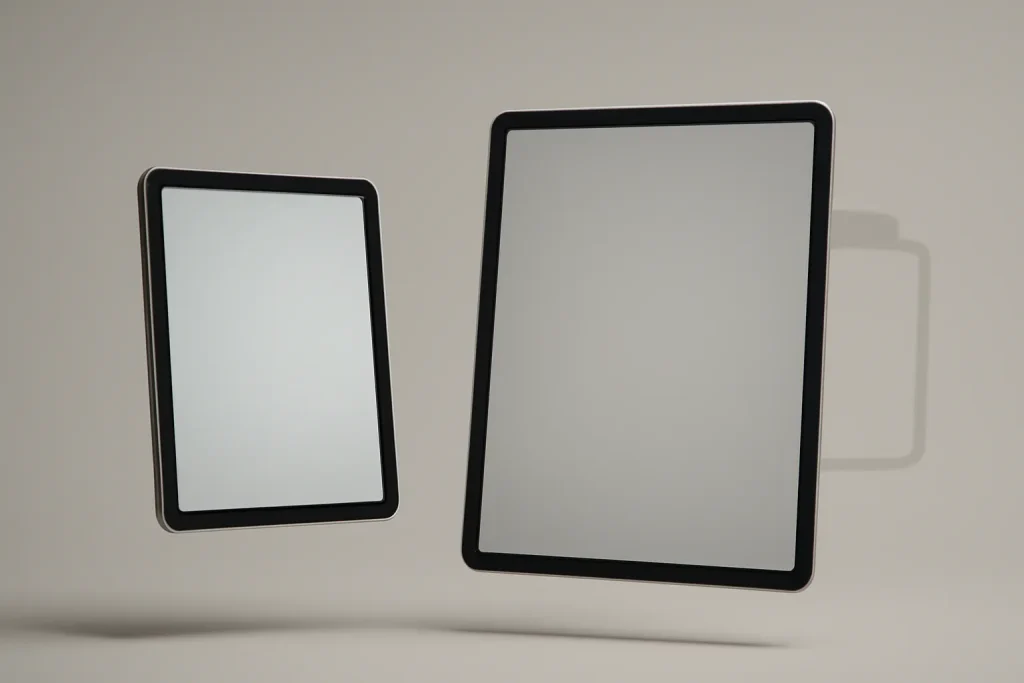
\r\nAlthough they share Xiaomi’s “DNA”, Xiaomi Pad 7 vs Redmi Pad 2 Pro is not just a matter of size. The Pad 7 is Wi‑Fi only (no SIM), whereas the Redmi Pad 2 Pro is available in both Wi‑Fi and 5G variants, which changes mobility and off‑home use. There is also a clear positioning difference: the Pad 7 aims to be the “tablet that does a bit of everything” with more headroom for multitasking; the Pad 2 Pro is more geared towards prolonged consumption (battery life) and a large display.\r\nArchitecture & Specifications: performance, memory and storage
\r\nAt the heart of the decision Xiaomi Pad 7 vs Redmi Pad 2 Pro is the processor. The Xiaomi Pad 7 uses the Qualcomm Snapdragon 7+ Gen 3, while the Redmi Pad 2 Pro relies on the Snapdragon 7s Gen 4. Without diving into benchmarks (not provided in the source), the technical takeaway is simple: the 7+ Gen 3 is presented as the option with more headroom for multitasking and gaming, and this tends to translate into greater longevity when apps become more demanding.\r\n\r\nMemory and storage reinforce this gap. The Pad 7 combines up to 12 GB of RAM LPDDR5X with UFS 4.0 storage. In short: LPDDR5X and UFS 4.0 are newer standards, usually associated with higher bandwidth and lower latency in tasks such as opening apps, switching windows and copying large files. By contrast, the Redmi Pad 2 Pro offers LPDDR4X and UFS 2.2, sufficient for everyday use and light gaming, but less “elastic” when many apps or large media libraries are open.\r\n\r\nIn practical terms, Xiaomi Pad 7 vs Redmi Pad 2 Pro splits as follows: users who run many apps (documents, a browser with many tabs, calls and notes) tend to feel more consistency on the Pad 7; those who mainly use video, reading and social media may not notice much difference, provided expectations remain realistic.\r\n\r\n
Technical Details of the display: sharpness, fluidity and formats
\r\nThe display is the second major criterion in Xiaomi Pad 7 vs Redmi Pad 2 Pro. The Xiaomi Pad 7 sports an IPS LCD panel of 11,2" with a resolution of 3.2K and 144 Hz. The Redmi Pad 2 Pro steps up to 12,1" with a resolution of 2.5K and 120 Hz. In short: the refresh rate (Hz) influences scroll smoothness and animations; resolution and pixel density affect text sharpness and fine details.\r\n\r\nThere is also an important nuance: the Pad 7 uses a 3:2 aspect ratio, taller, which usually benefits reading, navigation and productivity (less vertical scrolling in pages and documents). The Pad 2 Pro uses a 16:10 ratio, closer to video and gaming on a wide screen. In terms of brightness, the source cites up to 800 nits (HBM) on the Pad 7 and up up to 600 nits (HBM) on the Pad 2 Pro. In short: HBM (High Brightness Mode) is a high‑brightness setting to improve visibility in bright environments.\r\n\r\nThe result: Xiaomi Pad 7 vs Redmi Pad 2 Pro is a choice between “more definition and fluidity” versus “more usable area”. If your day consists of PDFs, notes and web browsing, the 3:2 of the Pad 7 can be decisive. If the focus is video and games with a wider interface, the 16:10 of the Pad 2 Pro fits better.\r\nBattery life and mobility: large battery vs Wi‑Fi only
\r\nIn terms of battery, Xiaomi Pad 7 vs Redmi Pad 2 Pro has a clear winner in capacity: 12.000 mAh on the Redmi Pad 2 Pro against 8.850 mAh on the Xiaomi Pad 7. The source points to over 15 hours of use on the Pad 2 Pro and 8, 10 hours on the Pad 7 (figures depend on brightness, network, apps and refresh rate). Even without extrapolation, the message is clear: if you want long sessions away from a socket, the Pad 2 Pro offers more headroom.\r\n\r\nMobility isn’t just about battery. The Pad 7 being Wi‑Fi only means relying on a hotspot or public Wi‑Fi when you’re out of the house. Conversely, the availability of a 5G version on the Pad 2 Pro can be decisive for students, travellers or anyone who wants a “always‑on” tablet without sharing mobile data.\r\nCameras and calls: adequate, but with one important detail
\r\nNeither device was designed for photography, which is typical for tablets. Still, Xiaomi Pad 7 vs Redmi Pad 2 Pro shows a useful difference: the Pad 7 includes a rear camera of 13 MP capable of recording up to 4K at 30 fps, whereas the Pad 2 Pro has 8 MP on the rear and can record up to 1080p at 30 fps. Both have 8 MP front‑facing cameras, sufficient for video calls, lessons and meetings.\r\n\r\nIf you frequently digitise documents or need more flexibility in video (for example, recording a presentation with greater detail), the Pad 7 scores points. If the camera is only needed for occasional calls, the advantage is less significant.\r\n\r\n
What to do now: choose without regrets
\r\nTo decide on Xiaomi Pad 7 vs Redmi Pad 2 Pro, start with three questions: (1) will you use it away from home without Wi‑Fi? If so, the 5G option of the Pad 2 Pro may carry weight. (2) will you keep many apps open and want “headroom” for the coming years? The Snapdragon 7+ Gen 3 + LPDDR5X + UFS 4.0 suite on the Pad 7 is more compelling. (3) do you prefer reading/working (3:2) or watching video on a large screen (16:10)?\r\n\r\nIf you buy for light productivity with smooth performance and want the best overall balance, the Pad 7 makes more sense. If your priority is battery life and a larger screen at the same price point, the Pad 2 Pro fits better. For additional context on the tablet landscape, it is worth cross‑referencing this analysis with iOutlet’s editorial selection in best tablets in 2025. For transparency, the comparison is based on the original source: Sportskeeda article.\r\nFAQ
- Does the 5G of the Redmi Pad 2 Pro make sense if I already have a phone with data?
- It depends on your usage pattern. If you work or study on the move, the 5G avoids needing a hotspot and can be more stable. If you’re almost always on Wi‑Fi, the benefit carries less weight.
- UFS 4.0 vs UFS 2.2 noticeable in everyday use?
- Generally, it is most noticeable when copying large files, installing or updating apps and loading them. In basic use (streaming, social media), the difference may be subtle.
- Is the 3:2 screen of the Xiaomi Pad 7 better for what?
- For reading, web browsing and documents, because it shows more content vertically. For cinema‑style video, the 16:10 of the Redmi Pad 2 Pro tends to fit better.
- Do the refresh rates (144 Hz vs 120 Hz) make a real difference?
- They mainly affect scrolling, a stylus (when supported) and animations. Between 120 and 144 Hz a difference exists, but it is less decisive than resolution, brightness and screen format.
- Which is the most “future‑proof” choice?
- Without software support numbers in the source, the best clue is the hardware: the Xiaomi Pad 7, with a stronger chipset and faster memory/storage, is likely to handle multitasking and future apps better.
- Is there a clear advantage for video calls between them?
- Both have 8 MP on the front camera, so the experience should be similar. The Xiaomi Pad 7 stands out more on the rear and can record up to 4K fps, useful for video and higher‑detail digitisation.
Get more articles like this one.
Refurbished tech analysis + €5 with BEMVINDO5 on your first order.