In this article
Historical Context
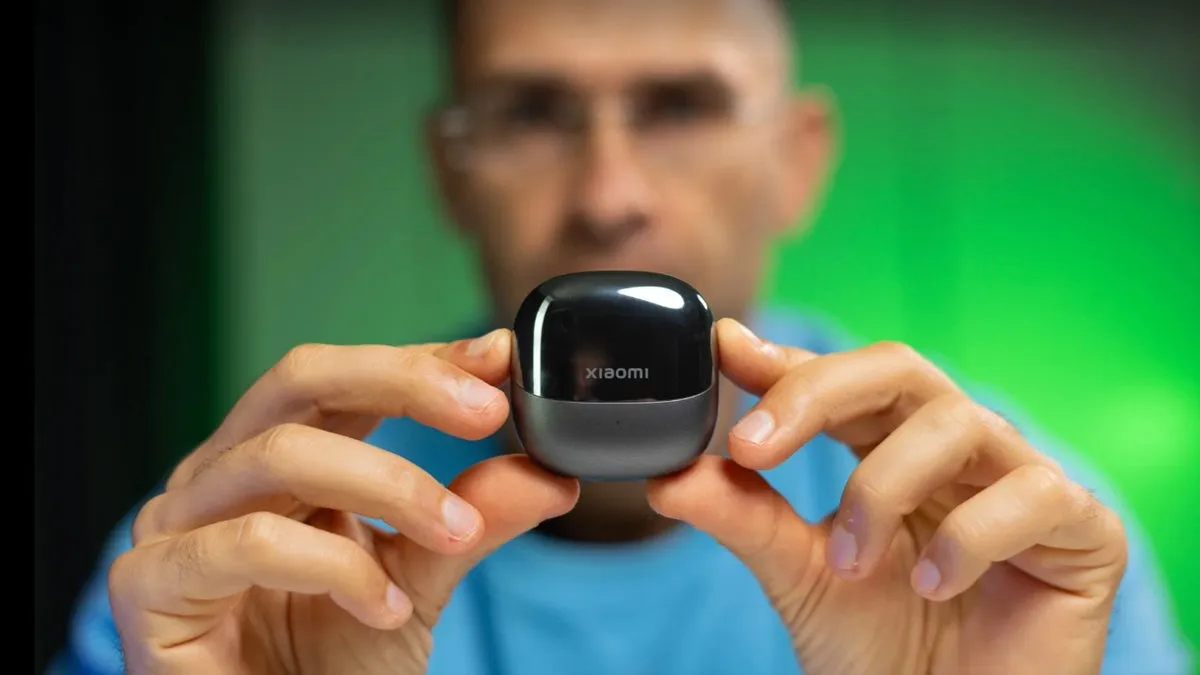
The Buds 6 arrive 'alongside' the Xiaomi 17 Ultra and are positioned as a direct evolution of the Xiaomi Buds 5 (released the previous year). The most significant change is not cosmetic: it is the ambition to push wireless audio closer to 'audiophile' territory, using better codecs and a more robust processing chain. Even so, it is worth taking the promises with a pinch of salt: battery life, ANC quality and Bluetooth stability often vary considerably with usage patterns, volume and how well the smartphone and earbuds play together.Architecture & Specifications
The headline feature is the integration of Snapdragon Sound, a Qualcomm 'badge' for a suite of audio technologies that can, on compatible devices, improve quality, latency and connection stability. Here, Xiaomi mentions support for aptX Lossless and data rates of up to 2,1 Mbps. In plain terms, aptX Lossless is a codec designed to carry audio without perceptible loss when both the source and the receiver support the same mode, but the result always depends on the phone, the operating system and the implementation. On the acoustic hardware side, Xiaomi talks about a driver with a triple-magnet unit and a diaphragm with a 24K gold-plated coating. The idea behind more magnetic force is to increase control over the diaphragm's movement, which can help deliver tighter bass and lower distortion. The use of conductive materials and a more responsive diaphragm may contribute to faster transients (percussion attacks, for example) and greater detail at low volumes. The company also claims a 30% increase in high-frequency sensitivity, a figure that, without published methodology, should be taken as an indicator of intent rather than a universal guarantee of 'more treble'.Practical Advantages
In practice, the package promises three benefits for the average user. First, more clarity in voices and instruments, especially if the Harman tuning is well executed. Second, a better experience on calls and while on the move: the Buds 6 have three microphones, adaptive ANC and AI-driven wind noise reduction, a combination that tends to be more effective than solutions relying solely on fixed filters and microphones. Third, convenience: there is smart connectivity with two devices, Bluetooth 5.4, controls via the Xiaomi Earbuds app and real-time recording (handy for quick notes, depending on the scenario and the phone's permissions). One point that is particularly relevant for iPhone users: support for Apple Find My, which lets you locate the earbuds through the Apple network, much like with compatible accessories. For many people, this lowers the 'cost' of losing an earbud in daily life. If you are unsure about what to expect from location features and privacy within the Apple ecosystem, the documentation at Apple Support usually clarifies the requirements and limitations.Limitations & Challenges
There are three areas where it is worth tempering expectations. The first is real-world battery life: Xiaomi quotes a 35 mAh battery in each earbud and 475 mAh in the case, with up to 6 hours without ANC and up to 35 hours in total. However, previous tests of the Buds 5 (cited in the original article) came in below the announced figure. In other words, the 'on the box' number is useful for comparison, but what really matters is how long a typical session lasts at moderate volume with calls and switching between codecs. The second is aptX Lossless compatibility. Even if the Buds 6 support the codec, the phone must support it too and, in some cases, the connection may negotiate a different mode for stability. The third is the very nature of the 'half in-ear' design: this form factor tends to be more comfortable for some people, but it may isolate less than models with silicone tips. That affects perceived ANC and bass response, because the seal in the ear is part of the 'acoustic system'. Finally, the IP54 rating indicates resistance to dust and splashes, but it does not mean they are suitable for submersion or intense, sweaty workouts. To reduce friction after purchase (exchanges, timelines and conditions), it is worth knowing about support policies such as warranty conditions and return policies, especially when buying audio gear that depends heavily on comfort and fit.Next Steps
According to the information available, the Xiaomi Buds 6 are currently available in China for 699 yuan, with no official timeline for a global release. Even so, there is precedent: the previous generation first launched in China and eventually made its way to other markets. For additional details and context, the source is the PhoneArena article. If you are considering waiting for the global version, it makes sense to have a checklist: your smartphone's compatibility with aptX/aptX Lossless, the importance of Find My (if you use an iPhone) and whether you prefer 'half in-ear' comfort or better isolation with tips. And when dates and local conditions do appear, also check delivery times and support, because that matters just as much as a codec in daily use.FAQ
- What does 'half in-ear' mean and how does it affect the sound?
- 'Half in-ear' describes earbuds that sit at the entrance to the ear canal without forming a full seal. They tend to be more comfortable for some users, but may isolate less and have less 'full' bass if the seal is not good.
- Will I always get aptX Lossless on the Xiaomi Buds 6?
- Not necessarily. To use aptX Lossless, the smartphone must also support the codec and the connection needs to remain stable. Otherwise, the system may switch to another mode or codec to maintain continuity.
- Is Snapdragon Sound a codec?
- No. Snapdragon Sound is a collection of technologies and requirements (including support for certain codecs and optimisations) that, when present on both sides, can improve quality, latency and stability.
- Does Apple Find My work with Android?
- Find My is an Apple network designed for iPhone, iPad and Mac users. On Android, that particular feature does not offer the same benefit; the exact behaviour depends on the implementation and pairing.
- IP54 is fine for workouts and rain?
- IP54 indicates resistance to dust and splashes, which helps in light rain and moderate sweat. It is not a rating for submersion or water jets, so you should avoid washing the earbuds or using them in heavy water.
Get more articles like this one.
Refurbished tech analysis + €5 with BEMVINDO5 on your first order.