
In this article
- Camera: when Xiaomi 17 Ultra vs vivo X300 Pro choose opposite paths
- Video and stabilisation: the test that separates the two most
- Architecture & performance: Snapdragon vs MediaTek without simplification
- Battery and 5G: capacity is not the same as autonomy
- Design, ergonomics and software: details that decide purchases
- What to do now: a choice guided by habits
- FAQ

Camera: when Xiaomi 17 Ultra vs vivo X300 Pro choose opposite paths
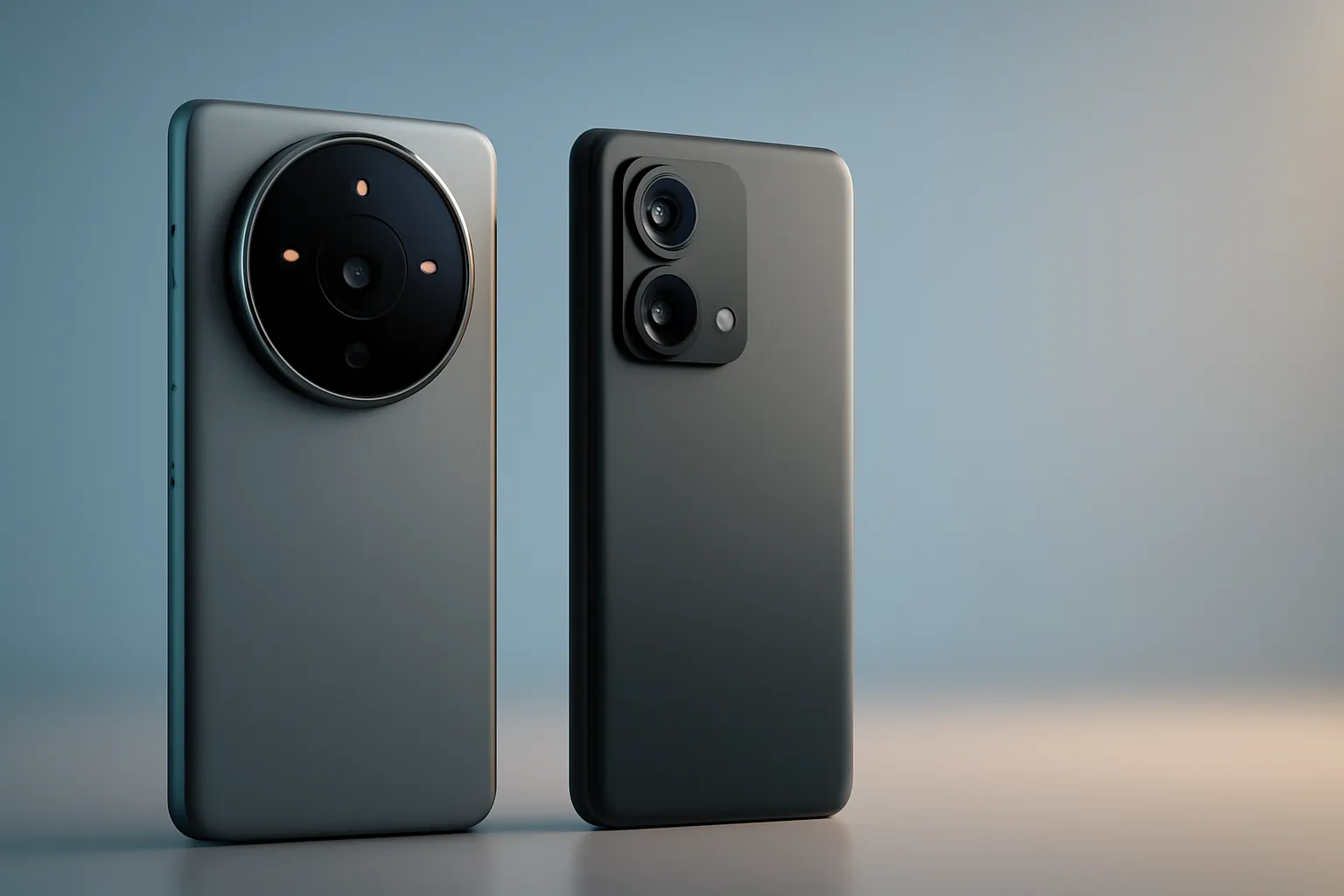
The starting point is simple: in Xiaomi 17 Ultra vs vivo X300 Pro, Xiaomi tries to win through physics and vivo through computation. A 1-inch sensor (larger capture area) tends to improve dynamic range and blur backgrounds with more naturalness. Advanced stabilisation, meanwhile, is the "safety net" for video and low-light photography, reducing shake and micro-blur without relying so much on a tripod. In practice, Xiaomi combines a large sensor with continuous optical zoom between 75–100 mm, something rare in smartphones, which can deliver real versatility in portraiture and tight framing. Vivo opts for a fixed 85 mm telephoto, compensating with stabilisation and a more "realistic" colour approach, designed for consistency across scenes. There is also an aesthetic difference: Xiaomi tends towards more vibrant tones (with a magenta bias), whilst vivo pulls towards greens and preserves shadow detail better. This is not "right" or "wrong"; it is a signature. If you edit little and want skin and vegetation closer to what you see, vivo can make it easier. If you like immediate impact and contrast, Xiaomi may please more: knowing that this does not always mean fidelity.Video and stabilisation: the test that separates the two most
In Xiaomi 17 Ultra vs vivo X300 Pro, video is where priorities become clearest. Xiaomi's larger sensor can create more cinematic bokeh (blur), especially in shots with people and distant background. The problem is that, according to the comparison, Xiaomi's stabilisation suffers when there is movement, which can degrade consistency in recordings whilst walking, running or in scenes with rapid changes. Vivo, by contrast, stands out for stabilisation: fewer "jumps", less shake and better predictability in difficult conditions, including low light and action. For those who record much handheld: travel, events, family videos, social content: this difference weighs more than a more blurred background. If your style is filming stationary, with controlled framing, Xiaomi can deliver a more dramatic look; if you film whilst moving, vivo tends to be the more pragmatic choice.Architecture & performance: Snapdragon vs MediaTek without simplification
The Xiaomi 17 Ultra uses Snapdragon 8 Gen 5 and the vivo X300 Pro turns to MediaTek Dimensity 9500. In Xiaomi 17 Ultra vs vivo X300 Pro, the video review points to Xiaomi ahead in CPU (good for multitasking, heavy apps and productivity) and vivo better in GPU (advantage in gaming and graphics tasks). Without concrete numbers, the useful idea is this: CPU helps when you switch between many apps and processes; GPU matters when the display is being "pulled" by graphics, effects and rendering. Both include cooling systems to maintain sustained performance. Here, what matters to the user is behaviour after 10–20 minutes of load: if the phone heats up and reduces performance, experience suffers. There is no throttling data in the source text, so it is worth seeking independent tests before deciding based on "raw power".
Battery and 5G: capacity is not the same as autonomy
In Xiaomi 17 Ultra vs vivo X300 Pro, Xiaomi has a larger battery (6800 mAh vs 6510 mAh), but vivo appears more efficient in 5G-intensive tasks, such as streaming, online gaming and video calls. This is an important reminder: mAh is capacity only; real autonomy depends on the modem, display, thermal management and software. Both promise a full day of use and support fast charging (with no additional details in the text). If you spend the day on 5G away from home, efficiency can be worth more than a few hundred mAh. If your use is more Wi‑Fi and photography, Xiaomi's larger battery can give extra margin, especially in long camera sessions.Design, ergonomics and software: details that decide purchases
The Xiaomi 17 Ultra has a 6.9" screen and a more striking camera module; the vivo X300 Pro sits at 6.78" and in a more discreet profile. In Xiaomi 17 Ultra vs vivo X300 Pro, this translates into two experiences: Xiaomi tends to be more "presence" in pocket and hand; vivo can be easier to handle for those who do not want a large phone. Both have IP68 certification (water and dust resistance) and include accessories such as screen protector, case and charger, which reduces cost and friction on day one. On software, Xiaomi uses HyperOS and vivo OriginOS. Vivo stands out for creative photography tools (film simulations and street modes), whilst Xiaomi bets on a "cinema mode" for video with more advanced controls. If you value photographing with a "look" ready to publish, vivo can be more immediate; if you want to control exposure and video parameters, Xiaomi can be more interesting. For editorial transparency, the original comparison is at Geeky Gadgets.
What to do now: a choice guided by habits
If your main criterion is portrait photography with zoom flexibility and a more "cinematic" look, Xiaomi 17 Ultra vs vivo X300 Pro tends to lean towards Xiaomi, especially for the 1-inch sensor and continuous optical zoom. If you film much whilst moving, want more natural colour and value 5G autonomy, vivo emerges as the more consistent choice for everyday use. Before closing the decision, do a simple test: think of three real scenarios (night, children/animals in motion, video whilst walking) and choose the phone that reduces the most risk of failing in those moments. And if you buy online, always confirm returns, delivery times and warranty conditions to avoid post-purchase surprises.FAQ
- What does "1-inch sensor" mean in a smartphone?
- It is a sensor format designation which, in general, indicates a larger capture area, helping with dynamic range and natural blur; the final result also depends on the lens and processing.
- Is continuous optical zoom (75–100 mm) really useful in everyday use?
- It can be useful for portraits and framing without losing detail as with digital zoom, but quality varies with light, stabilisation and shutter speed.
- Why does stabilisation weigh so much in the choice?
- Stabilisation (optical and/or electronic) reduces shake and improves sharpness in low light and in video whilst walking, being one of the most visible factors outside controlled scenarios.
- Stronger CPU or stronger GPU: which matters more?
- CPU tends to influence multitasking, apps and productivity; GPU weighs more in gaming, graphics effects and some editing tasks. The ideal is to cross this with your real use.
- Does more mAh guarantee more autonomy?
- No. Autonomy also depends on 5G modem efficiency, brightness and screen type, heating and operating system optimisation.
- Are colour differences (magenta vs green) "defects"?
- Not always; often they are processing choices (colour profile). If you want fidelity, seek examples of photos in various conditions and see which signature you prefer.
Get more articles like this one.
Refurbished tech analysis + €5 with BEMVINDO5 on your first order.