
In this article
Overview
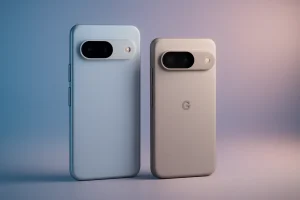
The Pixel 10 Pro stands out for its "Google-first" approach: software integration, computational photography and a Tensor G5 chip designed to balance on-device AI and efficiency. Even so, when the goal is maximum performance in benchmarks and sustained tasks (long gaming sessions, emulation, video exports), models with the Snapdragon 8 Elite tend to have the edge. Put simply: Tensor usually prioritises features and ecosystem optimisation, while the Snapdragon 8 Elite is built for "brute force" and graphics. That is why, in the list of Android phones more powerful than the Pixel 10 Pro, you mostly see flagships with that SoC and, in some cases, more aggressive cooling systems.Architecture & Specifications
Before the models, it is worth fixing three concepts that explain why these devices earn a place in the group of Android phones more powerful than the Pixel 10 Pro: SoC (System-on-a-Chip): the "brain" of the smartphone, where the CPU, GPU, modem and other blocks live. The generation and tuning of the SoC affect performance and battery life. Sustained performance: it is not just peak speed; it is the ability to maintain performance without overheating and without reducing clock speeds (thermal throttling). Cooling: vapour chambers and liquid cooling are solutions to dissipate heat. In gaming and long tasks, they can separate a flagship that is "fast out of the box" from one that stays consistently fast. With that in mind, here are four choices often cited as Android phones more powerful than the Pixel 10 Pro, based on synthetic performance and real-world use reported by market reviews (the original piece aggregates comparisons via Versus). Samsung Galaxy S25 Ultra Uses Snapdragon 8 Elite for Galaxy and focuses on power, screen and productivity. The titanium build and integrated stylus put it on a different level from the Pixel in terms of durability and workflows (notes, editing, document management). For charging, it supports 45 W wired and 15 W wireless, and the stated battery is 5.000 mAh. It is one of the Android phones more powerful than the Pixel 10 Pro for anyone who wants high performance in an "all-in-one" package, even if the software experience is not the same minimal Pixel philosophy. OnePlus 15 A big bet on battery life: the source mentions a 7.300 mAh battery and fast charging at 80 W. The Snapdragon 8 Elite Gen 5 and up to 16 GB of RAM make it especially interesting for multitasking and gaming. The 165 Hz OLED screen is an eye-catching number, but the real gain depends on app and game support. It makes the list of Android phones more powerful than the Pixel 10 Pro mostly because of the "chip + battery + charging" combination, with the caveat that the stated update policy is shorter than Google's and Samsung's. Samsung Galaxy S25 Plus Shares the same chip as the Ultra (Snapdragon 8 Elite for Galaxy) and comes with 12 GB of RAM, which is enough for top-tier performance in virtually any mobile scenario. It keeps a 120 Hz screen, 4.900 mAh battery and Wi‑Fi 7. On the camera side, the setup is competent, but the telephoto mentioned (67 mm, 3x) falls short of the optical reach of models with 5x. It is one of the Android phones more powerful than the Pixel 10 Pro for anyone who wants top performance without the Ultra's size and extras. RedMagic 11 Pro It is the most "overtly gaming" of the group: Snapdragon 8 Elite Gen 5, 7.500 mAh battery and a cooling system described as more efficient (liquid cooling) than the vapour chamber common in other flagships. It has an 144 Hz OLED screen, up to 24 GB of RAM and Wi‑Fi 7. In power and thermal consistency, it is an obvious candidate among Android phones more powerful than the Pixel 10 Pro; on the downside, the design is aggressive, cameras are not a priority and the update promise is significantly shorter.
Real-World Use Cases
What actually changes when you choose Android phones more powerful than the Pixel 10 Pro? Extended gaming sessions: the difference shows up after 15, 30 minutes. A stronger SoC and better cooling keep FPS more stable and prevent heat-related drops. Here, RedMagic tends to benefit from its thermal focus, while the Galaxy devices balance power with a more "general-purpose" profile. Heavy multitasking: switching between productivity apps, calls, browsing with many tabs and quick media editing is where CPU and RAM count. Even with less RAM than the Pixel in some versions, the Galaxy and OnePlus devices can compensate with chip performance and manufacturer optimisations. Photo/video editing on the phone: exports and intensive filters push the GPU and ISP. A top-tier Snapdragon can speed up workflows, but the Pixel remains the benchmark for computational photography. In other words, "more powerful" does not automatically mean "better camera". Battery life and charging: if your daily routine is demanding (GPS, hotspot, gaming, video), capacity and charging speed may matter more than peak performance. On that front, the OnePlus 15 and RedMagic 11 Pro qualify as Android phones more powerful than the Pixel 10 Pro with a clear focus on energy and fast refuelling.Limitations & Challenges
There are three recurring trade-offs when you look at Android phones more powerful than the Pixel 10 Pro: Updates and longevity: the source text says Google and Samsung offer seven years of updates (OS and security) on certain models, while other manufacturers promise fewer. If you plan to keep the smartphone for many years, this may be worth more than an extra 10, 15% of performance today. Software and system "cleanness": the Pixel is often praised for the most direct Android experience. With heavier or less polished skins, you may gain performance and lose consistency, or vice versa. Cameras: some performance-oriented models (especially gaming ones) treat photography as secondary. If the camera is a priority, check real samples and not just megapixels.Next Steps
If you are considering Android phones more powerful than the Pixel 10 Pro, first decide your "number one criterion": Do you want maximum performance with a premium package? The Galaxy S25 Ultra is the natural candidate, with a focus on productivity and build. Do you want battery life above all else? The OnePlus 15 (for the stated battery) or RedMagic 11 Pro (battery and cooling) may make more sense. Do you want top performance without going to the Ultra? The Galaxy S25 Plus tends to be the balance between power and form factor. For lower-risk purchases, check after-sales conditions and timeframes. In the iOutlet context, it makes sense to review warranty terms, returns policy and delivery times before deciding.
FAQ
- Is the Pixel 10 Pro "slow" compared with these models?
- No. The point is that some Android phones more powerful than the Pixel 10 Pro offer more headroom in heavy sustained tasks (long gaming sessions, exports), not that the Pixel fails for everyday use.
- What does "sustained performance" mean and why does it matter?
- It is the ability to keep speed high for several minutes without overheating and throttling. In gaming and video recording or editing, it can matter more than benchmark peak scores.
- Does more power guarantee better photos?
- No. Photo quality depends on sensors, lenses and processing. The Pixel is known for computational photography; some performance-focused models may only have competent cameras.
- Is it better to choose 7 years of updates or more performance?
- It depends on how long you plan to keep the phone. If you want to hold onto it for many years, a long update policy may be more valuable than performance gains today.
- Does a 165 Hz screen make a difference day to day?
- It does mostly in games and apps that support very high refresh rates. Many apps and content are capped at 60/90/120 Hz, so the benefit can be uneven.
- How do you compare "power" without relying only on benchmarks?
- Look at thermal stability tests, gaming performance over 20, 30 minutes, export times in editing apps and battery consumption under load. That gives you a closer picture of real-world use.
Get more articles like this one.
Refurbished tech analysis + €5 with BEMVINDO5 on your first order.