In this article
- What's really at stake in the iPhone 17 Pro vs Galaxy S25 Ultra
- Technical details: colour, contrast and bokeh (without Portrait mode)
- Real-world use cases: ultrawide and museums (difficult light, reflections and highlights)
- Zoom and Night mode: where preference turns 'technical'
- Selfies and consistency: the 'invisible factor'
- What to do now: how to choose without regret
- FAQ

What's really at stake in the iPhone 17 Pro vs Galaxy S25 Ultra
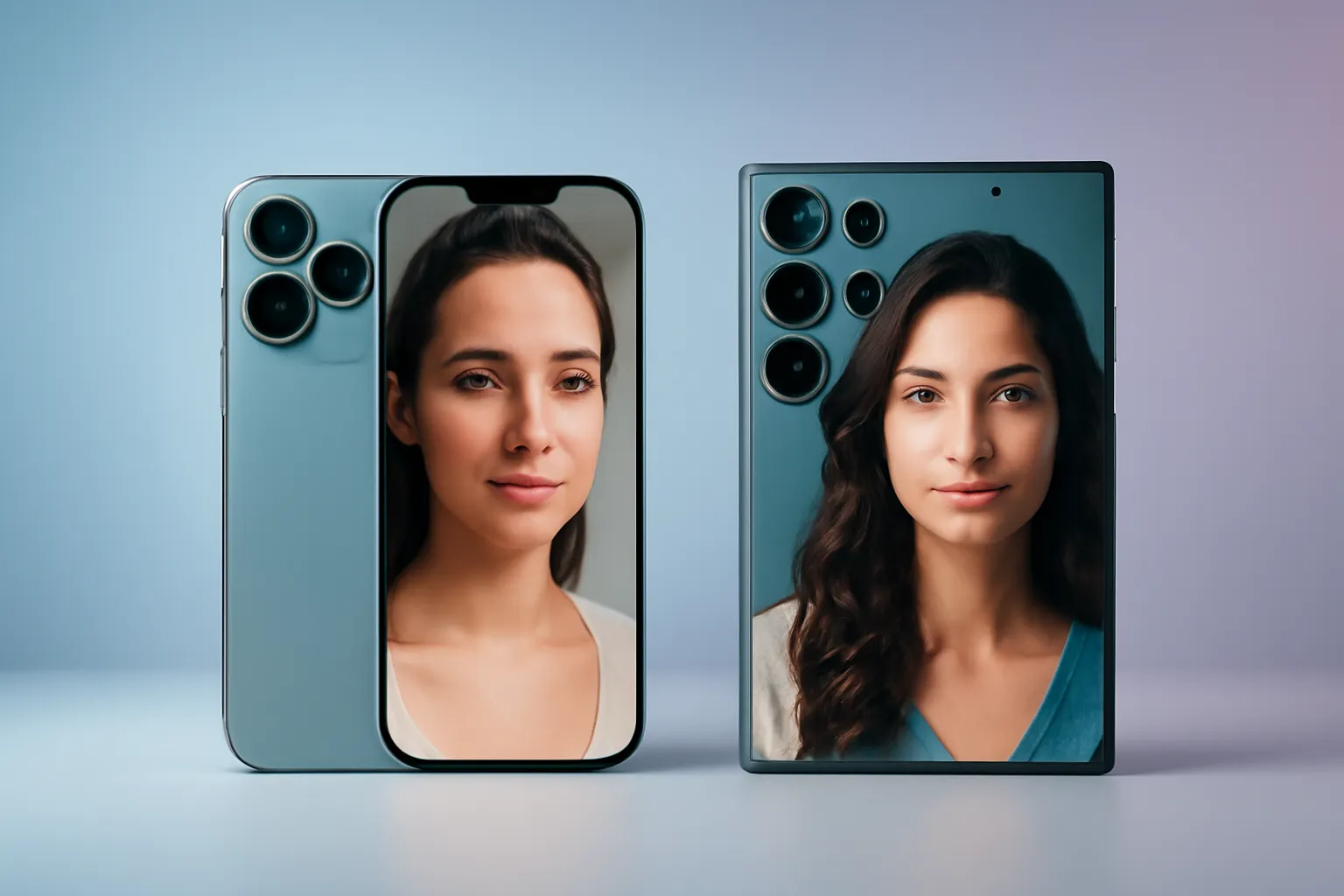
At the flagship level, the discussion is no longer 'does it have a good camera?' because both deliver strong files. The critical point is computational processing: how the software decides exposure, colour, contrast, noise reduction and sharpness. This is where the iPhone 17 Pro vs Galaxy S25 Ultra splits into two schools. When we talk about processingwe mean automatic decisions made in milliseconds. A simple example: boosting saturation and micro-contrast can give immediate impact, but it can also push the image toward a 'digital' look. A more neutral profile, on the other hand, preserves headroom for later editing (Lightroom, Snapseed), with less risk of 'burning' colours or losing subtle gradations. The original test used native camera apps and JPEG/HEIF export, resized in Lightroom without additional adjustments. This matters because it isolates default behaviour, what most people will see day to day.Technical details: colour, contrast and bokeh (without Portrait mode)
In the daylight main camera samples, the pattern repeats: the Galaxy S25 Ultra tends to deliver richer, more saturated colours, while the iPhone 17 Pro stays more restrained and often shows 'deeper' contrast. In scenes with lots of colour (boats, facades, leaves), that difference can be the line between a photo 'ready to post' and a photo 'ready to edit'. One interesting point in the comparison is optical bokeh, the natural blur created by the lens and distance to the subject, not the artificial cut-out of Portrait mode. Here, the iPhone seemed to produce more pleasing blur in some scenes, while the Samsung showed denser tones in others. It's not a clear win; it's consistency vs impact. There were also differences in fine detail on magnified crops: in certain images, the iPhone showed more clarity on edges and textures, while the Galaxy lost some detail. For sharing on messaging apps or social media, you'll probably never notice. If you print or make aggressive crops, it becomes a real criterion in the iPhone 17 Pro vs Galaxy S25 Ultra.
Real-world use cases: ultrawide and museums (difficult light, reflections and highlights)
With the ultrawide lens, the processing behaviour becomes even more apparent because these lenses suffer more from noise, distortion and dynamic range. In the test, there were situations where the iPhone's ultrawide preserved the 'punch' of contrast better, while the Galaxy tried to control reflections and highlights and ended up making the scene darker. Indoors, such as museums, where lighting is mixed and there are reflective surfaces, the difference was described as small, with variations in white balance (slight magenta on one, slightly cool on the other). This is typical: the algorithm tries to guess the 'colour' of ambient light and doesn't always get it right the same way in every frame. In practice, if you shoot indoors often, it's best to test your type of scene before assuming a winner in the iPhone 17 Pro vs Galaxy S25 Ultra.Zoom and Night mode: where preference turns 'technical'
On zoom, both have dedicated lenses and shortcuts for intermediate levels. The comparison mentions 8x on the iPhone (with 'optical quality' via processed crop from a high-resolution sensor) and 10x on the Galaxy. Translated: 'more X' doesn't always mean better; it depends on how the phone reconstructs detail and controls colour. What came up frequently was colour instability on the Galaxy's zoom in some scenes (temperature shifts and a tendency toward magenta), while the iPhone kept more consistent results, although it also sometimes showed a shift toward cooler cyan tones. In practical terms for the iPhone 17 Pro vs Galaxy S25 Ultra, this matters if you use zoom for architecture, concerts, sports or travel, where you take many shots and want predictability. At night, the game changes: the Galaxy can gain in sharpness and detail on buildings and textures, but the iPhone tends to produce cleaner files (less noise) with more pleasing colours in certain scenes. On night-time ultrawide, both fall short of what the main camera can do, a common limitation because the lens is darker and the sensor is typically smaller.Selfies and consistency: the 'invisible factor'
The test was clear on one point: the iPhone's front camera came out ahead, with better exposure, contrast, colour and detail. For anyone who lives on video calls, stories and group selfies, this weighs more than subtle differences on the rear camera. There is also the consistency factor: the feeling that 'you point and it always delivers' reduces friction. If you prefer photos that look faithful and provide a solid editing base, the iPhone tends to align with that intention. If you like more vibrant images with immediate impact and less desire to edit, the Galaxy may fit better. That is why, in the iPhone 17 Pro vs Galaxy S25 Ultra, the choice is more aesthetic than mathematical.
What to do now: how to choose without regret
Before deciding on the iPhone 17 Pro vs Galaxy S25 Ultra, run three quick tests based on your own use: (1) a scene with sky and shadows (dynamic range), (2) an indoor portrait (skin tones and noise) and (3) a zoom 5x, 10x in normal light. If possible, compare on a large screen, because on the phone almost everything looks 'great'. If you're buying online, check the policies on timings and returns so you have room to evaluate at home. In the editorial context of iOutlet, it makes sense to have the delivery times and returns and conditionspages to hand, because the best camera is the one that fits your actual workflow. For transparency, the reference comparison is in the original CNET review.FAQ
- On the iPhone 17 Pro vs Galaxy S25 Ultra, which is better for 'no-edit' photos?
- It depends on your taste: the Galaxy tends to deliver more saturated colours with immediate impact; the iPhone usually keeps a more natural look. If you want to post quickly, the Samsung may appeal; if you prefer neutrality, the iPhone is more predictable.
- Why do two photos of the same place look so different between these models?
- The main reason is computational processing (HDR, white balance, saturation and sharpness). Even with similar-quality sensors, the image 'profile' is a software choice.
- Does the Galaxy's 10x zoom always guarantee better detail than the iPhone's 8x?
- No. The zoom level is only part of the story. The final quality depends on stabilisation, available light and the detail reconstruction algorithm. In some scenes, the iPhone can seem more consistent in colour and contrast.
- What does 'optical quality' mean when the zoom is done by cropping?
- It is a term used to indicate that the phone uses a crop from a high-resolution sensor and applies processing to approximate the result of an optical zoom. It is not the same as a dedicated lens, but it can be convincing in good light.
- Which of the two is better for shooting at night?
- In the comparison, the Galaxy showed an advantage in sharpness and clarity on certain details, while the iPhone delivered more pleasing colours and, at times, less noise. If you shoot a lot of urban night scenes, it's worth testing both in your typical scenario.
- Do selfies really matter that much in the choice?
- For many people, yes: the front camera is used daily for calls, social media and group photos. In the test, the iPhone had better exposure, contrast and detail, which can outweigh subtle differences on the rear camera.
Get more articles like this one.
Refurbished tech analysis + €5 with BEMVINDO5 on your first order.