In this article
- Global View: what the adoption numbers show
- Historical Context: when a version becomes a benchmark
- Technical Details: why iOS 26.2 may 'weigh' more
- Real-World Use Cases: stability vs novelty in daily life
- What changes for the user: a practical checklist before deciding
- Next Steps: when it makes sense to switch (and when to wait)
- FAQ

Global View: what the adoption numbers show
The pattern described in web traffic analysis (via StatCounter, according to the original source) points to relatively slow adoption of iOS 26, while iOS 18 continues to account for a large share of active iPhones. The practical takeaway is simple: when an operating system 'already does everything' for the majority, the motivation to change decreases, especially if the new generation introduces interface changes and more background services. This phenomenon has an informal name in the source text: 'Version Preservation'. It is not resistance to Apple; it is risk management. In consumer technology, the cost of an update is not just the download: it is the time spent relearning workflows, tweaking settings and dealing with unexpected regressions.Historical Context: when a version becomes a benchmark
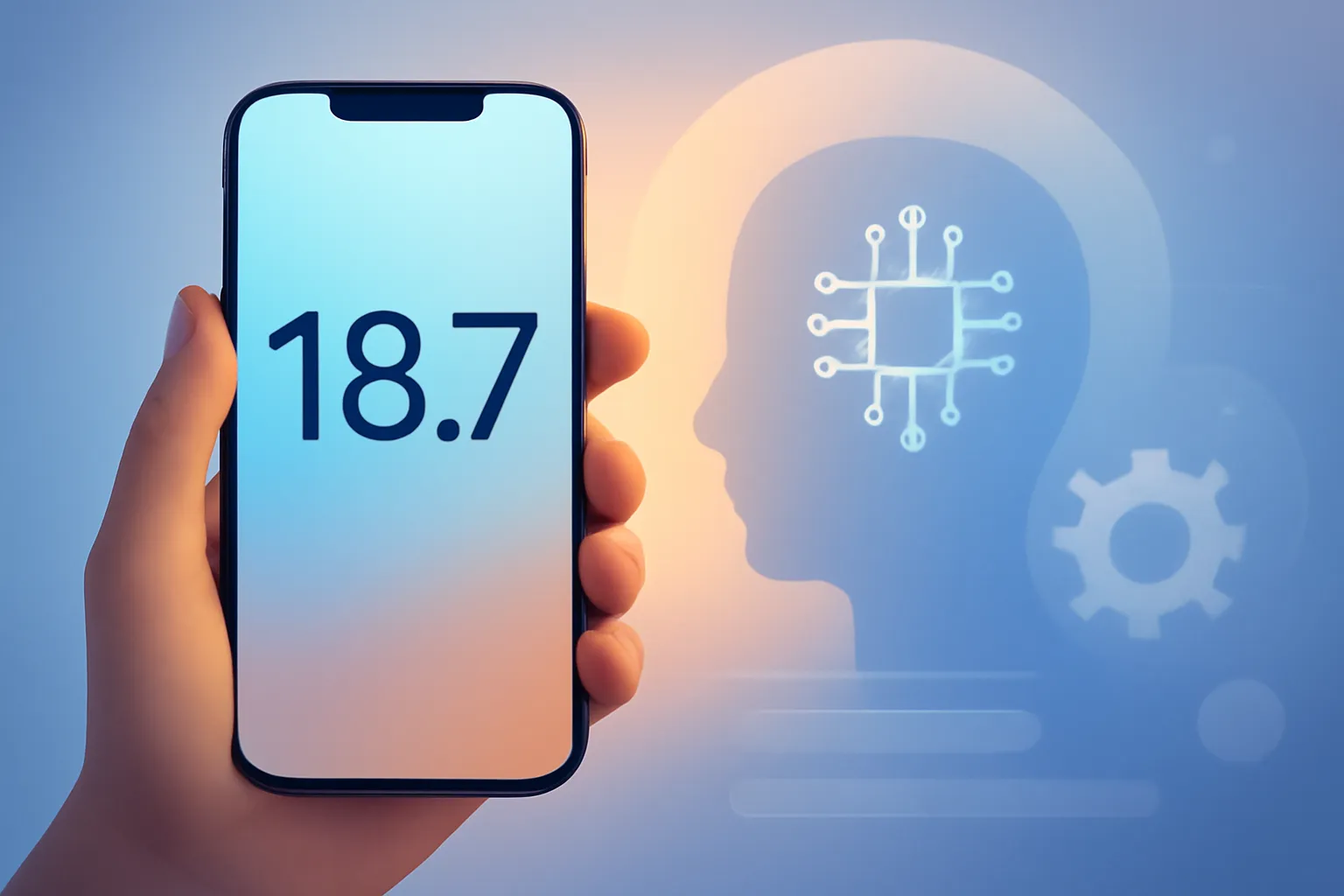
Some iOS versions, through maturity and predictability, end up becoming the 'baseline' for many users for longer. The text compares iOS 18.7 to previous cycles where a final generation release was seen as particularly stable. This pattern usually occurs when: (1) apps are already optimised, (2) power routines are fine-tuned, and (3) major changes are reserved for the next generation. In this context, staying on iOS 18.7 is, for many, a way to preserve consistency: fewer surprises in battery life, fewer changes to the look of the system and a lower chance of incompatibilities with critical apps. For users of the iPhone 14 Pro and iPhone 15 Pro (cited in the source), the feeling is that the hardware still has 'headroom' and does not need a paradigm shift to remain smooth.Technical Details: why iOS 26.2 may 'weigh' more
iOS 26 introduces two strong ideas in the source text: a visual overhaul ('Liquid Glass') and deeper integration of AI on the device. Here is a short definition: on-device AI is the processing of artificial intelligence models and tasks locally on the iPhone, rather than always relying on the cloud. This can reduce latency and increase privacy in certain scenarios, but it tends to increase computational load, memory usage and background activity. Even when the experience seems smooth in short demos, the real impact usually appears with prolonged use: more active services, more animations and more processing pipelines can translate into greater system overhead. Overhead, in this case, is the set of resources (CPU, GPU, RAM and energy) consumed by the system itself to keep features and effects running. This is why staying on iOS 18.7 can be rational for those who value predictability. It does not mean iOS 26.2 is 'worse'; it means the threshold of demand is different. If your day includes many hours of screen-on time, calls, browsing and multitasking, any variation in background consumption is felt.
Real-World Use Cases: stability vs novelty in daily life
The argument 'if it works, don't touch it' reappears in online communities because it reflects a reality: most people want a phone that fades into the background of their day, not a project in constant evolution. For that profile, staying on iOS 18.7 reduces friction: battery behaviour is better known, notifications and permissions have already been fine-tuned, and critical apps (banking, authentication, work) tend to be more tested in that environment. For those who value trying new capabilities, iOS 26.2 can make sense, especially if the AI features and new visual language are useful in your workflow. The question is measuring the real benefit: will you use these features every week, or only in the first few days?What changes for the user: a practical checklist before deciding
Before updating, it is worth treating the decision as a small audit. If your priority is reliability, staying on iOS 18.7 may be the most comfortable option for now. If you need specific security fixes or compatibility with apps that require a newer iOS, the balance shifts. Quick, pragmatic checklist: 1) Security: check whether there are active recommendations for your version and whether Apple is still providing security updates for your branch. If you are considering iOS 26.2 for security reasons, also read iOutlet's editorial context on updating to iOS 26.2 and cross-check with your needs. 2) Battery: if your battery life is already at its limit, avoid big jumps before a 'quiet' week to observe consumption and recalibration. 3) Critical apps: confirm the minimum iOS requirements for work, authentication and banking apps. 4) Space and performance: larger updates can require more temporary storage and make any battery degradation more noticeable. 5) Rollback plan: in practice, going back is not always straightforward; decide as if it were a change without 'undo'.
Next Steps: when it makes sense to switch (and when to wait)
If your iPhone is stable and your routine depends on consistency, staying on iOS 18.7 remains a defensible choice in 2026, especially while iOS 26 matures. On the other hand, if you need fixes, compatibility or specific features, updating may be unavoidable, but ideally with preparation: backup, time to adjust settings and attention to battery behaviour in the first few days. For editorial transparency, the analysis and figures cited in this piece come from the original article: original source on iOS 26.2 vs iOS 18.7. The most useful takeaway is this: updating is not a reflex; it is a risk vs return decision. And for many people, the return still does not justify it.FAQ
- is staying on iOS 18.7 safe in 2026?
- It can be, as long as Apple continues to provide security updates for that branch and your critical apps remain compatible. If your priority is security, always check the release notes and active support.
- Why might iOS 26.2 consume more battery?
- According to the framework in the source text, the deeper integration of AI on the device and a heavier visual language can increase background processes and system load. The real impact varies with the model, installed apps and usage patterns.
- How do I know whether to update now or wait?
- Update now if you need security fixes, app compatibility or features you use regularly. Wait if your iPhone is stable, you depend on predictable battery life and you have no clear benefit from the new additions.
- Is there a simple way to test iOS 26.2 without compromising daily use?
- On the iPhone, there is no practical 'dual boot'. The safest approach is to take a full backup, set aside time for adjustments and accept that reverting may not be immediate or possible, depending on firmware signing at the time.
- What should I do before updating to minimise problems?
- Back up, ensure free space, update critical apps, note important settings (notifications, accessibility, VPN) and plan the update for a period when you can monitor battery and performance for a few days.
Get more articles like this one.
Refurbished tech analysis + €5 with BEMVINDO5 on your first order.