
Global overview: what's changed in this AirPods Pro 3 review
If you were expecting a revolution, this AirPods Pro 3 review points to a well-targeted evolution. Apple has tweaked the fit, improved the seal with new ear tips and refined the acoustic package to deliver a wider soundstage, more detail and greater impact. On the noise-cancelling front, the ANC takes a perceptible leap forward, without falling into that artificial 'vacuum' feel that some rivals create. There are, however, decisions that remain divisive: the codecs are still limited to AAC and SBC (no aptX or LDAC) and the total battery life with the case has dropped. Even so, the proposition is consistent with the way Apple prioritises integration and day-to-day consistency.Architecture and specifications: the essentials, no fluff
From a technical foundation, the AirPods Pro 3 are true wireless earbuds with Bluetooth 5.3 and support for AAC and SBC codecs. 'Codec' is the method for compressing and transporting audio over Bluetooth; in practice, it defines compatibility and, in some cases, the potential for higher perceived quality. Active noise cancellation (ANC), a technology that uses microphones and processing to reduce ambient noise, is still present and, according to the tests in the source article, is more effective. Apple keeps the H2 chip, but combines new low-noise microphones, computational audio processing and revised ear tip material to improve isolation. Spatial Audio is also included, useful for creating a sense of a soundstage 'around' the user with compatible content. The stated battery life is 8 hours in the earbuds with ANC on and 24 hours total with the case. Water resistance has been upgraded to IP57 (better dust protection and resistance to short immersion), a detail that matters for workouts, rain and everyday use without worry.Comfort and fit: the change that could decide your purchase
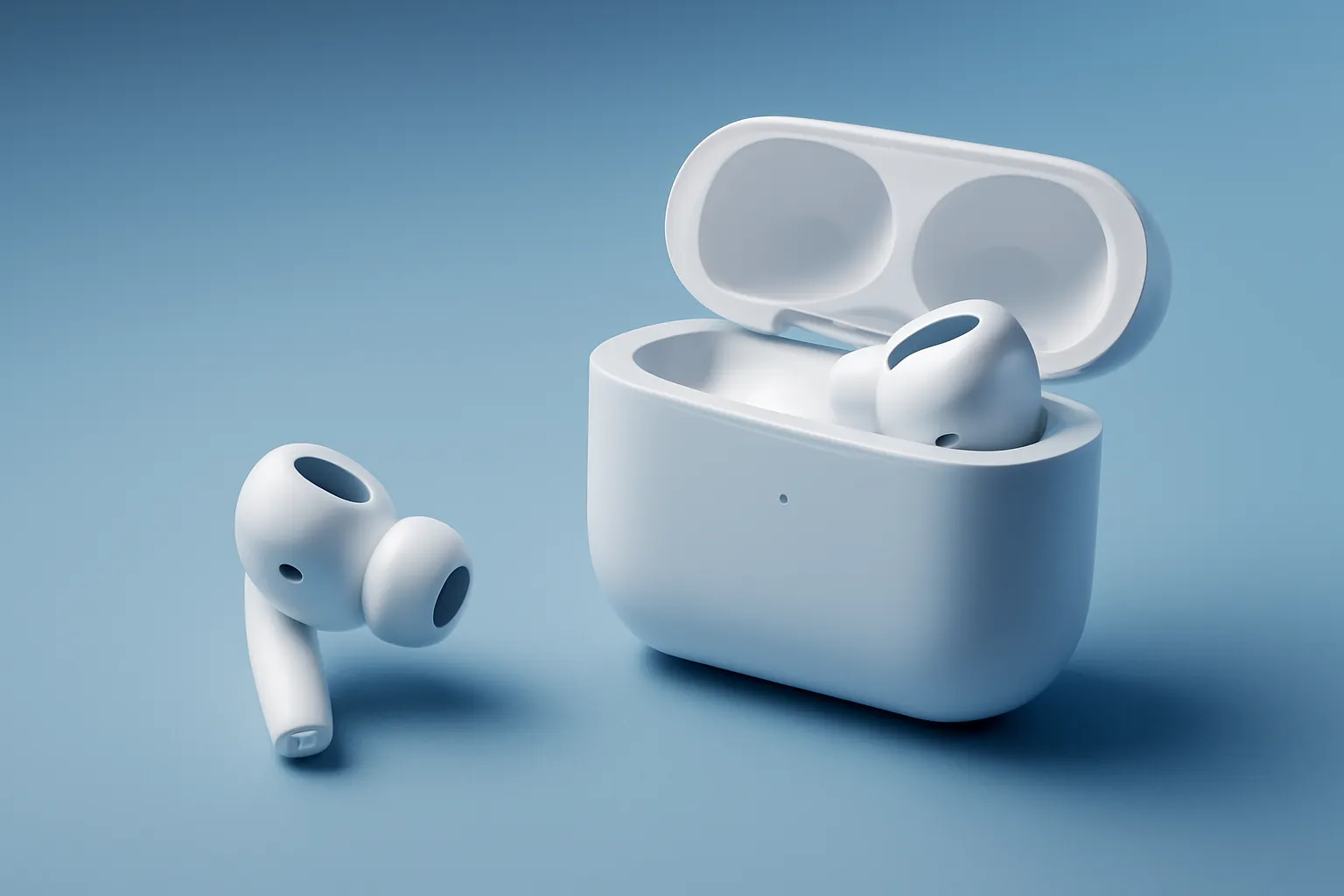
One of the most important parts of this AirPods Pro 3 review is the subtle redesign that you feel more than you see. The body is smaller, the nozzle points more directly into the ear canal and the transition zone to the stem has been redesigned. The aim is to improve compatibility with more ear shapes, but this creates an odd effect: those who loved the shallower fit of the previous generation may find the Pro 3 more prominent; those who struggled with stability before may finally get a more secure fit. The new ear tips come in five sizes and use a layer with 'microspheres infused in foam', making them thicker and firmer. Put simply: a better seal tends to mean better bass and better ANC, because less outside sound gets in passively. The practical recommendation remains the same: trying different sizes is not a fussy extra; it's the fastest way to improve sound and cancellation without touching any settings. The case includes USB-C and an Ultra Wideband chip (U2) for more precise location tracking. The lack of a physical pairing button may feel odd at first, but the process turns out to be simple with a few taps.Test results: ANC, transparency and calls
The high point of this AirPods Pro 3 review is the balance between power and naturalness. The ANC improves audibly, especially on low and mid-frequency noise (the constant drone of engines and the background hum of transport). The gain doesn't seem to come from an aggressive trick; it feels more like a clean reduction of the environment, with fewer distractions. Transparency and adaptive modes remain a strong point for Apple: instead of amplifying the outside world in a metallic way, the blend between music and ambient sound feels more organic. For anyone switching between the street, office and public transport, this cuts down the need to keep changing modes manually. On calls, the report is of clear and natural voice quality, without that processing that 'smooths out' speech too much. For hybrid work and quick calls on the move, this is a real gain, and often more important than an extra 5% of musical detail.
Sound: more space, more detail, the same Apple signature
On audio, Apple talks about a revised 'multiport acoustic architecture', with a custom driver and amplifier and more precise airflow control. Even without numbers, the described result is clear: a wider soundstage, more dynamics and better definition. 'Dynamics' is the ability to reproduce differences between quiet and loud sounds without noticeable compression; it's what gives life to drums, guitar attacks and transients. The signature remains balanced and musical, with clean and expressive vocals. The jump over the AirPods Pro 2 appears as more clarity and detail, bass with more authority and a superior sense of space. Even so, it's not presented as the most 'neutral' pair in the segment; it's a sound designed to be enjoyable and cohesive across many genres. There are two important notes for your expectations: first, the absence of hi-res codecs remains a limit for anyone wanting to maximise quality on compatible platforms and devices. Second, because iPhones also don't support those codecs, the decision may be irrelevant for most of the target audience, but it matters for users who switch to Android or value higher-bitrate formats.Competition and prices: where they fit and who they're for
The price puts the AirPods Pro 3 in the premium bracket, alongside brands that compete heavily on ANC and battery life. In this AirPods Pro 3 review, the most consistent competitive advantage is not a single 'superpower'; it's the combination of integration, reliable controls, well-tuned listening modes and a sound that has evolved without losing its identity. The strongest argument against upgrading, for those who already own AirPods Pro 2, is the similarity in features and the drop in total battery life with the case. For those coming from older generations, or for anyone who wants better ANC without giving up intuitive use on iOS, the proposition is far more convincing. If your decision depends on charging habits and accessories, it's worth reviewing how you manage power in the Apple ecosystem; for example, this guide on 3-in-1 Qi2 chargers helps you understand practical options for a desk or bedside table.What to do now: practical recommendations before buying
Before you choose, there are three quick checks that will prevent regrets. First, test the fit: the geometry has changed and comfort is personal. Second, confirm your usage pattern: if you rely heavily on the case for several days without a power socket, the drop to 24 total hours could be a factor. Third, decide if you live in iOS: the 'friction-free' experience is a central part of the value. For anyone buying online, it's also wise to be clear on the post-purchase rules. In iOutlet's editorial context, it makes sense to check the returns policy and warranty terms to reduce risk, especially when fit is a deciding factor. For transparency, the original review that served as the basis for this AirPods Pro 3 review is available at What Hi-Fi? (review).
FAQ
- Are the AirPods Pro 3 worth the upgrade from the AirPods Pro 2?
- It depends on what bothers you about the Pro 2. This AirPods Pro 3 review suggests clear improvements in sound and ANC, but total battery life with the case is lower and many features are similar. If your focus is stronger ANC and a more spacious sound, the upgrade makes more sense.
- Is the '8+24 hours' battery life enough for heavy use?
- The 8 hours in the earbuds (with ANC) help on long days, but the 24 total hours with the case may mean you need to charge more often than with the previous generation. For anyone who travels a lot without access to a power socket, this is a critical point.
- What does IP57 mean on the AirPods Pro 3?
- IP57 indicates better dust resistance and the ability to withstand a short immersion in water (within the limits defined by the standard). In practice, it gives you more leeway for rain, sweat and accidents, but it does not turn the earbuds into swimming equipment.
- Why does the lack of aptX or LDAC matter?
- aptX and LDAC are Bluetooth codecs used by many Android devices and some equipment to achieve higher audio bitrates. Without them, you're limited to AAC and SBC. For iPhone users, the impact may be small; for anyone who switches to Android, it could be decisive.
- Does the redesign actually improve comfort?
- It improves things for some people and makes them worse for others. Apple has adjusted the nozzle angle and the body shape to suit more ear types, but this can make the earbuds 'pop out' more in certain ears. If possible, try them before you buy.
- What is Adaptive Audio and when is it useful?
- It's a mode that adjusts the level of cancellation and transparency depending on the environment, to balance music and awareness of your surroundings. It's useful in routines with frequent changes (street, transport, office) without having to switch modes manually all the time.
If you enjoyed the review, you might want some reconditioned AirPods at a better price, with warranty.
In this article
- Global overview: what's changed in this AirPods Pro 3 review
- Architecture and specifications: the essentials, no fluff
- Comfort and fit: the change that could decide your purchase
- Test results: ANC, transparency and calls
- Sound: more space, more detail, the same Apple signature
- Competition and prices: where they fit and who they're for
- What to do now: practical recommendations before buying
- FAQ
Get more articles like this one.
Refurbished tech analysis + €5 with BEMVINDO5 on your first order.