In this article
- Overview: two philosophies for the same budget
- Competition & Prices: what changes with a 10% difference
- Architecture & Specifications: where CMF gains useful lifespan
- Real‑World Use Cases: cameras and video matter more than megapixels
- Practical Advantages: design, ergonomics and durability
- Limitations & Challenges: updates, availability and expectations
- What changes for the user: how to choose without regret
- FAQ
Overview: two philosophies for the same budget
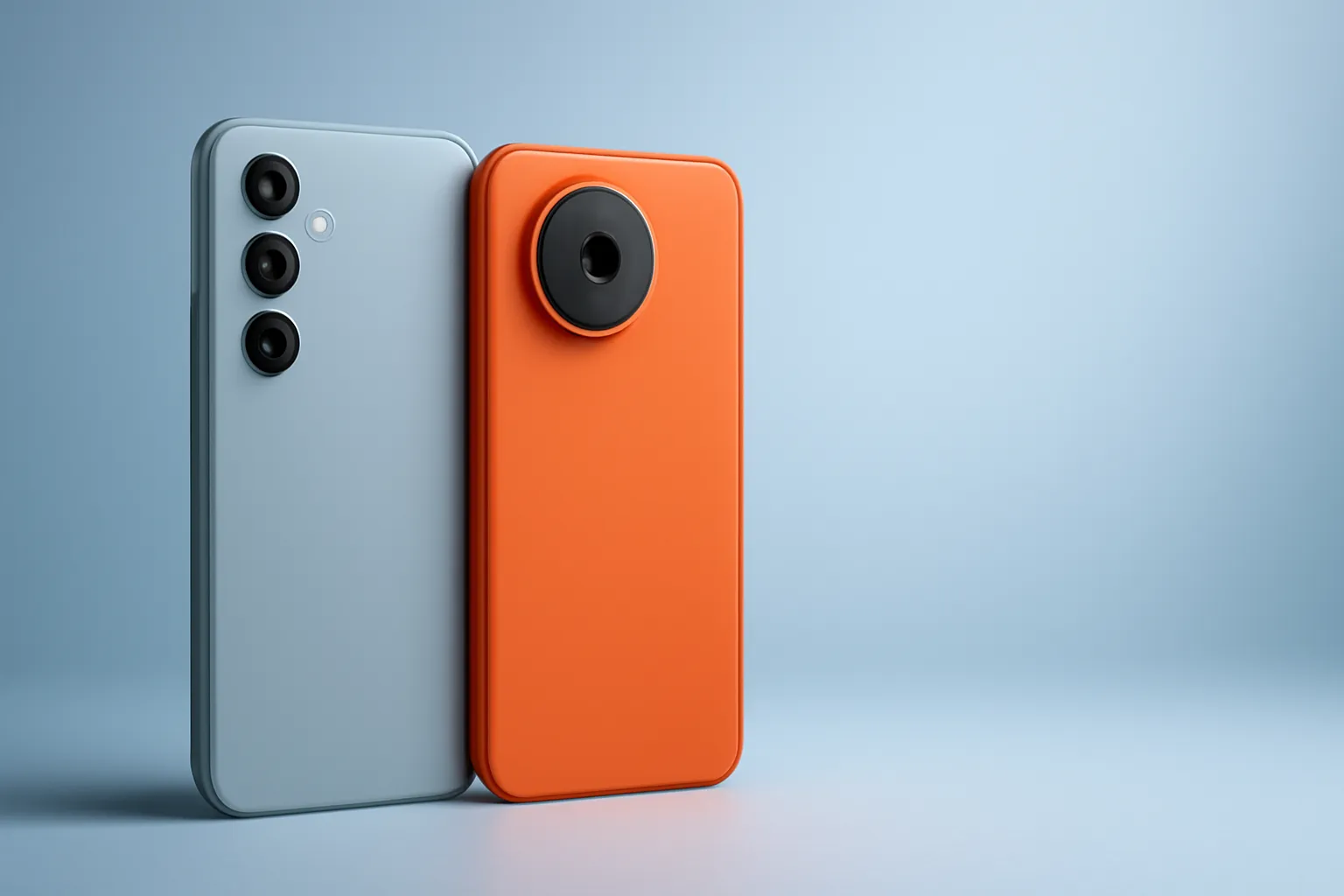
\r\nAlthough they sit in the same price bracket, Samsung Galaxy A17 5G vs CMF Phone 2 Pro is not a classic “model A versus model B” comparison. Samsung bets on ecosystem and predictability: a design aligned with the Galaxy family, One UI, and an update policy that, on paper, eases the worry of being “stuck” on an old Android version.\r\n\r\nCMF Phone 2 Pro, by contrast, aims to make the budget handset a more expressive and “mechanical” object: visible screws, a removable back and a mounting point for accessories. The proposition hinges not just on specifications but on whether you like (or dislike) a product with personality.\r\nCompetition & Prices: what changes with a 10% difference
\r\nIn the source text, the CMF Phone 2 Pro starts above the entry price of the Samsung Galaxy A17 5G. The gap looks small, but on a tight budget it can be decisive. In Samsung Galaxy A17 5G vs CMF Phone 2 Pro, the practical reading is simple: if the ceiling is roughly “around 200”, Samsung fits better; if there is room, CMF compensates with stronger hardware and more options.\r\n\r\nThere is also a relevant detail for users with many files: CMF offers a variant with larger storage (256GB), whereas the Samsung offering, as described, does not provide that option. For users who film heavily or install demanding games, storage acts as “invisible performance”: it prevents constant clean‑ups and reduces day‑to‑day friction.\r\nArchitecture & Specifications: where CMF gains useful lifespan
\r\nThe most technical point in Samsung Galaxy A17 5G vs CMF Phone 2 Pro lies in the “engine” and memory. CMF uses a MediaTek Dimensity 7300 Pro with 8GB of RAM; Samsung relies on an Exynos 1330 with 4GB of RAM. RAM is the system’s working memory: more RAM tends to keep more apps active and reduces reloads when switching between applications.\r\n\r\nThe original article notes that benchmarks clearly favour CMF in CPU and GPU. Even without turning these models into “gaming phones”, this translates into extra headroom for everyday tasks: browsing with many tabs, heavier social‑media apps, light photo editing and greater tolerance for future app versions. Still, a useful caveat remains: both devices may show slight pauses in animations and app switches, especially for users coming from a flagship.\r\n\r\n
Real‑World Use Cases: cameras and video matter more than megapixels
\r\nIn Samsung Galaxy A17 5G vs CMF Phone 2 Pro, photography is where CMF attempts to “step up class” with rare choices at this price. CMF sports a main camera of 50Mp with a larger sensor (1/1.56") than Samsung’s (1/2.76"). A larger sensor generally captures more light, helping indoors and at dusk with less noise and more detail.\r\n\r\nThe second trump card is even rarer: a dedicated telephoto of 50Mp with 2x zoom. In practice this delivers portraits and zoomed shots with better quality than solutions that merely crop the main sensor. For those photographing children, animals or distant detail, the difference is noticeable.\r\n\r\nFor video, CMF is also more flexible: 4K to 30fps and 1080p to 120fps, whereas Samsung offers 1080p to 30fps. 4K is not mandatory, but useful for cropping in post‑production and retaining detail on larger screens; 120fps enables smoother slow‑motion.\r\nPractical Advantages: design, ergonomics and durability
\r\nSamsung follows a recognisable and understated aesthetic, close to other Galaxy devices. This can be positive for users who want a phone that “doesn’t draw attention” and feels familiar. CMF, on the other hand, adopts an industrial look, with a removable back and a screwed‑in accessory point, designed for mounts, straps or other add‑ons.\r\n\r\nThere are also front‑panel differences: Samsung uses a teardrop notch; CMF opts for a hole‑punch, which tends to look more modern and interferes less with content. Regarding protection, both carry the IP54 certification (dust and splash resistance). IP54 is not “water‑proof”: it tolerates rain and light accidents, not submersion.\r\nLimitations & Challenges: updates, availability and expectations
\r\nThe most “anti‑obsolescence” factor in Samsung Galaxy A17 5G vs CMF Phone 2 Pro is the software policy. Samsung promises six years of Android updates and six years of security patches; Nothing promises three years of Android updates and six years of security patches. For buyers seeking a cheap phone that they can keep as long as possible, more Android years mean more time with new features, compatibility and typically higher resale value.\r\n\r\nOn the CMF side, the source text highlights availability limitations in some markets (notably the US). Even in Portugal, it’s worth confirming bands 5G/4G and local support before deciding. There is also an expectation point: superior performance does not completely eliminate the “micro‑pauses” typical of this segment; it merely reduces their frequency and provides extra headroom for the future.\r\n\r\n
What changes for the user: how to choose without regret
\r\nIf longevity with minimal risk is the priority, Samsung Galaxy A17 5G vs CMF Phone 2 Pro leans towards Samsung: more Android years and a consistent experience. If the priority is extracting more hardware per euro, especially in performance and cameras, the CMF Phone 2 Pro emerges as the more “exciting” and, overall, more capable option.\r\n\r\nBefore finalising the purchase, two practical checks can avoid headaches: (1) confirm the return policy and delivery timelines of the sales channel; (2) consider your realistic replacement cycle (2, 4 or 6 years). For editorial reference at iOutlet, you can consult delivery timescales, return policies and warranty conditions. For transparency, the original comparison is in reference analysis.FAQ
- In Samsung Galaxy A17 5G vs CMF Phone 2 Pro, which is better for 4, 5 years of use?
- Overall, the Samsung Galaxy A17 5G is the more conservative bet, promising more years of Android updates. This tends to extend compatibility and security without requiring an early replacement.
- Does the IP54 certification allow you to take any of them into a pool?
- No. IP54 indicates resistance to dust and splashes, not submersion. Rain and light accidents are one thing; submerging the phone is another.
- Do the CMF’s 8GB of RAM make a difference in everyday use?
- They usually do, especially when switching between apps and keeping more applications in the background without reloading. It doesn’t turn the phone into a flagship, but it provides extra headroom.
- Is the CMF’s 2x zoom truly “optical” and worth it?
- The source text describes a dedicated telephoto 2x, which normally retains more detail than a cropped‑sensor zoom. For portraits and distant detail, it is a genuine gain.
- 4K to 30fps is useful in a budget phone?
- It can be, if you record videos for editing, cropping or viewing on larger screens. If you only share on social media, 1080p may suffice, but the extra flexibility helps.
- Is there any reason to choose Samsung even with lower performance?
- Yes: a lower entry price and a longer promise of Android updates. For those who want predictability and to keep the phone for longer, that carries significant weight.
Get more articles like this one.
Refurbished tech analysis + €5 with BEMVINDO5 on your first order.