In this article
- What is really at stake in the Motorola Edge 70 vs iPhone Air
- Architecture & Specifications: where thickness exacts the price
- Durability, battery and charging: the “practical” side of the ultra-slim
- Cameras and media: choices that will irritate different people
- What changes for the user (and for the purchase) in the Motorola Edge 70 vs iPhone Air
- Next steps: how to decide without falling into the thickness trap
- FAQ
What is really at stake in the Motorola Edge 70 vs iPhone Air
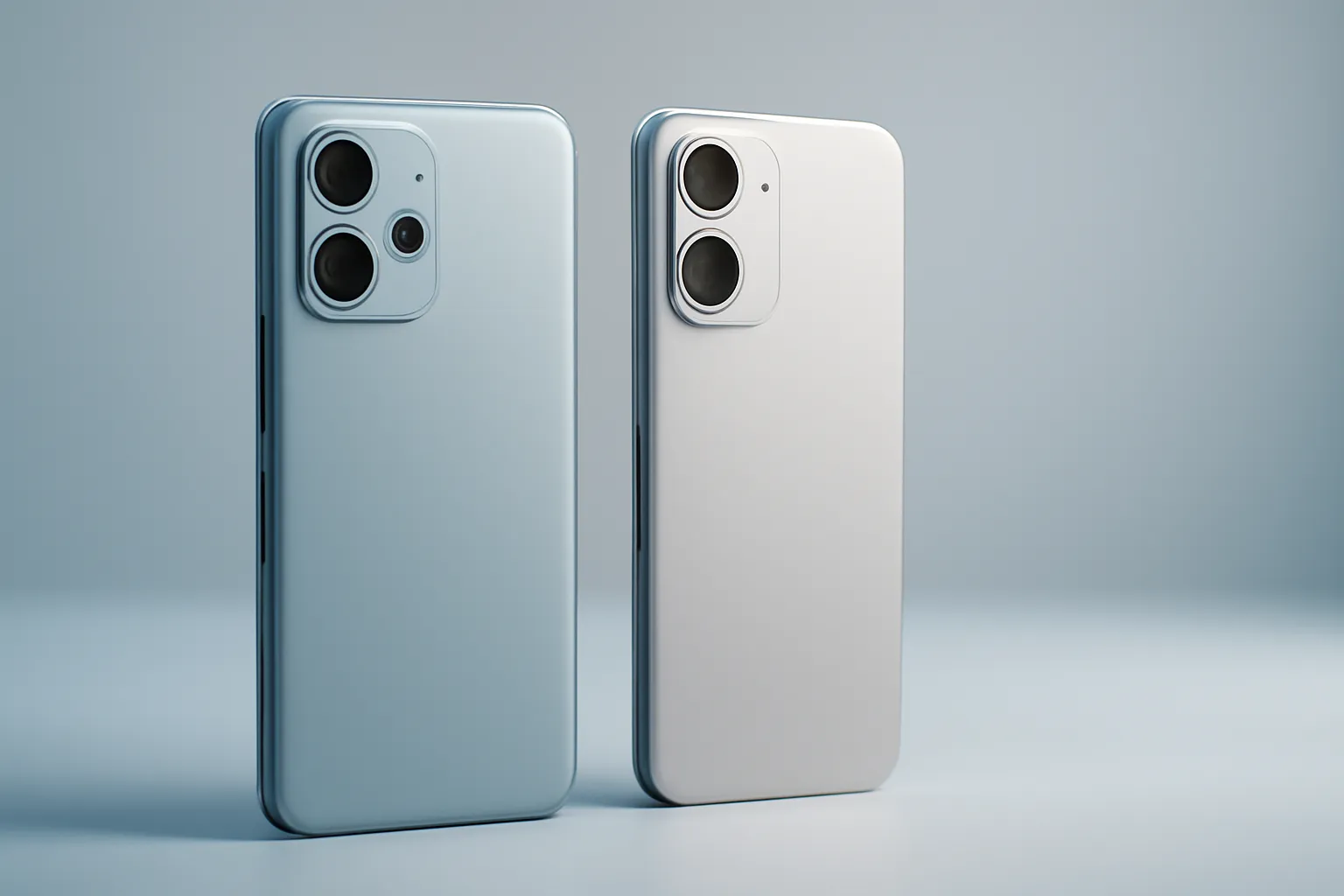
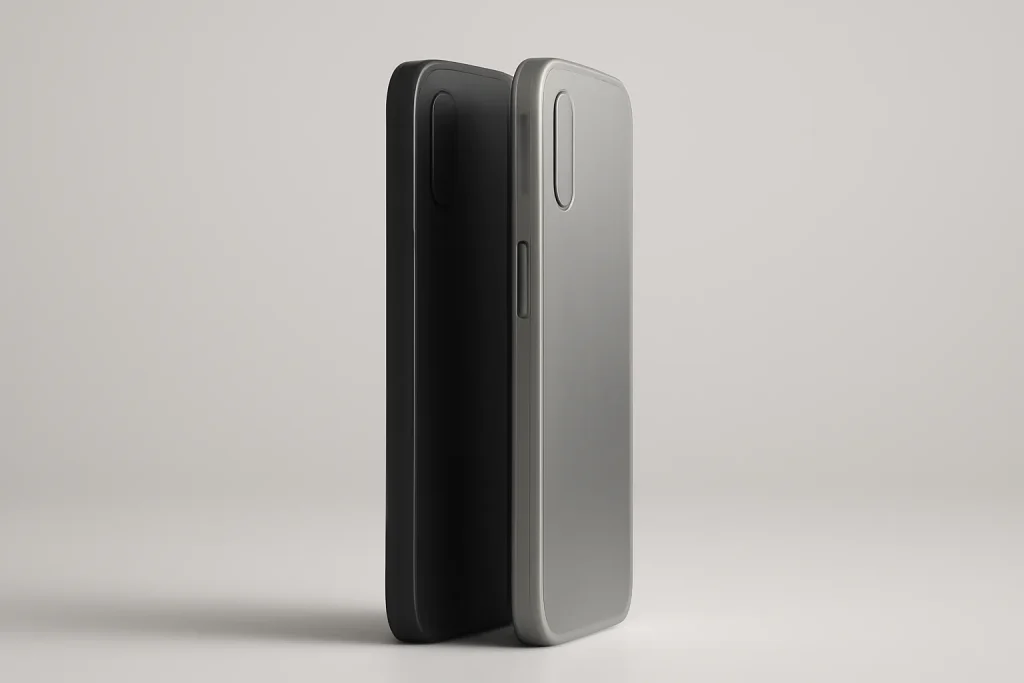
When a manufacturer quotes “5.6 mm” or “5.99 mm”, they are referring to the body - not the camera protrusion. In practice, both models have a rear “island” that is considerably thicker, which alters ergonomics on the tabletop and in the hand. Nevertheless, in the Motorola Edge 70 vs iPhone Air, the tenth-of-a-millimetre difference becomes relevant because the rest of the phone is already at the limit of what is comfortable and structurally safe. There is also a little-discussed side effect: the thinner the chassis, the harder it is to manage heat and rigidity. This helps explain material choices (titanium in the iPhone Air; plastic/fabric/faux leather backs in the Edge 70) and, above all, hardware decisions that seem “odd” on a flagship - such as Apple sticking with a single rear camera, or Motorola opting for a less ambitious SoC.Architecture & Specifications: where thickness exacts the price
On paper, the Motorola Edge 70 vs iPhone Air diverges immediately at the heart of the system. The iPhone Air uses the Apple A19 Pro with 12 GB of RAM (in a variant with one fewer GPU core than the Pro), while the Edge 70 relies on the Qualcomm Snapdragon 7 Gen 4, an upper-midrange chip. In ultra-slim phones, the question is not just “which is faster”: it is who can sustain performance under load without heating up and without aggressively throttling frequencies (thermal throttling). The display also shows two strategies. Apple opts for a 6.5‑inch OLED with variable 120 Hz via LTPO (LTPO is a back-plane technology that allows more efficient refresh-rate variation). Motorola counters with a 6.67‑inch pOLED and a higher quoted peak brightness, but without LTPO, which tends to limit refresh-rate flexibility and may penalise efficiency in mixed-use scenarios. In connectivity, the iPhone Air makes a generational leap with Wi‑Fi 7, Bluetooth 6 and Thread (Thread is a low-power network protocol used in smart homes). The Edge 70 stops at Wi‑Fi 6E and Bluetooth 5.4, without Thread. In contrast, Motorola adds something Apple omits: stereo speakers. In the Motorola Edge 70 vs iPhone Air, this detail matters to those who stream video, play casual games and make speaker‑phone calls without earphones.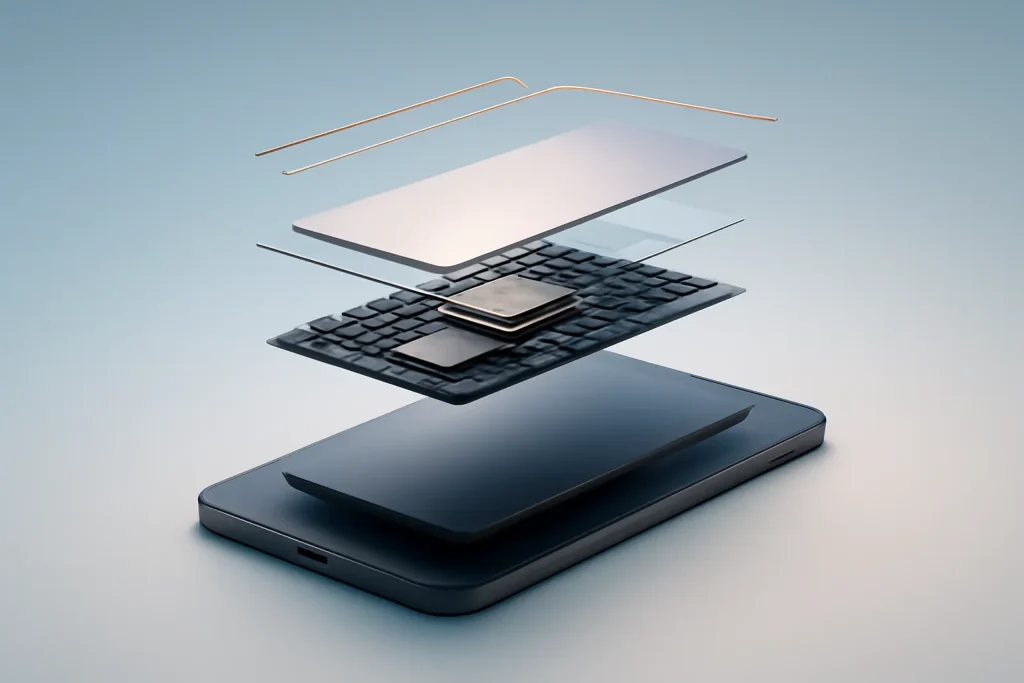
Durability, battery and charging: the “practical” side of the ultra-slim
There is a point where the Motorola Edge 70 vs iPhone Air surprises: protection. The Edge 70 combines IP68 + IP69, surpassing the iPhone Air’s IP68. IP69 is a rating for resistance to high-pressure, high-temperature water jets; it is not a free pass for abuse, but it clearly signals a focus on robustness in a delicate chassis. For the battery, the gap is large: 4,800 mAh (silicon‑carbon) in the Edge 70 versus 3,149 mAh in the iPhone Air (as recorded in EU filings). Silicon‑carbon batteries use a chemistry/anode that can increase energy density, useful when internal space is tight. Still, real endurance depends on the display, modem, software and thermal management - and here LTPO and the SoC’s efficiency can offset some of the “mAh” advantage. Regarding charging, the Edge 70 is more aggressive via cable (68 W). Apple sticks with 20 W and highlights MagSafe/Qi2, offering a better accessory experience and magnetic alignment. If your day is “charge ten minutes and go”, the Motorola Edge 70 vs iPhone Air leans towards Motorola; if you value bases, stands and a magnetic ecosystem, Apple has the edge.Cameras and media: choices that will irritate different people
The iPhone Air makes a controversial compromise: a single 48 MP rear camera that uses sensor cropping for a “2×” optical quality. It works for portraits and tighter framing, but does not replace an ultra-wide-angle lens for landscapes, interiors or group video. The Edge 70, by contrast, offers two rear cameras (50 MP primary + 50 MP ultra-wide), making the set more versatile for travel and casual photography. On the front, Apple opts for a “square” sensor camera with Centre Stage functionality for framing, including horizontal/vertical capture without rotating the device. Motorola counters with a 50 MP sensor, but without the cropping/rotation tricks. In the Motorola Edge 70 vs iPhone Air, the choice is simple: those who want rear flexibility lean towards Motorola; those who do many video calls and selfies with automatic framing may prefer Apple. A useful note: Motorola mentions a “third sensor” on the rear, but it is a light sensor, not a third camera. It is worth knowing this before comparing spec sheets.What changes for the user (and for the purchase) in the Motorola Edge 70 vs iPhone Air
There are three practical questions that resolve almost everything about the Motorola Edge 70 vs iPhone Air: 1) Will you keep the phone for many years? The iPhone Air promises five system upgrades, whereas the Edge 70 foresees three years of major upgrades. For buyers thinking about longevity, security and resale value, Apple has the advantage. 2) Is your usage “heavy” (games, editing, multitasking)? The A19 Pro should retain headroom for longer, even with the thermal limits of an ultra-slim body. The Snapdragon 7 Gen 4 is competent but sits below flagship level and may “age” more quickly under demanding tasks. 3) Do you prefer tangible day-to-day features? IP69, stereo speakers, larger battery and ultra-wide-angle are immediate wins. Here, Motorola offers more “things to use” straight away, even if the package is less premium.
Next steps: how to decide without falling into the thickness trap
If thickness is the number-one criterion, the iPhone Air is the thinnest and the most powerful, with more advanced connectivity and longer software support. If the goal is to enter the ultra-slim world without paying the premium segment price, the Edge 70 makes sense: it stays below 6 mm, brings a larger battery, IP69 and a more versatile camera set. Before finalising the purchase, check two points that rarely appear in the spotlight: (1) how the camera protrusion affects cases and stability on a table; (2) return policy and processing times, in case the “ultra-thin” ergonomics are not for you. In iOutlet’s editorial context, it may be useful to review return policies and processing times. For transparency, the original comparison that formed the basis of this analysis is in Android Central.FAQ
- Does the camera protrusion “nullify” the advantage of an ultra-slim phone?
- It does not nullify it, but it changes the experience: in the hand you feel the thin body; on a table the protrusion can cause wobble and require a case to stabilise.
- Does IP69 mean I can use the Edge 70 in any water situation?
- No. IP69 indicates resistance to high-pressure, high-temperature water jets in specific tests, but it does not cover every scenario (drops, salt water, seal wear). It remains prudent to avoid unnecessary exposure.
- Without LTPO, does the Edge 70’s screen use more battery?
- It can use more in mixed use, because LTPO allows the refresh rate to be reduced more granularly. Still, final endurance also depends on the SoC, the brightness used and system optimisations.
- Is a single rear camera on the iPhone Air enough for everyday photography?
- For many users, yes, especially if they value consistency and video. The limit appears when you need a true ultra-wide-angle for interiors, landscapes and wide framing.
- Is eSIM only on the iPhone Air a problem in Portugal?
- It depends on your carrier and your profile. If you already use eSIM, it is indifferent; if you need to swap physical cards frequently, it can be a hurdle. Check your carrier’s policy before buying.
- Is the Snapdragon 7 Gen 4 “bad” for an ultra-slim phone?
- It is not bad; it is an upper-midrange chip. The issue is expectation: for daily use it is sufficient, but it may have less headroom for heavy tasks and for ageing well over several years.
Get more articles like this one.
Refurbished tech analysis + €5 with BEMVINDO5 on your first order.