In this article
- Big Picture: the decision is not just "new vs cheap"
- Architecture & Specifications: display, materials and the jump to 120Hz
- Technical Details: cameras and "Center Stage" on the front
- Practical Advantages: performance, storage and Apple Intelligence
- Limitations & Challenges: battery, iOS 26 and what changes in daily use
- What changes for the user: quick recommendations by profile
- Next Steps: how to decide in 10 minutes (without regrets)
- FAQ
Big Picture: the decision is not just "new vs cheap"
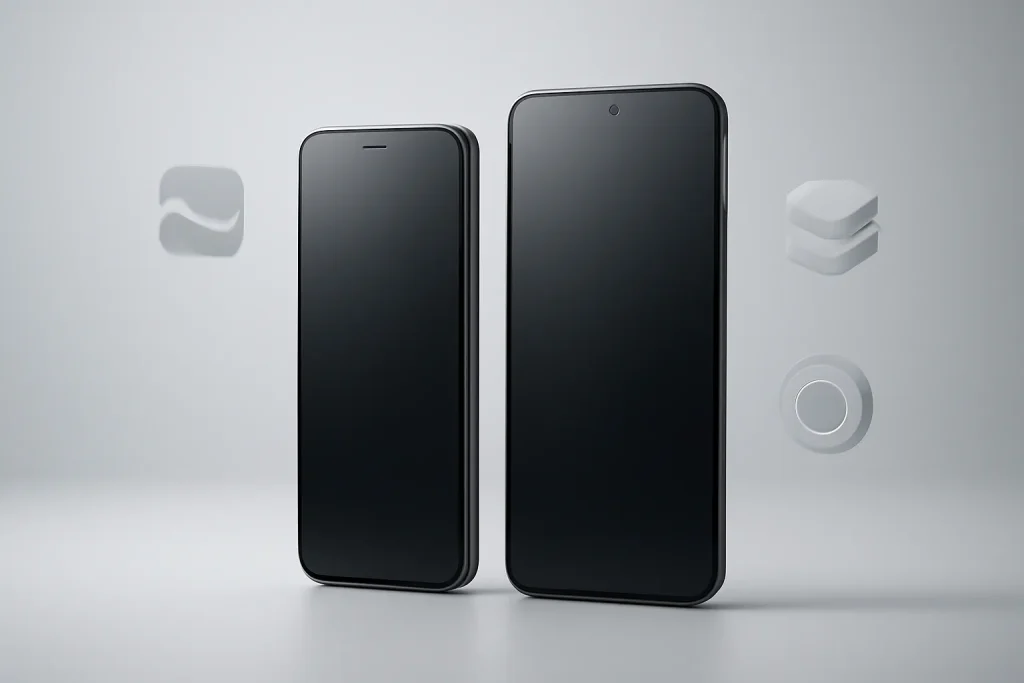
In practice, iPhone 17 vs iPhone 16 breaks down to "experience" and "value". The iPhone 17 tries to justify itself with a more advanced panel (including always-on), more brightness and a more generous storage base. The iPhone 16, on the other hand, becomes more appealing when budget is the dominant factor and when 60Hz isn't a problem. There's still a point that tends to be overlooked: the real cost over time. If 128GB forces you to manage space, pay for iCloud or delete content frequently, the initial price difference can lose relevance. And if you value visual fluidity (scrolling, animations, games), 120Hz tends to be a change that's hard to "unsee".Architecture & Specifications: display, materials and the jump to 120Hz
The biggest differences in iPhone 17 vs iPhone 16 start with the display. The iPhone 17 increases the diagonal from 6.1 to 6.3 inches without growing the body, thanks to slimmer bezels. Apple also points out a new Ceramic Shield 2 with greater scratch resistance (a manufacturer claim, not an independent test). The most transformative point is the refresh rate: the iPhone 17 goes to 120Hz (variable), while the iPhone 16 stays at 60Hz. Refresh rate is the frequency at which the display refreshes the image per second; more Hz typically translates to smoother motion. This jump unlocks the "always-on" display, useful for seeing the time, notifications and Live Activities without waking the phone. There are also readability improvements: the iPhone 17 adds an anti-glare coating and raises the announced peak brightness to 3,000 nits, compared to 2,000 nits on the iPhone 16. For anyone using their phone outdoors, this can be more important than it seems, especially on bright sunny days.Technical Details: cameras and "Center Stage" on the front
In iPhone 17 vs iPhone 16, the main (wide) camera stays at 48 megapixels in both. The relevant change is in the ultra-wide angle: the iPhone 17 jumps from 12 to 48 megapixels, which can benefit landscapes, interiors and video with more room for cropping. On the front camera, the iPhone 17 goes from 12 to 18 megapixels and debuts Center Stage. Center Stage is an automatic framing that adjusts composition to keep people in frame, which can be useful for calls and group selfies, especially when you switch between portrait and landscape. Both models include the Camera Control button to open the camera and access controls quickly, and support Visual Intelligence (recognition/contextual assistance tool built into the Apple ecosystem).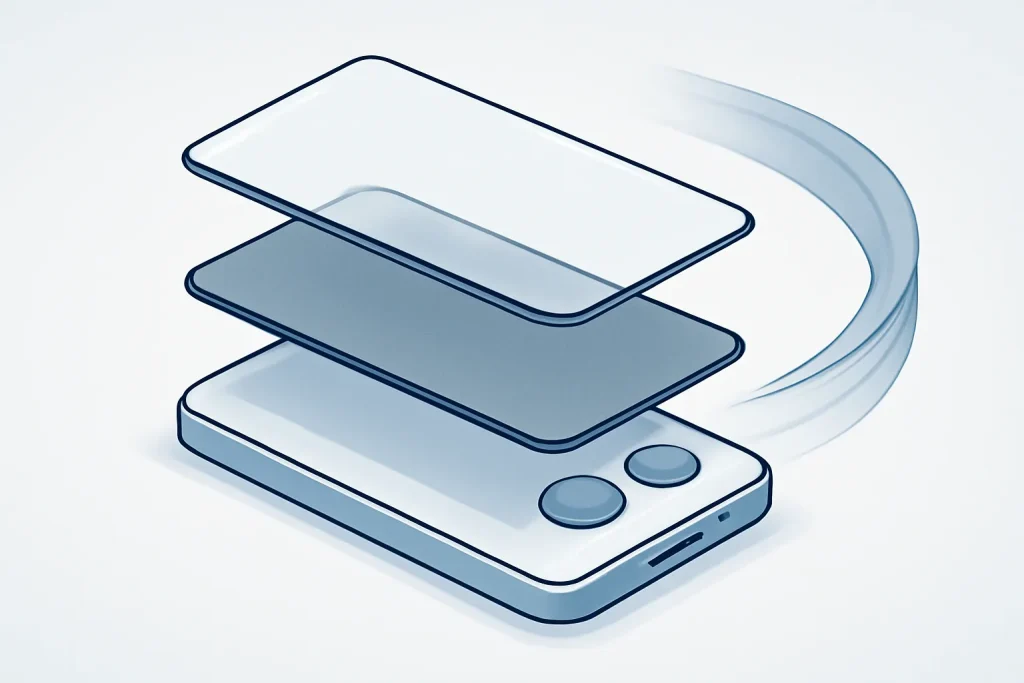
Practical Advantages: performance, storage and Apple Intelligence
The iPhone 17 swaps the iPhone 16's A18 for the A19. Without benchmark numbers in the source text, the prudent read is: there will be incremental gains in efficiency and performance, with greater impact on heavy tasks (editing, games, on-device AI) than on messaging and social media. Base storage is, here, an objective argument: the iPhone 17 starts at 256GB, while the iPhone 16 started at 128GB at the same launch price. In iPhone 17 vs iPhone 16, this matters for anyone who records a lot of video, installs large games or wants to keep libraries offline (music, maps, series). Both support Apple Intelligence, Apple's set of AI features (such as writing tools, image generation and notification summaries). Real utility depends on your language, the apps you use and your comfort with automation; still, it's a point of longevity, because these features tend to expand with updates. If you're interested in the topic of "memory, AI and costs", it's worth crossing this discussion with iOutlet's article on costs of memory in AI PCs, because it helps frame how AI pressures hardware and storage.Limitations & Challenges: battery, iOS 26 and what changes in daily use
Apple doesn't disclose battery capacity in mAh in this comparison, but points to battery life in hours of video playback: up to 22 hours on the iPhone 16 and up to 30 hours on the iPhone 17. In tests cited by the original source, differences in short scenarios were small, suggesting that for typical use, both last "a day" without drama. The iPhone 17 comes with iOS 26, and the iPhone 16 should also receive iOS 26 when it becomes publicly available. A highlight is Adaptive Power (adaptive power management) which, according to Apple, makes small performance adjustments to save battery. Adaptive Power is a power management strategy that trades some speed for more battery life in certain tasks, when the system thinks it makes sense. In iPhone 17 vs iPhone 16, this means the battery difference can depend as much on software and your usage pattern as on hardware. If your routine is mostly messaging, browsing and occasional photography, it's plausible that you'll feel the 120Hz display more than the extra announced battery life. For context and editorial transparency, the comparison is based on the original piece from iPhone 17 vs iPhone 16 review.What changes for the user: quick recommendations by profile
If you're deciding between iPhone 17 vs iPhone 16, these are the most rational choices, without dramatising differences: Choose iPhone 17 if you value fluidity (120Hz), want an always-on display, spend a lot of time in the sun outdoors, or if 256GB base saves you headaches with space. It also makes sense if you frequently use the ultra-wide angle and want more detail. Choose iPhone 16 if the discount is decisive and if 60Hz doesn't bother you. It remains a solid base for iOS, Apple Intelligence and capable main photography, with less upfront cost. For anyone still unsure between platforms, iOutlet's guide on differences between iPhone and Android helps separate ecosystem preferences (apps, services, integration) from specs.
Next Steps: how to decide in 10 minutes (without regrets)
Before closing on iPhone 17 vs iPhone 16, do three quick checks: (1) how much space you use today and how much it grows per year; (2) whether you've used 120Hz and whether it makes a difference to you; (3) which are your two most-used cameras (main vs ultra-wide vs front). If two of these points fall on the iPhone 17 side, the upgrade is easy to justify. If they fall on the price side, the iPhone 16 is the pragmatic choice. And, whichever option you choose, confirm post-purchase policies (timelines, returns and warranty) to reduce risk. At iOutlet, you can check warranty terms and return rules before deciding.FAQ
- Does the 120Hz display on the iPhone 17 make a difference outside of games?
- Yes, especially in scrolling, system animations and app navigation. In iPhone 17 vs iPhone 16, it's the most "visible" change in daily use, even for non-gamers.
- Does 256GB on the iPhone 17 replace the need for iCloud?
- Not necessarily. 256GB reduces storage pressure for photos, video and apps, but iCloud remains useful for backups, syncing and sharing between devices. The decision depends on your video volume and how you manage libraries.
- Does the 48MP ultra-wide on the iPhone 17 improve video or just photos?
- The source text highlights the resolution bump; in practice, more megapixels can help with detail and cropping, but final quality also depends on processing, stabilisation and light. It's an improvement with greater impact in good lighting conditions.
- Will the iPhone 16 have the same iOS 26 features as the iPhone 17?
- The iPhone 16 should receive iOS 26, but some features may vary by model. In iPhone 17 vs iPhone 16, the essential thing is that both enter the iOS 26 cycle, which helps with longevity.
- Does the "always-on display" use a lot of battery?
- Depends on implementation and your usage pattern. In general, the always-on display is designed to consume little power (with reduced brightness and limited updates), but can have an impact on long days without charging.
- Is it worth upgrading from iPhone 16 to iPhone 17 just for the battery?
- It's not the strongest reason on its own. Despite the increase in announced video hours, the source suggests small differences in short tests and typical use. In iPhone 17 vs iPhone 16, battery matters more when combined with display, storage and cameras.
Get more articles like this one.
Refurbished tech analysis + €5 with BEMVINDO5 on your first order.