In this article
- Overview: focused evolution, not a "revolution"
- Architecture & Specifications: Snapdragon, RAM and real-world impact
- Real-World Use Cases: camera tuned for low light (and what it means)
- Limitations & Challenges: battery, charging and design with practical implications
- Next Steps: how to decide on the upgrade without regrets
- FAQ

Overview: focused evolution, not a "revolution"
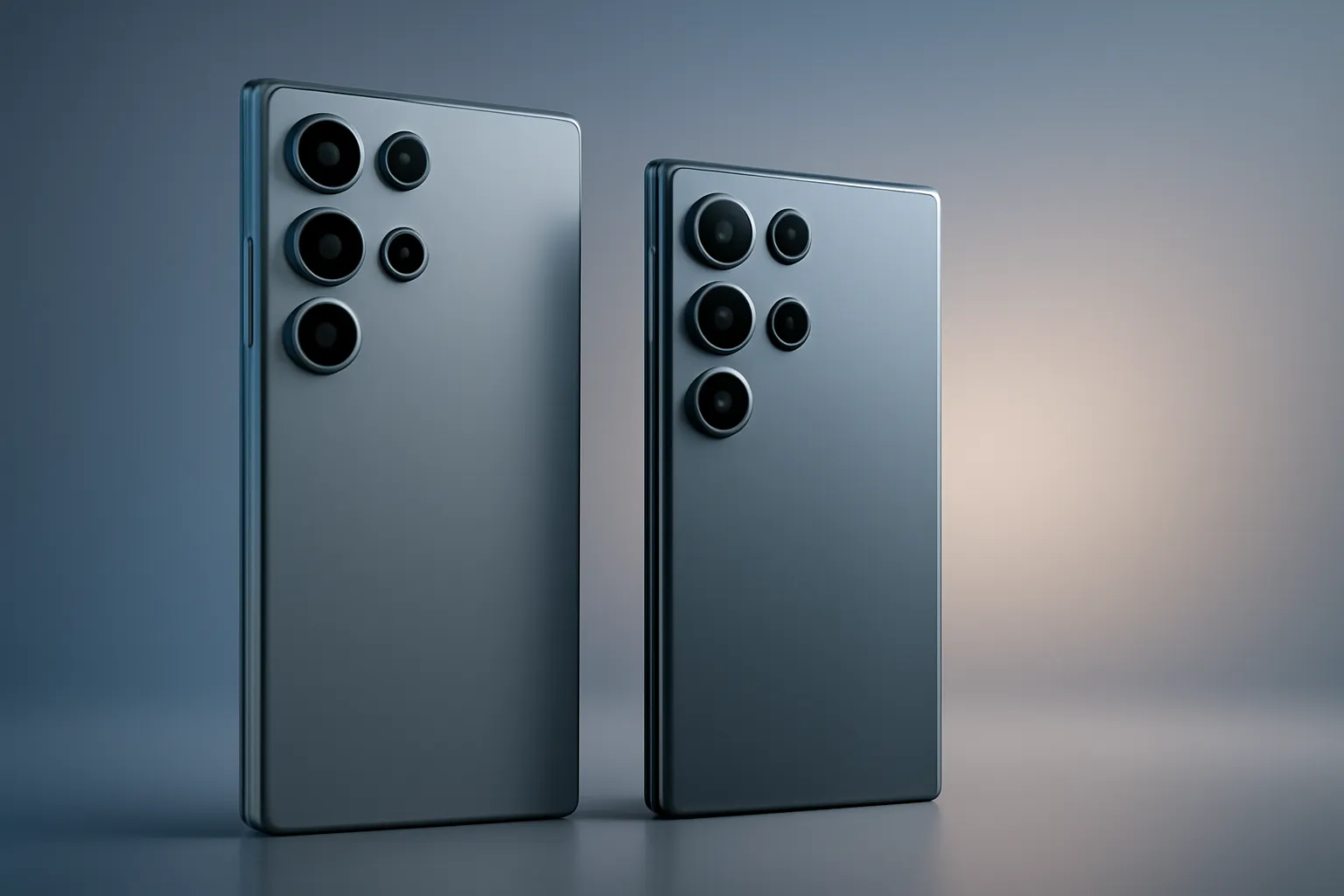
The framing of Galaxy S26 Ultra vs S25 Ultra suggests a typical maturation strategy: maintain the foundation that already works and address friction points. The main camera should remain at 200 MP, but with optical adjustments to capture more light. The battery may grow slightly and, notably, wired charging could accelerate. On design, there's talk of a return to the "camera island" (raised module) to reduce dust accumulation around exposed lens rings. It's worth noting what's still uncertain: without final specifications, any decision should be taken as "planning" rather than certainty. Still, the pattern of changes: greater efficiency, faster speeds and refinement: is consistent with what's expected from a mature "S" generation.Architecture & Specifications: Snapdragon, RAM and real-world impact
At the heart of the Galaxy S26 Ultra vs S25 Ultra comparison is the processor. Leaks point to a Snapdragon 8 Elite Gen 5 "for Galaxy", which is essentially a variant tailored for the Galaxy line. In practice, this type of tuning typically translates to margins of sustained performance and more predictable thermal management, which matters in gaming as well as photo and video editing on your phone. There's also talk of markets with up to 16 GB of RAM. RAM (random access memory) is the system's "workspace": more RAM helps keep heavy apps open, reduces reloading and improves multitasking. The source text mentions LPDDR5X, a more efficient and faster memory standard that tends to reduce latency and power consumption in intensive use scenarios. The practical effect of this combination is straightforward: fewer stutters in demanding tasks, faster exports in editing apps and more headroom for on-device AI features. If your use is mostly social media, messaging and casual photography, the difference may be subtle. If you do editing, gaming or mobile work, Galaxy S26 Ultra vs S25 Ultra can become a more "rational" decision than an emotional one.
Real-World Use Cases: camera tuned for low light (and what it means)
The camera is where Galaxy S26 Ultra vs S25 Ultra seems easier to explain: and harder to "feel" across all situations. The S25 Ultra already starts with a strong set, featuring a 200 MP main sensor and multiple focal lengths. On the S26 Ultra, the most relevant rumour is the main sensor aperture shifting to f/1.4. Aperture (f/…) measures how much light enters the lens; a smaller number typically allows better low-light performance, with potential to reduce noise and shorten exposure times. There's also the possibility that the 3x telephoto steps up from 10 MP to 12 MP and that a faster laser autofocus emerges. Laser autofocus is a distance-measurement system that can speed up focusing, especially in dark environments or low-contrast situations. The gain here tends to be more about consistency (fewer failed shots) than "more detail" in all images. The rest of the set: ultra-wide and periscope: appears to remain similar. This reinforces the reading: with Galaxy S26 Ultra vs S25 Ultra, Samsung may be optimising what's already good, rather than redesigning mobile photography from scratch.Limitations & Challenges: battery, charging and design with practical implications
On battery life, leaks point to a slightly larger capacity (in the region of 5,200–5,400 mAh, compared to the reported 5,000 mAh for the S25 Ultra). But the more tangible part may be charging: there's talk of 60 W wired and 25 W wireless, above the S25 Ultra's 45 W standard. Fast charging isn't just about "filling up quickly"; it also changes habits, because 10–15 minutes may become enough to recover hours of use. There is, however, a less glamorous side: higher speeds require good thermal management and, ideally, compatible accessories. Without getting into charge-time numbers, the key point is this: if Samsung increases power, the user should expect more specific recommendations about chargers and cables to maintain safety and consistency. On design, the possible "camera island" could address complaints about dirt around individual lens rings. It sounds like a detail, but it has impact on maintenance and cases: fewer fine cutouts, fewer spots where dust and fibres accumulate. In Galaxy S26 Ultra vs S25 Ultra, this kind of refinement is what makes a flagship feel more "polished" after weeks of real-world use.Next Steps: how to decide on the upgrade without regrets
If you're weighing Galaxy S26 Ultra vs S25 Ultra, the practical rule is to separate "want" from "need". It makes sense to wait for the S26 Ultra if you value three things: sustained performance (new chip), more consistent low-light photography (aperture and focus) and faster charging (habit change). If the S25 Ultra already gives you fluidity, battery life and image quality that satisfy you, the switch may sound like incremental improvement. For those upgrading from a model before the S25 Ultra, the sum of improvements: efficiency, on-device AI, charging and camera refinements: tends to be more noticeable. For those already on the S25 Ultra, the decision is more about priorities: do you want to reduce failures in low-light shots? Do you want more headroom for heavy multitasking? Or would you prefer to wait for a generation with more profound changes? For editorial transparency, the analysis is based on non-final information and should be read as a likely scenario, not as a confirmed specification sheet. You can check the original piece at source.
FAQ
- Has the Galaxy S26 Ultra been officially announced yet?
- No. The Galaxy S26 Ultra vs S25 Ultra comparison, at present, is based on information leaks and analysis; final specifications may change.
- What does an f/1.4 aperture mean in practice?
- Generally, a smaller aperture (like f/1.4) lets in more light, which can improve low-light photos and reduce noise, depending on processing and sensor.
- Does 16 GB of RAM make a difference for everyone?
- Not always. It helps mainly with heavy multitasking, demanding games and editing apps. For basic use, the gain may be barely noticeable.
- Can 60 W charging degrade the battery faster?
- It can increase heat and stress if thermal management isn't done well. In modern models, control is handled by software and hardware, but it's worth following the manufacturer's recommendations and using compatible accessories.
- Is the "camera island" better than separate lenses?
- It's a design choice. It can ease cleaning and reduce dust accumulation around lens rings, but it also changes how the phone sits on a table and how cases fit.
- When does it make the most sense to upgrade from the S25 Ultra to the S26 Ultra?
- When you value specific gains: more consistent low-light photography, faster charging and sustained performance for demanding tasks. If the S25 Ultra already meets your needs, waiting may be more sensible.
Get more articles like this one.
Refurbished tech analysis + €5 with BEMVINDO5 on your first order.