
In this article

Overview
\r\nRedmi Note has long been synonymous with a safe recommendation in the mid-range, but it has lost consistency in recent generations. In this Redmi Note 15 5G review, the pattern repeats with a hint of "back to basics": solid build for the price, focus on battery life and screen, and a specification set that, on paper, appears balanced.\r\n\r\nHowever, there is a typical tension of 2026: the user wants a cheap phone but will not tolerate hesitations when switching between apps, returning to the home screen or performing simple tasks. This is where the Redmi Note 15 5G becomes tricky, because its positioning relies more on the perception of speed than on technical spec numbers.\r\nArchitecture & Specifications
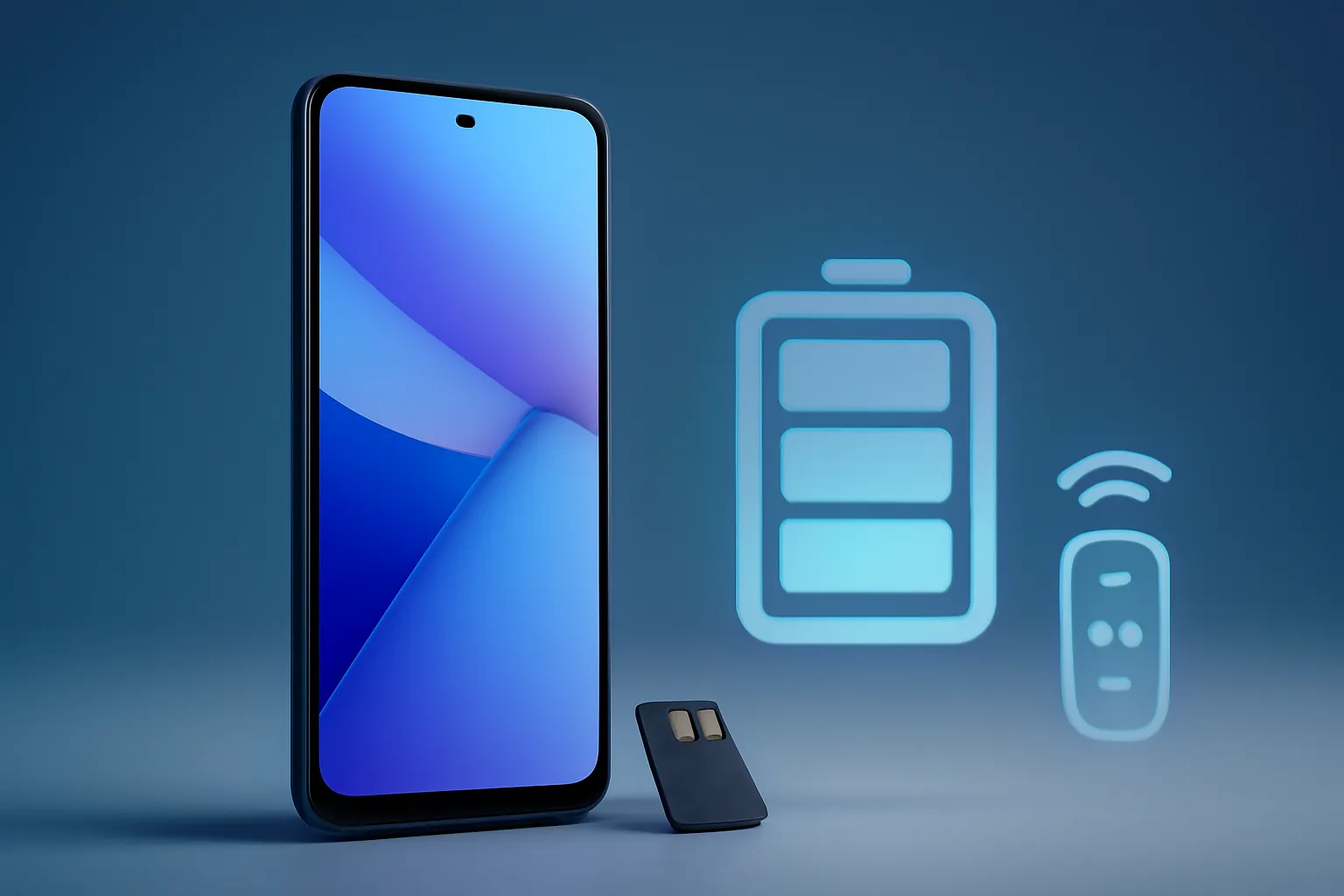
\r\nThe model highlighted in this Redmi Note 15 5G review combines a 6,77-inch AMOLED display with a refresh rate of 120 Hz and a advertised peak brightness of 3.200 nits. In practice, this translates to good outdoor readability and a visual experience that exceeds expectations for a "budget" device. Xiaomi also trims margins, which improves the perception of a higher-priced product.\r\n\r\nInside, the Snapdragon 6 Gen 3 (4 nm) processor appears with an Adreno 710 GPU and 8 GB of RAM (in the variants mentioned in the source text). It is not a SoC aimed at demanding games; rather, it is a chip focused on efficiency and everyday use. The issue arises when "everyday use" involves a heavy interface: HyperOS 2 (based on Android 15) is heavily customised, and this can amplify micro-lags on mid-range hardware.\r\n\r\nOn the power side, the 5.520 mAh battery is one of the device’s pillars. The source text notes the adoption of silicon-carbon battery technology (a chemistry that can increase energy density, allowing more capacity in the same volume). It is paired with fast wired charging at 45 W and an included charger, a detail that remains a differentiator. Wireless charging compatibility at 18 W is also mentioned, which is rare at this price point.\r\n\r\nIn connectivity and extras, there is 5G, NFC, an under-display fingerprint sensor and an IR blaster (useful for controlling TVs and other compatible equipment). MicroSD expansion (up to 1 TB, according to the source) is relevant for users who record lots of video, download music offline or want longevity without relying on the cloud.\r\n\r\n
Real-World Use Cases
\r\nIf your priority is video consumption, social media and reading, this Redmi Note 15 5G review is easy to summarise: the display is the most compelling argument. AMOLED plus 120 Hz and high brightness improve everything from browsing to streaming. The slim body (7,35 mm) and weight (178 g) also matter for prolonged use, especially for those who spend hours with the phone in hand.\r\n\r\nIn terms of battery life, the picture is equally favourable. The 5.520 mAh capacity, combined with an efficiency-focused chip, tends to deliver a full day even with 5G active. For many users, this matters more than gaining a few seconds in benchmarks: less battery anxiety and more predictability.\r\n\r\nThe downside appears in fluidity. The test report notes frequent "hiccups" when switching between apps and even in simple actions, such as returning to the home screen after changing a wallpaper. In a Redmi Note 15 5G review, this kind of issue weighs more than an occasional FPS dip in a game, because it affects dozens of daily interactions.\r\nLimitations & Challenges
\r\nThe biggest compromise is perceived performance. The Snapdragon 6 Gen 3 may be adequate in many scenarios, but pairing it with a heavy software layer and pre-installed bloatware creates friction. "Bloatware" is software that comes pre-installed from the factory that many users did not ask for; besides taking up space, it can consume resources and send notifications.\r\n\r\nThe second point is the software strategy. The device ships with Android 15 and HyperOS 2, while Xiaomi itself signals the upcoming HyperOS 3 based on Android 16. The promise of four years of system updates is positive, but starting a cycle already "behind" reduces the practical value of that promise for users seeking real longevity. In this Redmi Note 15 5G review, this means the purchase makes more sense for those who replace their phone frequently, or for those who do not mind being one version behind.\r\n\r\nIn photography, the main 108 MP camera is described as solid for the price, delivering good results in good light and offering zoom up to 3x via sensor cropping (a technique that uses extra resolution to zoom without a dedicated telephoto lens). In low light, processing tends to smooth detail by reducing noise, a common trait in larger sensors in this class. The ultra-wide-angle 8 MP camera, however, is noted as weak and more of a "checklist" feature than a creative tool.\r\nCompetition & Prices
\r\nThe source text positions the Redmi Note 15 5G with indicative prices starting from INR 22.999/€279 and a variant 8 GB/256 GB at INR 24.999/€299, varying by market. For comparison, models such as the Nothing Phone 3a and OnePlus Nord CE5 are cited as alternatives with better performance. The practical takeaway from this Redmi Note 15 5G review is straightforward: if you value consistent speed and a lighter interface, it may be worth stretching the budget slightly; if you value screen, battery life, charger in the box and microSD, the Redmi scores points.\r\n\r\nThere is also a durability note: the glass protection steps down from the previous generation (from Gorilla Glass 5 to a Xiaomi-internal solution). This is not, in itself, proof of fragility, but serves as a reminder to consider a screen protector and case, especially for daily use.\r\n\r\n
What changes for the user
\r\nFor purchasers on a controlled budget, the Redmi Note 15 5G review offers a conditional recommendation. It makes sense if you want a screen above average, good battery life, fast charging with charger included and expandable storage. It is also a practical choice for those who use an IR blaster and NFC and prefer a lightweight phone.\r\n\r\nAvoid it if your tolerance for "stutters" is low, if you want to keep the same phone for several years with a sense of speed, or if you value a cleaner Android experience. If you proceed, reduce the impact of bloatware (by uninstalling/deactivating what you can) and keep free storage space to preserve performance over time.\r\n\r\nFor online purchasers, it is worth confirming after-sales conditions and delivery timelines before deciding, including warranty terms, return policy and delivery timelines. For editorial transparency, the original piece is in Android Central.FAQ
- Does the Redmi Note 15 5G actually come with a charger in the box?
- Yes. The source text indicates fast wired charging (45 W) and a charger included, which is no longer guaranteed on many current models.
- What is "silicon-carbon battery" and why does it matter?
- It is a battery technology that can increase energy density, allowing more capacity in a thinner body. In the Redmi Note 15 5G, it helps explain the 5.520 mAh capacity in a lightweight design.
- Are the updates promised by Xiaomi sufficient for several years?
- Xiaomi promises four years of system updates, but the phone arrives with Android 15. In practice, starting a version behind can reduce the number of major Android upgrades the user experiences over time.
- Does microSD compensate for buying more internal storage?
- It makes sense if you store many files (video, offline music, photos) and want flexibility. The typical downside is that microSD cards can be slower than internal storage, depending on the card.
- Does the 108 MP camera replace a telephoto lens?
- Not entirely. The source text refers to lossless zoom up to 3x via sensor cropping, which can work well in good light but does not provide the same perspective/consistent quality as a dedicated telephoto lens.
- Is it worth waiting for HyperOS 3 (Android 16)?
- If your priority is having newer software, it may make sense to wait for the announced update. Nevertheless, there is no confirmed date in the source text, and the experience may remain dependent on the hardware and level of customisation.
Get more articles like this one.
Refurbished tech analysis + €5 with BEMVINDO5 on your first order.